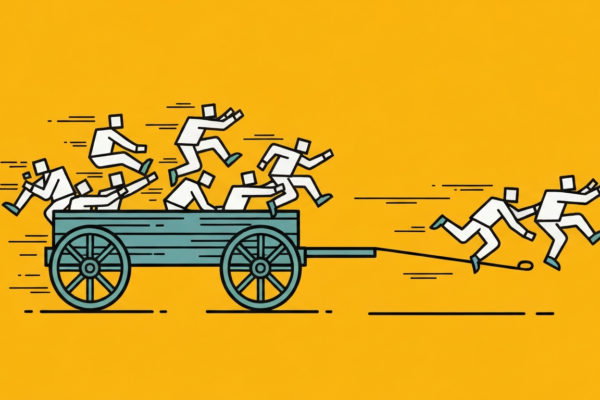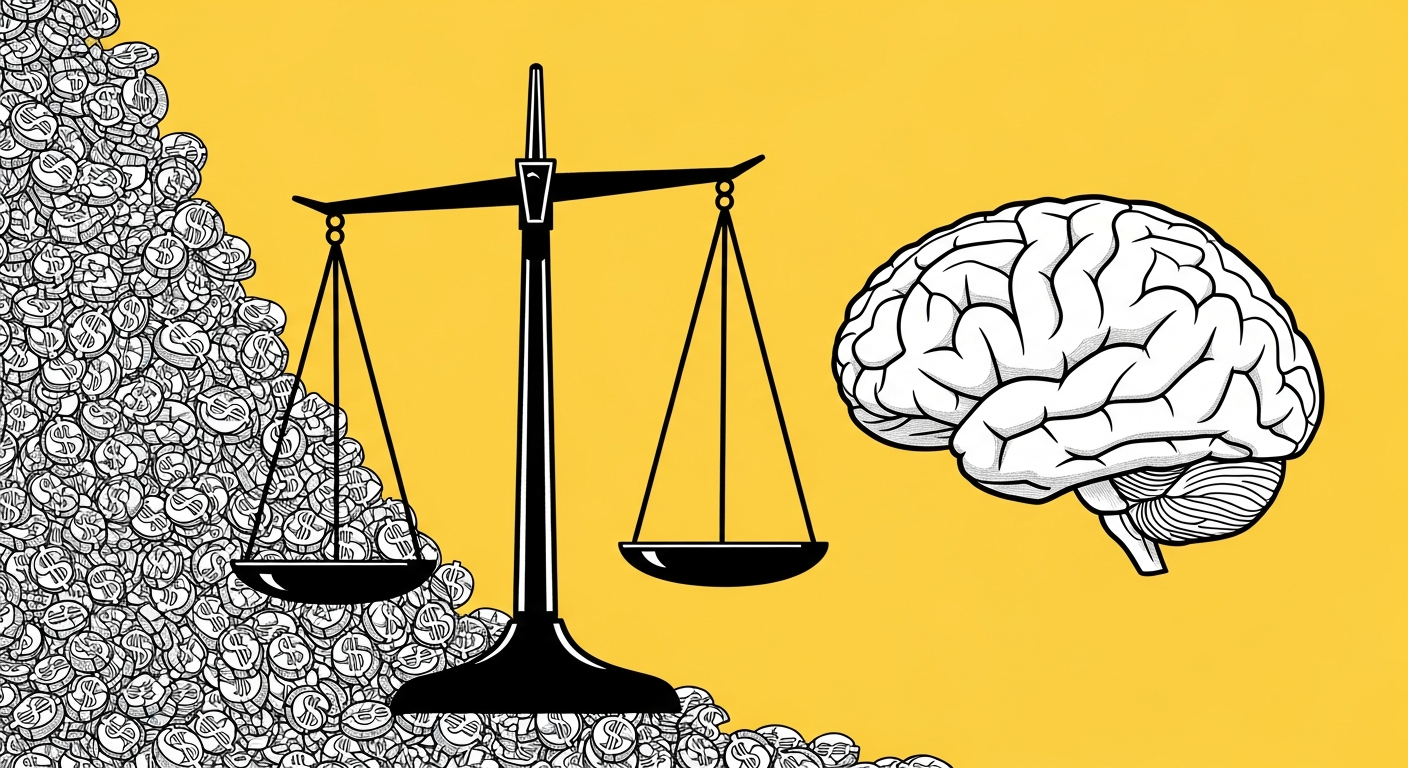
Classical economics assumes consumers make rational decisions by weighing costs and benefits. Behavioral economics proves they do not. Consumers anchor on the first number they see, overweight losses relative to gains, follow the crowd, and choose options they are primed to prefer. Daniel Kahneman and Amos Tversky’s Prospect Theory (1979) formally demonstrated these departures from rationality, earning Kahneman the Nobel Prize in Economics in 2002.
Every effective advertisement exploits at least one of these irrational tendencies, whether the advertiser knows the science behind it or not.
What Is Behavioral Economics? (And Why Advertisers Need It)
The Gap Between Classical Economics and Real Consumer Behavior
Classical economics models assume a “rational agent” who processes all available information, calculates expected value, and chooses the option that maximizes utility. Real consumers skip the fine print, buy the middle option without comparing, and pay more for a product they could get cheaper with ten minutes of research.
Behavioral economics studies these systematic deviations from rationality. For advertisers, the field provides a taxonomy of cognitive shortcuts that predict how consumers will respond to specific messaging frames, price structures, and choice architectures.
Key Thinkers: Kahneman, Tversky, and Thaler
Daniel Kahneman and Amos Tversky established the field with Prospect Theory (1979), demonstrating that people evaluate outcomes relative to a reference point and feel losses roughly twice as strongly as equivalent gains. Richard Thaler, Nobel laureate in 2017, extended their work into “nudge theory,” showing that the design of choice environments (choice architecture) can predictably influence decisions without restricting options. Robert Cialdini translated academic behavioral science into practitioner frameworks through Influence: The Psychology of Persuasion.
10 Behavioral Economics Principles Every Advertiser Should Know
1. Anchoring Effect
The first piece of information a consumer encounters becomes the reference point for all subsequent evaluations. Show a $299 price before revealing the $199 sale price, and the discount feels substantial. Show the $199 price alone, and the consumer has no anchor to judge value against.
Apple uses anchoring masterfully at product launches. The highest-priced model is announced first, anchoring the audience’s price expectation. When the lower-priced models follow, they feel like bargains relative to the anchor, even if they are still premium-priced by market standards.
2. Framing Effect
Identical information presented differently produces different decisions. “95% fat-free” and “5% fat” describe the same product but generate different purchase intent. Positive framing (what you gain) works better for prevention products. Negative framing (what you lose) works better for detection products, according to research by Rothman and Salovey.
Advertisers choose frames constantly: “Save $50” versus “Don’t miss out on $50.” The frame determines the emotional response, which determines the action.
3. Loss Aversion
Kahneman and Tversky demonstrated that the pain of losing $100 is roughly twice as intense as the pleasure of gaining $100. This asymmetry drives urgency messaging (“Offer expires tonight”), free trial strategies (you’ll lose access), and money-back guarantees (removes the risk of loss).
Booking.com’s “Only 2 rooms left at this price” combines loss aversion with scarcity to create immediate action. The consumer is not excited about booking. They are afraid of losing the deal. Our detailed guide to loss aversion pricing strategy covers this principle’s application to pricing decisions.
4. Social Proof
Social proof is the tendency to conform to the actions of others when uncertain about the correct course of action. Cialdini identified it as one of six universal principles of influence. In advertising, social proof manifests as testimonials, user counts (“Join 50 million users”), star ratings, and “best-seller” labels.
Amazon’s entire product page design is a social proof engine: star ratings, review counts, “frequently bought together,” and “customers who bought this also bought.” Each element reduces purchase uncertainty by showing that others have already validated the decision.
5. Scarcity and Urgency
Limited availability increases perceived value. Cialdini’s research shows that people assign more value to opportunities when they are less available. Limited editions, countdown timers, “only X left in stock” indicators, and seasonal availability all trigger the scarcity principle.
Supreme built a billion-dollar streetwear brand almost entirely on scarcity. Weekly limited drops create artificial scarcity that drives queues, resale markets, and cultural status. The product’s value is its scarcity, not its material quality.
6. The Decoy Effect
Adding an inferior third option makes one of the original two options look more attractive. The Economist’s famous pricing experiment offered three subscription options: online only ($59), print only ($125), and print + online ($125). The print-only option existed solely to make print + online look like an incredible deal. With the decoy, 84% chose print + online. Without it, 68% chose online only.
SaaS companies use the decoy effect constantly in pricing tier design. The middle tier is often the target. The premium tier exists to make it look reasonable. The basic tier exists to make it look comprehensive.
7. Endowment Effect
People overvalue things they already possess. Richard Thaler’s research showed that participants who received a coffee mug demanded roughly twice as much to sell it as others were willing to pay to buy it. Ownership, even brief ownership, increases perceived value.
Free trials exploit the endowment effect. Once a user has spent two weeks configuring their Spotify playlists or customizing their Netflix profile, the thought of losing access triggers loss aversion amplified by the endowment effect. The free trial did not just demonstrate value. It created ownership.
8. Reciprocity
When someone gives us something, we feel obligated to give something back. Cialdini documented this as the most powerful influence principle. In advertising, reciprocity drives free sample strategies, free content marketing, and lead magnets. HubSpot’s free tools and courses create reciprocity: the user receives value and feels obligated to consider HubSpot’s paid products.
9. Status Quo Bias and Default Options
People prefer the current state of affairs and resist change. In practical terms, the default option wins. Research on organ donation shows that countries with opt-out policies (you are a donor unless you opt out) have donation rates above 90%, while opt-in countries average below 15%. The decision architecture, not individual preference, determines the outcome.
Subscription services exploit status quo bias through auto-renewal. The default is continued subscription. Canceling requires active effort. Every friction point in the cancellation process leverages status quo bias to reduce churn.
10. Cognitive Load and Choice Overload
As the number of options increases, decision quality decreases and the likelihood of choosing nothing increases. Sheena Iyengar’s famous jam study showed that a display of 24 jam varieties generated 10x less purchasing than a display of 6 varieties. More choice attracted more attention but less action.
For advertisers, this means simplifying the call to action. One clear next step outperforms three options. One product recommendation outperforms a category page. The paradox of choice is not theoretical. It is the reason high-converting landing pages have one button, not three.
How Top Brands Use Behavioral Economics in Advertising
| Principle | Brand | Application | Impact |
|---|---|---|---|
| Anchoring | Apple | Announces highest price first at launch events | Lower tiers feel like bargains |
| Scarcity | Amazon | Lightning Deals with countdown timers | Creates urgency and impulse purchases |
| Social Proof | Coca-Cola | “Billions served” / Share a Coke | Universality validates choice |
| Decoy Effect | Netflix | Three-tier pricing structure | Drives selection of preferred middle tier |
| Endowment | Spotify | 30-day free trial with personalization | Creates ownership before payment |
| Framing | Nike | “Just Do It” (gain frame for achievement) | Positions purchase as self-improvement |
| Loss Aversion | Booking.com | “Only 2 rooms left” messaging | Triggers fear of missing deal |
| Reciprocity | HubSpot | Free courses, tools, and certifications | Builds obligation toward paid products |
How to Apply Behavioral Economics to Your Ad Campaigns
Choice Architecture in Ad Design
Structure ad layouts to guide the viewer through a predetermined decision path. Place the anchor first (original price, competitor comparison). Present the desired option as the default (pre-selected, highlighted, labeled “Most Popular”). Minimize cognitive load by limiting choices and using clear visual hierarchy.
Framing Your Value Proposition
Test loss versus gain framing for your specific product category. Insurance, security, and health products typically perform better with loss frames (“Don’t risk losing…”). Lifestyle, entertainment, and aspiration products perform better with gain frames (“Imagine achieving…”). A/B test both frames and let the data decide.
Testing Behavioral Triggers in Digital Ads
Digital advertising platforms enable rapid testing of behavioral economics principles. Test anchoring (different reference prices), social proof (different user count formats), scarcity (countdown timers versus stock indicators), and framing (positive versus negative messaging) as variables in your A/B testing program. Measure not just click-through rates but downstream conversion and customer lifetime value.
The Ethics of Behavioral Economics in Advertising
Nudging vs. Manipulation
Thaler and Sunstein’s “libertarian paternalism” framework draws the ethical line: a nudge preserves freedom of choice while guiding people toward decisions that serve their own interests. A nudge is making the healthy option the default in a cafeteria. Manipulation is hiding the unhealthy option’s health information.
In advertising, the test is transparency and consumer welfare. Using scarcity indicators when stock is genuinely limited is a nudge. Displaying a fake countdown timer that resets for every visitor is manipulation. Using social proof (real reviews) is a nudge. Using fabricated testimonials is fraud.
Regulatory Considerations
The FTC prohibits deceptive advertising practices, which includes fabricated scarcity claims, fake reviews, and misleading anchoring (showing an inflated “original” price that was never actually charged). The EU’s Digital Markets Act and Consumer Rights Directive impose additional requirements on digital choice architecture. Advertisers using behavioral economics techniques must ensure their implementations comply with both the letter and spirit of consumer protection regulations.
FAQ
What is the difference between behavioral economics and traditional economics?
Traditional economics assumes rational agents who maximize utility through complete information processing. Behavioral economics studies systematic deviations from rationality: the cognitive biases, emotional influences, and contextual factors that cause real consumers to make predictably irrational decisions. For advertisers, behavioral economics provides a more accurate model of consumer decision-making.
How does the anchoring effect work in advertising?
The anchoring effect causes consumers to rely heavily on the first piece of information encountered. In advertising, showing a higher reference price (original price, competitor price, or premium model price) before revealing the target price makes the target feel more affordable. The anchor sets the mental framework within which all subsequent information is evaluated.
Is using behavioral economics in advertising ethical?
When used transparently and in the consumer’s interest, behavioral economics techniques are ethical and widely accepted. Real scarcity indicators, genuine social proof, and honest framing serve both the advertiser and the consumer. Fabricated scarcity, fake reviews, and deceptive framing cross the line into manipulation and may violate FTC regulations.
What is the most effective behavioral economics principle for digital ads?
Social proof consistently produces the strongest effect in digital advertising because online consumers face high uncertainty and rely heavily on others’ behavior to guide decisions. However, the most effective principle varies by product category and purchase stage. Test multiple principles against your specific audience to identify the strongest lever for your business.
Behavioral economics provides the science behind why great advertising works. For deeper exploration of specific principles, see our guides to loss aversion in pricing, cognitive biases in advertising, and the anchoring effect in pricing.