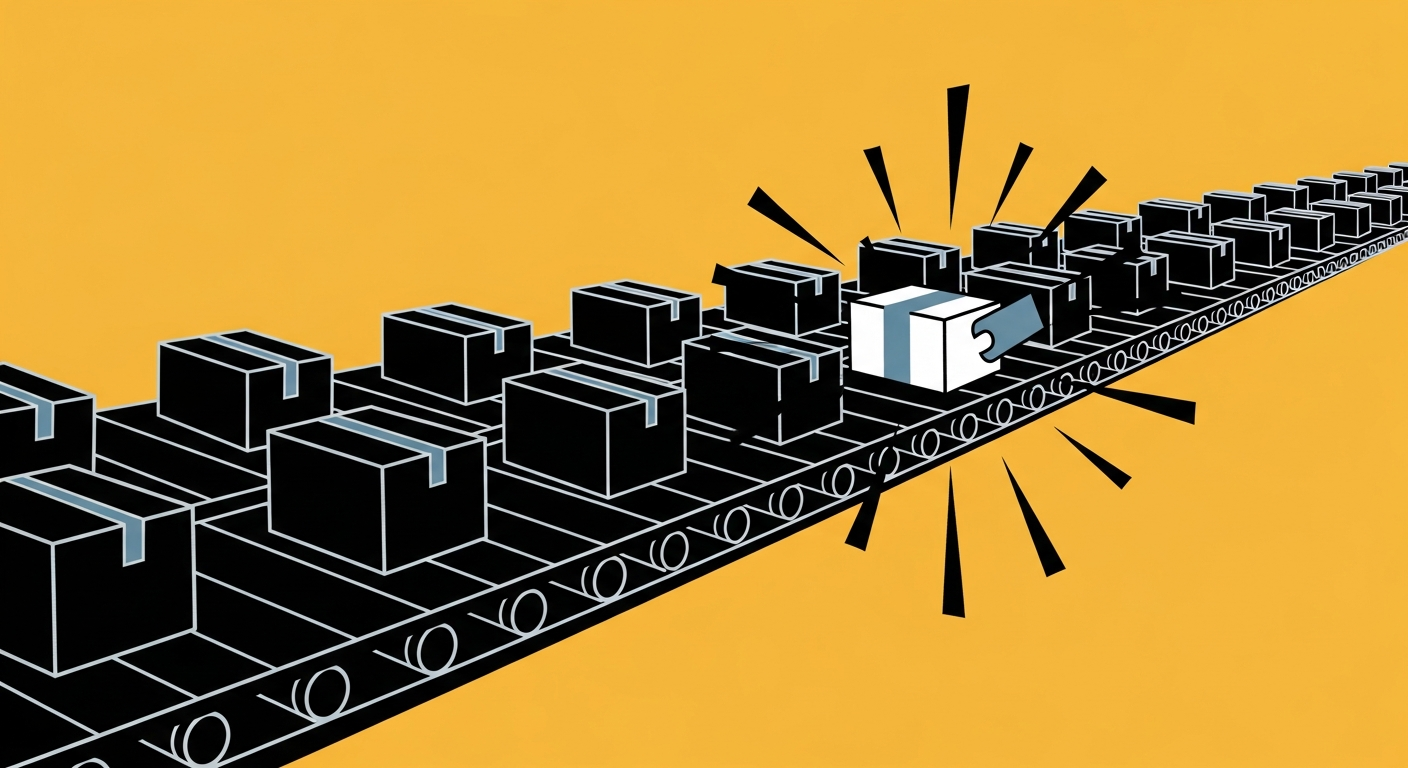
Brand salience determines whether your brand is the one buyers think of first when they are ready to spend money. It is the single most undervalued metric in modern brand strategy, and the brands that master it, Coca-Cola, Nike, Starbucks, consistently convert mental availability into market share.
Most marketers confuse it with brand awareness.
What Is Brand Salience?
Brand salience is the probability that a consumer will think about your brand in a buying situation. Jenni Romaniuk and Byron Sharp, researchers at the Ehrenberg-Bass Institute, define it as “a brand’s propensity to be noticed or come to mind in buying situations” in their foundational paper Conceptualizing and Measuring Brand Salience. The definition matters because it ties salience directly to revenue, not to vague “visibility.”
Consider a traveler who lands in an unfamiliar city and needs coffee.
Starbucks surfaces instantly. Not because the traveler has researched every local cafe, but because Starbucks owns the strongest memory structures linked to “coffee on the go.” That instant recall is brand salience in action. The traveler may know dozens of coffee brands (awareness), but only one or two come to mind in the moment of need (salience).
High brand salience means your brand occupies a privileged position in the buyer’s memory network. It means less reliance on paid media to generate consideration.
Bain Consulting found that up to 90% of B2B purchases go to brands already on the buyer’s shortlist before research even begins. In consumer markets the dynamic is even more pronounced. Shoppers rarely evaluate a full set of alternatives. They pick from a mental shortlist of two or three brands, and salience determines which brands make that list.
Brand Salience vs. Brand Awareness
Marketers use these terms interchangeably, but they measure fundamentally different things.
| Dimension | Brand Awareness | Brand Salience |
|---|---|---|
| What it measures | Whether consumers recognize or recall your brand at all | Whether consumers think of your brand when ready to buy |
| When it matters | At any point in the customer journey | At the moment of purchase decision |
| Depth | Broad but shallow (“I’ve heard of them”) | Deep and contextual (“That’s who I’d buy from”) |
| Revenue link | Indirect | Direct |
| Example | Most people know Apple exists | When shopping for a $200 phone, Android brands are more salient than Apple |
| Measurement | Aided and unaided recall surveys | Category entry point mapping and mental market share |
The critical insight: awareness is necessary but not sufficient.
A brand can have near-universal awareness and still lose at the point of purchase. Apple has almost 100% awareness globally, yet in the budget smartphone category, brands like Xiaomi and Samsung hold higher salience because buyers in that context associate those brands with the problem they are solving. Brand positioning determines which buying situations your brand owns.
This distinction reshapes how you allocate budget. Awareness campaigns cast a wide net. Salience-building campaigns target specific purchase occasions and anchor your brand to them through repeated, distinctive cues.
The Psychology Behind Brand Salience: Memory Structures
Brand salience lives in the brain’s associative memory network.
Every time a consumer encounters your brand, their brain creates or strengthens a link between your brand and a context: a need, an emotion, a sensory cue. Romaniuk and Sharp call these memory structures. The more memory structures a brand owns, and the fresher and stronger those structures are, the more likely the brand is to surface when a related buying situation arises.
Two principles govern how memory structures drive salience.
Quantity: More Links Mean Higher Salience
A brand connected to many different memory structures has more “hooks” in the buyer’s mind. Mailchimp, for example, does not just link itself to “email marketing.” Through years of distinctive advertising, podcast sponsorships, and a memorable brand mascot, Mailchimp has built connections to small business growth, creative entrepreneurship, and marketing automation broadly. When a small business owner needs any marketing tool, Mailchimp’s name surfaces because the memory network is wide.
Quality: Stronger Links Mean Lasting Salience
Personal relevance and emotional resonance create durable memory structures that resist decay.
A consumer who has used an iPhone for a decade and relies on the Apple ecosystem daily holds deep, high-quality memory structures for Apple. These connections are reinforced through daily use, not just advertising. They make Apple’s salience almost unshakable in that consumer’s technology purchase decisions. This is why brands that penetrate daily habits, like Google Search or Starbucks morning rituals, maintain salience with less ongoing ad spend.
For practitioners, the implication is clear: you build salience by increasing both the number and the strength of memory links between your brand and the buying situations that matter most.
How to Build Brand Salience: 5 Strategies That Work
Building brand salience is not a single campaign. It is a long-term discipline that compounds over time. Here are five strategies grounded in how memory and attention actually work.
1. Own Your Category Entry Points
A category entry point (CEP) is any cue, situation, or trigger that prompts a buyer to think about the category your brand competes in. Romaniuk defines CEPs as “the cues that category buyers use to access their memories when faced with a buying situation.”
For a coffee brand, CEPs include “tired in the morning,” “meeting a friend,” and “need an afternoon pick-me-up.” For a project management tool, CEPs include “team missed a deadline” and “onboarding a new hire.” Identify your category’s top CEPs through customer research, then build campaigns that anchor your brand to those specific moments. The more CEPs your brand owns, the wider your mental availability.
2. Build Distinctive Brand Assets
Distinctive assets are the sensory cues that make your brand instantly recognizable without needing to see the brand name.
Nike’s swoosh, Intel’s five-note audio signature, Coca-Cola’s contour bottle, and Tiffany’s robin-egg blue are all distinctive assets that trigger instant brand recognition. These assets do the heavy lifting of salience because they work at the speed of perception, faster than any rational message. Invest in creating and consistently deploying brand elements that are unique to you: color palettes, sonic logos, typography, mascots, and packaging shapes.
In B2B, Salesforce’s cloud logo and HubSpot’s sprocket serve the same function.
3. Position Clearly and Narrowly
Brands that try to mean everything to everyone end up meaning nothing to anyone at the moment of purchase. Clear market positioning means your brand is linked to a specific outcome in a specific context. Volvo owns “safety.” FedEx owns “overnight delivery.” The narrower the association, the stronger the memory link and the higher the salience in that buying situation.
4. Stay Consistently Present Across Channels
Memory structures decay without reinforcement.
A brand that advertises heavily for three months then goes dark for nine loses salience to competitors who maintain steady presence. Les Binet and Peter Field’s research on advertising effectiveness shows that continuous “always on” investment outperforms burst campaigns for long-term brand building. Consistent messaging across social media, content marketing, email, and paid media keeps memory structures fresh. Brands with consistent presentation across platforms see revenue increases of up to 23%, according to a Lucidpress (now Marq) State of Brand Consistency study.
The channel matters less than the consistency of the memory cues delivered through it.
5. Create Emotional Resonance
Emotional experiences create stronger, more durable memory traces than rational messages. This is well-documented in neuroscience and confirmed by advertising effectiveness research.
VRBO does not sell vacation rentals. It sells the feeling of a family reunion in a house big enough for everyone. Nike does not sell shoes. It sells the belief that athletic achievement is within reach. These emotional connections create high-quality memory structures that persist long after the ad has run. When practitioners build campaigns, the question should not be “what do we want to say?” but “what do we want people to feel and remember?”
How to Measure Brand Salience
Brand salience is not a single metric you pull from Google Analytics. It requires primary research designed to map how your brand shows up in buyer memory.
Step 1: Identify Category Entry Points Through Qualitative Research
Interview 15 to 20 category buyers and ask open-ended questions about when, where, and why they think about buying in your category. Do not mention your brand. The goal is to surface the natural cues and situations that trigger purchase consideration.
Step 2: Map CEPs to Brands Using Quantitative Surveys
Present a randomized list of the CEPs you identified and ask respondents which brands come to mind for each one.
For example, present the cue “I need a quick, healthy lunch” and let respondents list the brands they associate with it. Repeat across all major CEPs. The result is a matrix showing which brands own which entry points and where your brand has gaps.
Dan White, author of The Smart Branding Book, calls this output “mental market share.” It is the most actionable salience metric available because it tells you exactly where to invest.
Step 3: Track Distinctive Asset Recognition
Test whether consumers can correctly identify your brand from its distinctive assets alone, without the brand name visible. Show your color palette, your logo mark, your sonic cue, or your packaging shape. High recognition rates indicate strong salience infrastructure. Low rates signal that your assets are not yet distinctive enough to carry memory on their own.
Step 4: Monitor With Ongoing Brand Tracking
Salience is not static.
Run quarterly tracking surveys to measure shifts in mental market share, CEP ownership, and spontaneous brand recall. Compare your trajectory against key competitors. Focus groups add qualitative depth by letting you explore why certain associations are strengthening or weakening. Social listening tools like Meltwater can supplement survey data by revealing how often and in what contexts consumers mention your brand organically.
Kevin Keller’s Brand Salience Model
Marketing professor Kevin Lane Keller, author of Strategic Brand Management, places salience at the foundation of his Customer-Based Brand Equity (CBBE) pyramid.
The model has four levels, each building on the one below.
| Level | Question It Answers | Brand Building Block |
|---|---|---|
| 1. Identity (Base) | Who are you? | Brand Salience |
| 2. Meaning | What are you? | Performance and Imagery |
| 3. Response | What do I think or feel about you? | Judgments and Feelings |
| 4. Relationships (Peak) | What connection do I have with you? | Resonance |
Salience sits at the base because nothing else matters if the buyer does not think of your brand in the first place.
You cannot build meaning, trigger emotional responses, or create loyalty for a brand that never enters the buyer’s consideration set. This is why Keller’s framework validates the practitioner instinct: before you invest in differentiation, storytelling, or loyalty programs, make sure you have solved the salience problem first. Many brands skip this step and wonder why their beautifully crafted messaging fails to generate pipeline.
The model applies equally to B2B and B2C contexts, as demonstrated by how Salesforce, HubSpot, and Intel have systematically built salience through distinctive assets and consistent category presence.
Brand Salience in Practice: Lessons From Top Brands
Theory is useful. Execution is what separates winners from the rest.
Nike has built one of the highest-salience brands on earth through a combination of a universally recognized distinctive asset (the swoosh), an ownable tagline (“Just Do It”), and relentless linkage to the category entry point of athletic aspiration. When a runner laces up shoes or a teenager imagines their first basketball dunk, Nike surfaces. That is not luck. It is the result of decades of disciplined brand positioning and creative investment.
Coca-Cola takes a different approach, anchoring its salience to social occasions and emotional warmth rather than product attributes.
The brand’s contour bottle, its red-and-white color scheme, and its association with holidays and gatherings create a memory network so dense that “cola” and “Coca-Cola” are nearly synonymous in most markets. A SWOT analysis of Nike or a look at Coca-Cola’s brand equity trajectory reveals that both brands invested in salience long before they invested in performance marketing. The lesson for practitioners: salience is the foundation, not the finish line.
Frequently Asked Questions
What is the difference between brand salience and brand equity?
Brand equity is the total commercial value a brand adds to a product beyond its functional benefits, including loyalty, perceived quality, and associations. Brand salience is one component of brand equity. It specifically measures whether the brand comes to mind at purchase time. You can have strong equity (loyal customers, premium pricing power) among existing buyers while still having weak salience among non-customers who never think of you in the first place.
Can a small brand achieve high brand salience?
Yes, within a defined category and target audience. Salience does not require universal fame. A regional craft brewery can achieve dominant salience in its local market by owning the “Friday night with friends” category entry point through consistent local presence, distinctive tap handles, and community events. The key is narrowing the scope to a category and audience where your memory structures can be the densest.
How long does it take to build brand salience?
Meaningful salience shifts typically require 12 to 18 months of consistent brand activity. Memory structures build incrementally through repeated exposure, and they decay when investment stops. Brands that expect salience gains from a single quarter of advertising will be disappointed. The compounding effect rewards patience: each exposure strengthens existing memory links and creates new ones, making subsequent exposures more efficient.
Does digital marketing build brand salience or just performance metrics?
Both, if done correctly. Most digital campaigns optimize for clicks and conversions, which builds short-term performance but not memory structures. To build salience through digital channels, brands need to invest in brand-building creative, such as video, distinctive display formats, and social content that reinforces brand cues rather than just driving action. Byron Sharp’s research in How Brands Grow confirms that reach and mental availability matter more than hyper-targeting for long-term growth.
What role does brand awareness play in brand salience?
Awareness is the prerequisite. A buyer cannot recall a brand they have never heard of. But awareness alone does not guarantee salience. The gap between the two is filled by distinctive assets, emotional associations, and consistent presence at category entry points. Think of awareness as the door and salience as the reason someone walks through it at purchase time.
Building Brand Salience Is a Long Game Worth Playing
Brand salience is the most direct path from brand investment to revenue growth. It determines whether your brand makes the buyer’s mental shortlist, and that shortlist determines who wins.
The brands that dominate their categories, Nike, Coca-Cola, Apple, Starbucks, did not get there by outspending competitors on performance media alone. They built dense networks of memory structures linked to the buying situations that matter most. They invested in distinctive assets that work at the speed of perception. And they stayed consistently present, year after year, reinforcing those connections.
For practitioners, the playbook is clear: identify your category entry points, build distinctive assets, position narrowly, and invest consistently over time.