The business model canvas is the most widely used one-page framework for mapping how a company creates, delivers, and captures value. Alexander Osterwalder introduced it in his 2010 book Business Model Generation, and since then everyone from Y Combinator startups to Fortune 500 strategy teams has adopted it as their default planning tool.
Yet most business model canvas examples online list the nine blocks and stop there. This article goes further: it breaks down 10 real company canvases with practitioner commentary on why each block works, compares business models side by side, and gives you a step-by-step process for building your own canvas from competitive data rather than guesswork.
What Is the Business Model Canvas?
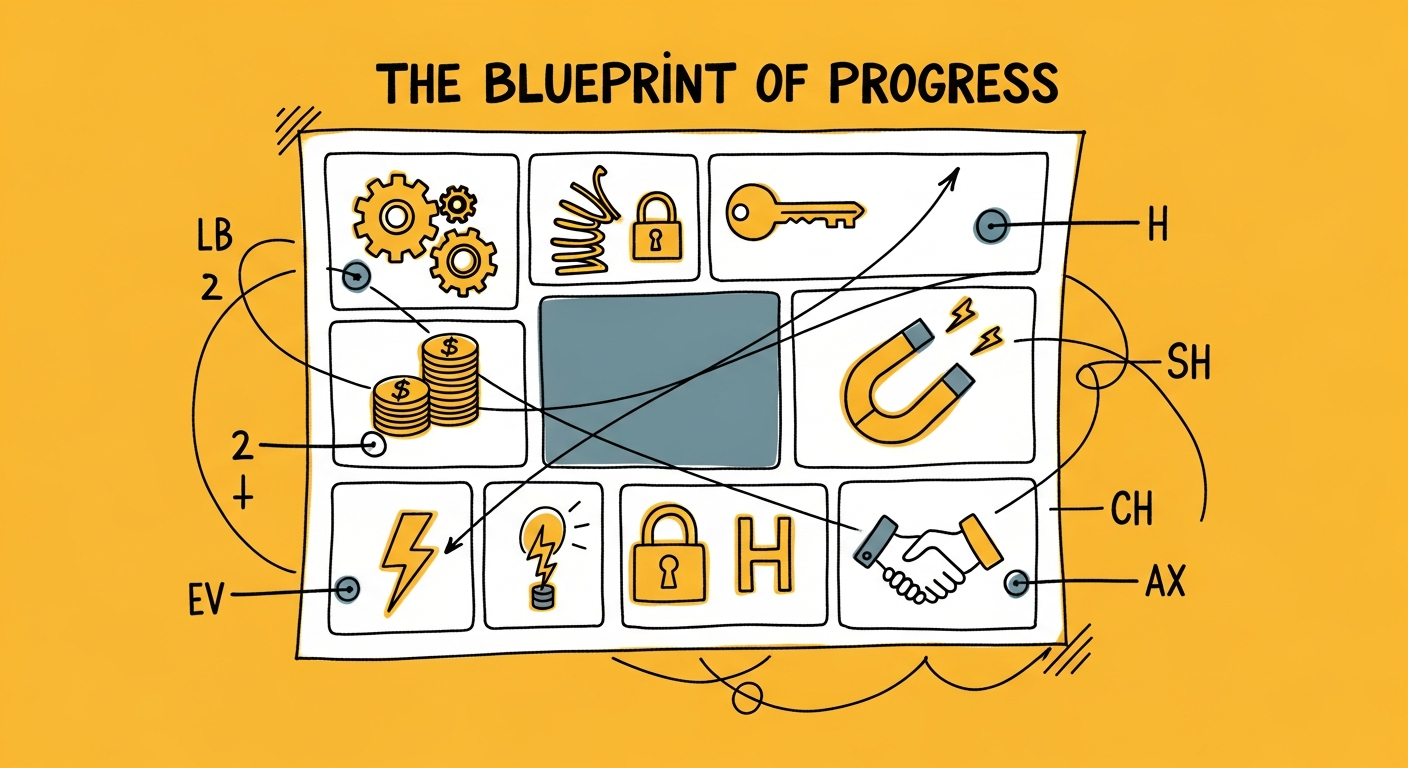
The business model canvas is a strategic management tool that maps nine interdependent building blocks onto a single page.
Osterwalder and co-author Yves Pigneur designed it to replace traditional 40-page business plans with a visual framework that teams can iterate on in hours, not weeks. The canvas forces clarity because every block must connect logically to the others. A value proposition that does not match the customer segment makes the disconnect immediately visible. A revenue stream that requires a channel you have not built exposes the gap before you spend money on it.
Over 5 million copies of Business Model Generation have sold globally. The framework has become standard curriculum at business schools including Harvard, Stanford, and INSEAD, and consulting firms like McKinsey and Bain use modified versions during strategy engagements.
The 9 Building Blocks of the Business Model Canvas
Every business model canvas contains the same nine blocks, but how you fill them determines whether you have a defensible business or a collection of assumptions.
The right side of the canvas covers value creation and customer-facing elements. The left side covers operational infrastructure and cost. The table below defines each block with a practitioner lens on what most teams get wrong.
| Building Block | What It Answers | Common Mistake |
|---|---|---|
| Customer Segments | Who are you creating value for? | Listing demographics instead of needs-based segments |
| Value Propositions | What problem do you solve or need do you fulfill? | Describing features instead of outcomes |
| Channels | How do you reach and deliver value to customers? | Ignoring post-purchase support channels |
| Customer Relationships | What type of relationship does each segment expect? | Assuming one relationship type fits all segments |
| Revenue Streams | How does each segment pay, and how much? | Listing only primary revenue and ignoring ancillary streams |
| Key Resources | What assets are essential to deliver the value proposition? | Conflating “nice to have” resources with truly essential ones |
| Key Activities | What must you do exceptionally well? | Listing every activity instead of only strategic ones |
| Key Partnerships | Who helps you deliver what you cannot do alone? | Treating vendors as partners when they are suppliers |
| Cost Structure | What are the major costs inherent in the model? | Underestimating customer acquisition cost |
The blocks do not exist in isolation. Customer segments drive value propositions. Value propositions determine channels. Channels influence cost structure. In practice, most teams start by filling in the blocks they know, then use the canvas to expose the blocks they are guessing about.
10 Business Model Canvas Examples from Real Companies
Theory means nothing without application. The following 10 examples break down how leading companies fill each canvas block, with commentary on the strategic logic behind their choices.
1. Airbnb Business Model Canvas
Airbnb operates a platform business model connecting hosts who have spare space with travelers seeking alternatives to hotels.
Customer Segments: Two-sided market. Hosts seeking income from unused property. Travelers wanting local, affordable accommodation. Business travelers needing extended-stay options.
Value Proposition: For hosts, monetization of idle assets with insurance protection. For guests, unique local experiences at lower cost than hotels. For both, a trust system built on reviews and verified identity.
Channels: Mobile app, website, SEO-driven content, social media, partnerships with local tourism boards. The app handles the entire customer journey from discovery through post-stay review.
Revenue Streams: Service fees from both hosts (3%) and guests (up to 14.2%). Airbnb Experiences commissions.
Key Resources: Platform technology, brand trust, global host network, data analytics infrastructure, customer service operations.
Cost Structure: Technology development, customer support, marketing, regulatory compliance, insurance programs. The asset-light model means Airbnb owns zero real estate.
2. Netflix Business Model Canvas
Netflix has evolved from DVD-by-mail to the world’s largest streaming platform, with a business model built on subscription revenue and original content investment.
Customer Segments: Entertainment consumers across 190+ countries. Sub-segments include binge-watchers, families, documentary enthusiasts, and anime fans. Netflix uses behavioral data rather than demographics for segmentation.
Value Proposition: Unlimited on-demand content for a flat monthly fee. No ads on premium tiers. Personalized recommendations powered by algorithms that surface relevant content from a library of thousands of titles.
Channels: Direct-to-consumer app across smart TVs, mobile devices, tablets, and gaming consoles. No intermediary distribution.
Revenue Streams: Tiered monthly subscriptions ranging from $7.99 (Standard with Ads) to $24.99 (Premium) in the US as of 2025. Advertising revenue from the ad-supported tier launched in 2022.
Key Activities: Content production and acquisition, algorithm development, platform engineering, global expansion. Netflix spent approximately $17 billion on content in 2024.
Cost Structure: Content is the dominant cost at roughly 65% of revenue. Technology infrastructure, marketing, and general administration account for the remainder. The high fixed-cost model means each additional subscriber carries near-zero marginal cost.
3. Tesla Business Model Canvas
Tesla combines automotive manufacturing with energy solutions and software, creating a vertically integrated model that looks nothing like a traditional automaker.
Customer Segments: Environmentally conscious consumers, technology early adopters, premium car buyers, fleet operators, and commercial energy clients.
Value Proposition: High-performance electric vehicles with industry-leading range, over-the-air software updates, and the largest proprietary charging network. Tesla sells a technology ownership experience, not just a car. The Supercharger network eliminates range anxiety, which remains the primary barrier to EV adoption.
Revenue Streams: Vehicle sales (approximately 79-85% of revenue depending on the year), energy generation and storage products, regulatory credit sales to other automakers, Full Self-Driving subscriptions, and service revenue.
Key Partnerships: Battery suppliers (Panasonic, CATL), semiconductor manufacturers, raw material suppliers for lithium and nickel. Tesla also partners with governments for factory incentives and charging infrastructure subsidies.
Cost Structure: Manufacturing facilities (Gigafactories), R&D for battery technology and autonomous driving, raw materials, workforce, and Supercharger network expansion. Tesla’s vertical integration strategy increases capital expenditure but reduces long-term dependence on suppliers.
4. Uber Business Model Canvas
Uber runs a multi-sided platform connecting riders, drivers, and merchants (through Uber Eats).
Customer Segments: Urban commuters, business travelers, riders without personal vehicles, restaurant owners seeking delivery reach, and drivers seeking flexible income.
Value Proposition: For riders, on-demand transportation at transparent pricing. For drivers, flexible earning opportunities with no fixed schedule. For restaurants, access to a massive delivery network without building their own logistics.
Key Activities: Platform development, driver onboarding and retention, dynamic pricing optimization, regulatory navigation, safety system management. The algorithm that matches riders to nearby drivers and adjusts surge pricing is the core operational engine.
Cost Structure: Driver incentives, technology development, marketing, legal and regulatory costs, insurance. Uber operates at lower margins than most technology companies because drivers typically receive approximately 75% of the fare on a given ride.
5. Spotify Business Model Canvas
Spotify dominates music streaming with a freemium model that converts free listeners into paying subscribers.
Customer Segments: Music listeners (free and premium), podcasters, artists, and advertisers targeting the free tier. Spotify reached 675 million monthly active users by the end of 2024.
Value Proposition: Access to over 100 million songs and 6 million podcast titles. For free users, ad-supported listening with shuffle limitations. For premium subscribers, offline downloads, ad-free playback, and higher audio quality. For artists, global distribution and listener analytics.
Revenue Streams: Premium subscriptions account for approximately 87% of revenue. Advertising revenue from the free tier provides the remaining 13%. Spotify Marketplace offers paid promotional tools for artists and labels.
Key Partnerships: Record labels (Universal, Sony, Warner), podcast creators, device manufacturers (Samsung, PlayStation, Sonos), and telecommunications companies offering bundled plans.
6. Amazon Business Model Canvas
Amazon operates multiple business models under one corporate umbrella, which is precisely why its canvas is instructive for strategists.
Customer Segments: Online shoppers, third-party sellers, enterprise cloud computing clients (AWS), content consumers (Prime Video), smart home users (Alexa), and advertisers.
Value Proposition: For shoppers, the widest selection at competitive prices with fast, reliable delivery. For sellers, access to hundreds of millions of active customers plus fulfillment infrastructure. For AWS clients, scalable cloud computing without upfront hardware investment. Each segment gets a distinct value proposition, but all share Amazon’s logistics backbone.
Revenue Streams: E-commerce product sales, third-party seller fees and commissions, AWS cloud services, advertising, Prime membership fees, and subscription services. AWS generated over $107 billion in annual revenue in 2024.
Key Resources: Fulfillment centers (over 175 globally), AWS data centers, logistics fleet, Prime membership base, customer data, and the Alexa ecosystem.
7. Google Business Model Canvas
Google’s business model is deceptively simple: provide free products to billions of users and monetize through advertising.
Customer Segments: Internet users searching for information, advertisers seeking targeted reach, Android device users, enterprise clients (Google Workspace), and developers building on Google Cloud.
Value Proposition: For users, the most relevant search results, free email, free cloud storage, and free navigation. For advertisers, the ability to reach consumers at the exact moment of purchase intent. Google Ads delivers measurable ROI through cost-per-click pricing that smaller advertisers can afford.
Revenue Streams: Advertising (Google Search, YouTube, Display Network) accounts for approximately 72-77% of Alphabet’s total revenue. Google Cloud contributes roughly 12%. Hardware, Play Store commissions, and subscriptions make up the remainder.
Cost Structure: Data centers, talent acquisition (Google consistently ranks among the highest-paying tech employers), traffic acquisition costs paid to distribution partners like Apple, and content acquisition for YouTube.
8. Starbucks Business Model Canvas
Starbucks sells more than coffee. Its business model canvas reveals a company built on experience, loyalty, and real estate strategy.
Customer Segments: Daily coffee consumers, remote workers needing workspace, premium beverage buyers, and loyal rewards program members. Starbucks Rewards has over 34 million active members in the US alone.
Value Proposition: A consistent “third place” experience between home and office, premium beverages customized to individual taste, and a loyalty program that creates switching costs. The mobile order-ahead feature removes friction from the purchase process.
Channels: Company-operated stores (approximately 52% of total), licensed stores, mobile app, drive-through, delivery partnerships (DoorDash, Uber Eats), and packaged goods sold through grocery retailers.
Key Activities: Store operations, supply chain management for ethically sourced coffee beans, beverage innovation, loyalty program management, and real estate selection. Location strategy is arguably the most critical activity because foot traffic determines unit economics.
9. Nike Business Model Canvas
Nike’s canvas illustrates a brand-led business model where marketing and storytelling drive premium pricing.
Customer Segments: Athletes (professional and recreational), fashion-conscious consumers, sneaker collectors, and institutional buyers (sports teams, schools). Nike uses psychographic market segmentation based on athletic identity rather than income brackets.
Value Proposition: Performance innovation backed by athlete endorsements and cultural relevance. Nike does not sell shoes. It sells aspiration, identity, and belonging. The “Just Do It” positioning connects product performance to personal achievement.
Key Partnerships: Manufacturing partners in Vietnam, Indonesia, and China. Athlete endorsement deals (LeBron James, Cristiano Ronaldo). Retail distribution partners and technology collaborators. Nike’s direct-to-consumer shift means the company is reducing wholesale partnerships to control brand experience.
Revenue Streams: Footwear (approximately 66% of revenue), apparel (27%), and equipment (7%). Direct-to-consumer sales through Nike.com and owned stores now represent approximately 44% of Nike brand revenue, up from 32% in fiscal 2019.
10. LinkedIn Business Model Canvas
LinkedIn monetizes professional identity and career data, operating a business model that most social networks cannot replicate.
Customer Segments: Job seekers, recruiters, sales professionals, content creators, advertisers, and learning-focused professionals.
Value Proposition: For professionals, a verified career identity and networking platform. For recruiters, access to passive candidates who are not actively job hunting. For sales teams, account intelligence and direct access to decision-makers through Sales Navigator. For advertisers, targeting by job title, company size, industry, and seniority.
Revenue Streams: Talent Solutions (recruiter tools and job postings) generates the largest share. LinkedIn Premium subscriptions, Sales Navigator licenses, advertising, and LinkedIn Learning subscriptions contribute the remaining revenue. Microsoft acquired LinkedIn for $26.2 billion in 2016 and reports it within the Productivity segment.
Business Model Canvas Examples Compared: Platform vs. Product vs. Service
Seeing individual canvases is useful. Comparing them reveals the strategic patterns that separate business model types.
The table below contrasts three dominant model types using companies from the examples above. Understanding these differences matters because the model type determines which blocks carry the most strategic weight. Platform businesses live and die by their network effects. Product businesses depend on supply chain and innovation. Service businesses hinge on customer relationships and customer lifetime value.
| Canvas Block | Platform (Airbnb) | Product (Tesla) | Service (Starbucks) |
|---|---|---|---|
| Value Proposition | Connects supply and demand | Innovation and performance | Experience and consistency |
| Key Resource | Network of users | IP, factories, R&D | Locations, brand, staff |
| Revenue Model | Transaction fees | Unit sales + software | Per-unit + loyalty program |
| Cost Driver | Technology + trust systems | Manufacturing + materials | Real estate + labor |
| Scalability | High (asset-light) | Medium (capital-intensive) | Low (location-bound) |
| Defensibility | Network effects | Vertical integration + IP | Brand + habit formation |
The comparison reveals a critical insight: the canvas block that matters most changes depending on your business model type. If you run a platform, obsess over customer segments and network effects. If you sell a product, invest in key resources and partnerships. If you deliver a service, prioritize customer relationships and channel experience.
How to Build Your Own Business Model Canvas: Step-by-Step
Most teams fill in the canvas from top-left to bottom-right. That approach produces a canvas full of assumptions because it starts with infrastructure instead of customers.
Start with the right side. Validate before moving left. Here is the sequence that produces the most accurate canvas based on how successful companies actually operate.
Step 1: Define Customer Segments First
List every distinct group that pays you or could pay you. Do not use demographics alone. Group customers by the problem they hire your product to solve. A 25-year-old startup founder and a 55-year-old corporate VP might occupy the same segment if they share the same unmet need.
Step 2: Map the Value Proposition for Each Segment
Write one sentence per segment explaining the outcome you deliver. Not features. Outcomes. “Save 4 hours per week on reporting” beats “automated dashboard.” Test each proposition by asking: would this segment switch from their current solution based on this claim alone? If the answer is no, the proposition is too weak.
Use the value proposition canvas (also by Osterwalder) as a companion tool to map customer jobs, pains, and gains against your product’s pain relievers and gain creators.
Step 3: Identify Channels and Customer Relationships
Map how each segment discovers, evaluates, purchases, receives, and gets support for your product. Most businesses have five to seven touchpoints across the customer journey. List them all, then identify which ones are broken or missing.
Step 4: Define Revenue Streams
For each segment, document how money flows. Subscription, transaction fee, licensing, advertising, freemium conversion. Be specific about pricing: “SaaS subscription at $49/month per seat” is useful. “Subscription revenue” is not.
Step 5: Build the Left Side (Resources, Activities, Partners, Costs)
Now work backward from the right side. Ask: what do we need to deliver this value proposition through these channels? List only resources that are truly essential, not every asset you happen to own. The same filter applies to key activities: if an activity does not directly support a value proposition, it is operational overhead, not a strategic activity.
Conduct a competitive analysis at this stage to identify which resources and partnerships your competitors have that you lack. This gap analysis often reveals the investments required to make your canvas viable.
5 Mistakes That Ruin Business Model Canvas Exercises
After reviewing hundreds of canvases from startups and corporate strategy teams, these five errors appear repeatedly.
Mistake 1: Treating It as a One-Time Exercise
A canvas filled in once during a strategy offsite and never updated is a wall decoration, not a strategic tool. The companies in the examples above update their models continuously. Netflix has changed its canvas fundamentally three times: DVD-by-mail, streaming with licensed content, and streaming with original content. Each shift required rewriting nearly every block.
Mistake 2: Confusing Activities with Value Propositions
“We build software” is an activity, not a value proposition. “We reduce invoice processing time by 80%” is a value proposition. Most teams describe what they do rather than what the customer gets.
Mistake 3: Ignoring the Cost Structure
Teams spend hours on the right side of the canvas and fill in costs as an afterthought. This leads to business models that look compelling on paper but lose money on every transaction. The cost structure block should include customer acquisition cost, not just operational expenses. If acquiring a customer costs more than the revenue that customer generates over their lifetime, the model fails regardless of how strong the value proposition is.
Mistake 4: Listing Too Many Customer Segments
When everything is a priority, nothing is. Startups should have one to three segments. Even large corporations like Amazon operate distinct canvases for each major business unit rather than cramming everything onto a single page.
Mistake 5: Skipping Competitive Validation
Your canvas does not exist in isolation. Every block should be tested against what competitors offer. If three competitors already deliver the same value proposition through the same channels, your canvas describes an undifferentiated business. Use tools like a competitive analysis framework to pressure-test each block before you commit resources.
Business Model Canvas vs. Lean Canvas vs. SWOT Analysis
The business model canvas is not the only strategic framework available. Knowing when to use each tool prevents wasted effort.
The Lean Canvas, created by Ash Maurya, replaces four blocks from Osterwalder’s original: Key Partners becomes Problem, Key Activities becomes Solution, Key Resources becomes Key Metrics, and Customer Relationships becomes Unfair Advantage. It is designed for early-stage startups validating a new idea, not for established companies mapping an existing business. If your product already has paying customers, use the business model canvas. If you are still testing whether the problem exists, use the Lean Canvas.
A SWOT analysis serves a different purpose entirely. SWOT evaluates a company’s strategic position (Strengths, Weaknesses, Opportunities, Threats) but does not map how the business operates. You can use SWOT to identify what needs to change, then use the business model canvas to design the new operating model. The hedgehog concept, another popular strategic framework, helps narrow focus to the intersection of passion, skill, and economic viability before you fill in the canvas blocks.
| Framework | Best For | When to Use | Limitations |
|---|---|---|---|
| Business Model Canvas | Mapping an existing or planned business model | Strategy planning, investor communication, team alignment | Does not prioritize assumptions or measure risk |
| Lean Canvas | Testing a startup hypothesis | Pre-product/market fit, early validation | Less useful for multi-product or enterprise businesses |
| SWOT Analysis | Evaluating strategic position | Annual planning, competitive assessment | Descriptive, not prescriptive. Does not map operations |
| Value Proposition Canvas | Deep-diving customer needs vs. product fit | Product development, messaging refinement | Narrow scope. Only covers one canvas block in depth |
Using the Business Model Canvas for Competitive Strategy
The most underused application of the canvas is competitive intelligence.
Fill in a canvas for each of your top three competitors based on publicly available information: annual reports, job postings, pricing pages, customer reviews, and press coverage. Then place your canvas next to theirs. The blocks where you are identical represent undifferentiated territory. The blocks where you differ represent your potential competitive advantage.
This exercise works because it moves competitive analysis from abstract (“they’re cheaper”) to structural (“they achieve lower cost through key partnerships with offshore manufacturers, which we cannot replicate, so we must compete on customer relationships instead”). Mapping competitors onto the canvas also reveals vulnerabilities. If a competitor’s entire revenue stream depends on a single customer segment, a shift in that segment’s behavior creates an opening.
For a deeper framework on building sustainable differentiation, explore the market positioning strategy process. Positioning and business model design are two sides of the same strategic coin: your canvas describes how you operate, your positioning describes how customers perceive you.
Frequently Asked Questions
What is the purpose of a business model canvas?
The business model canvas provides a visual, one-page framework that maps how a company creates value for customers, delivers that value through channels and relationships, and captures revenue. It replaces lengthy business plans with a tool that teams can build, debate, and iterate on in a single workshop session. The primary purpose is alignment: ensuring every team member shares the same understanding of how the business operates and which assumptions still need validation.
How often should you update a business model canvas?
Review and update your canvas quarterly, or whenever a significant market shift occurs. A new competitor, a change in customer behavior, a regulatory change, or a pricing experiment that outperforms expectations are all triggers for a canvas update. Companies like Netflix and Amazon have rewritten their canvases multiple times as their business models evolved. Treating the canvas as a static document defeats its purpose.
Can startups use the business model canvas?
Yes, but startups in the pre-revenue stage may benefit more from the Lean Canvas, which prioritizes problem validation and key metrics over partnerships and cost structure. Once a startup has paying customers and a repeatable sales process, switching to the full business model canvas provides a more complete strategic view. Many accelerators, including Y Combinator and Techstars, use lean methodology tools and the business model canvas as standard frameworks for startup development.
What is the difference between a business model canvas and a business plan?
A business plan is a 20-to-40-page document that includes financial projections, market research, management bios, and operational details. A business model canvas is a one-page visual that captures only the nine essential building blocks of how the business works. The canvas is faster to create, easier to update, and better for team collaboration. Business plans remain useful for bank loans and formal investor presentations, but the canvas has largely replaced them for internal strategy work and startup pitch preparation.
Which block of the business model canvas is most important?
The value proposition is the anchor block. Every other block exists to support it. If your value proposition does not resonate with your target customer segments, no amount of optimization in channels, partnerships, or cost structure will save the business. Start there, validate it with real customer feedback, and build outward.
Build a Canvas That Actually Gets Used
The difference between a useful business model canvas and a forgettable one comes down to evidence.
Fill each block with data, not opinions. Use customer interviews for the right side, financial records for the left side, and competitive research for validation. Pin the canvas where your team can see it daily, mark the assumptions that still need testing, and schedule quarterly reviews to update it as the market shifts.
The 10 examples in this article show how companies at very different scales and in very different industries all use the same nine blocks. The framework works. The variable is whether you treat it as a living strategy document or a one-time exercise.
- Strategic Planning Examples: Frameworks and Real-World Applications
- Value Proposition Examples: How Leading Brands Define Their Promise
- The Hedgehog Concept Explained: Finding Your Strategic Focus
- Brand Architecture Types: How Companies Organize Multiple Brands
- Market Positioning Strategy: Types, Frameworks, and Examples