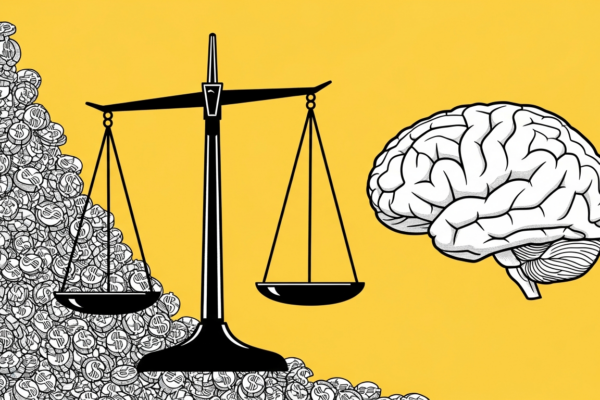
The human brain processes approximately 11 million bits of sensory information per second. Conscious thought handles about 50. The gap is filled by cognitive biases: mental shortcuts that allow rapid decision-making by simplifying complex information. These shortcuts are not flaws. They are survival mechanisms. But they create predictable patterns of irrational behavior that advertisers can leverage to influence purchase decisions.
Understanding these biases is the difference between designing ads that work with the brain and designing ads that work against it.
What Are Cognitive Biases?
Why Cognitive Biases Matter in Advertising
Every ad competes for attention in an environment of information overload. Consumers do not rationally evaluate each message they encounter. They use cognitive shortcuts to filter, process, and decide. Advertisements that align with these shortcuts are processed more easily, remembered more readily, and acted upon more frequently.
Dan Ariely, behavioral economist and author of Predictably Irrational, demonstrated that these biases are not random. They are predictable and consistent across populations, cultures, and demographics. This predictability is what makes them useful for advertisers.
The Science Behind Biased Decision-Making
Kahneman’s dual-process theory divides thinking into System 1 (fast, automatic, biased) and System 2 (slow, deliberate, rational). Advertising primarily targets System 1 because most brand interactions occur in low-attention contexts: scrolling social media, driving past billboards, watching TV between shows. In these contexts, cognitive biases dominate decision-making because System 2 is not engaged.
The implication for advertisers is straightforward. Design for System 1. Use biases as design principles, not afterthoughts.
12 Cognitive Biases Every Advertiser Should Know
1. Anchoring Bias
The first number a consumer sees becomes the reference point for all subsequent evaluations. In advertising, this means the original price, competitor price, or first-mentioned figure anchors the consumer’s perception of value. Williams-Sonoma increased sales of a $275 bread maker by 57% simply by placing a $429 model next to it. The expensive model was the anchor. The “regular” model became the deal.
2. Loss Aversion
Consumers feel the pain of loss approximately twice as strongly as the pleasure of an equivalent gain. Advertising that frames the message around potential loss (“Don’t miss out,” “Offer expires tonight,” “You’ll lose access”) generates stronger action than equivalent gain framing (“You’ll save,” “You’ll get access”). Free trials exploit loss aversion: after experiencing the product, losing access feels like a genuine loss. See our guide to loss aversion pricing strategy for detailed applications.
3. Social Proof
When uncertain, people look to others’ behavior for guidance. Social proof in advertising includes testimonials, user counts, ratings, “best-seller” badges, and influencer endorsements. Booking.com displays “12 people are looking at this right now” and “Booked 3 times in the last 24 hours” because these indicators reduce uncertainty and create urgency simultaneously.
4. Framing Effect
Identical information presented in different frames produces different responses. “90% success rate” and “10% failure rate” describe the same outcome but generate different emotional reactions. Advertisers frame value propositions, pricing, and product attributes strategically. “Save 20%” (gain frame) versus “Don’t overpay by 20%” (loss frame) target different psychological responses.
5. Confirmation Bias
People seek, interpret, and remember information that confirms their existing beliefs. In advertising, this means targeting consumers who already believe your category value proposition rather than trying to convert skeptics. Apple advertises to people who already value design and innovation. The ads confirm what they already believe about themselves, strengthening identity-based loyalty.
Retargeting campaigns leverage confirmation bias by showing ads to people who have already demonstrated interest through browsing behavior. The ad confirms their existing inclination rather than creating new interest.
6. Decoy Effect
Adding an asymmetrically dominated third option makes one of the original two options more attractive. Pricing pages across SaaS, media subscriptions, and consumer products use decoy tiers to steer consumers toward the target option. The “basic” tier makes the “standard” tier look comprehensive. The “premium” tier makes the “standard” tier look affordable.
7. Authority Bias
People defer to perceived experts and authority figures. In advertising, authority bias drives celebrity endorsements, expert testimonials, professional certifications, and “as seen in” media logos. Colgate’s “recommended by dentists” claim leverages authority bias to differentiate in a commoditized category. The dentist’s endorsement substitutes for the consumer’s inability to evaluate toothpaste chemistry.
8. Mere Exposure Effect
Familiarity breeds preference. Research by Robert Zajonc (1968) demonstrated that repeated exposure to a stimulus increases positive feelings toward it, even without conscious recognition. In advertising, this is the scientific justification for frequency-based media strategies. Retargeting ads exploit the mere exposure effect: repeated brand visibility builds familiarity, which builds preference, which builds conversion likelihood.
9. Illusory Truth Effect
Statements encountered repeatedly are judged as more truthful than novel statements, regardless of their accuracy. Consistent brand messaging leverages this effect. Coca-Cola has repeated “happiness” associations for over a century. The repetition has made the association feel true. GEICO’s “15 minutes could save you 15%” has been repeated so frequently that it functions as accepted fact.
10. IKEA Effect
People place disproportionately high value on things they have personally created or contributed to. Named after IKEA’s furniture assembly model, this bias explains why customization increases purchase intent. Nike By You (custom sneakers), Threadless (user-designed t-shirts), and product configurators all exploit the IKEA effect: the consumer’s labor increases their perceived value of the product.
11. Bandwagon Effect
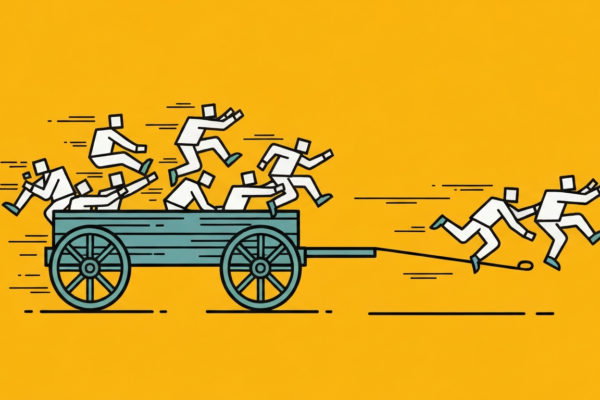
The tendency to adopt beliefs and behaviors because many other people do. McDonald’s “billions served,” Spotify Wrapped’s social sharing, and trending hashtags all leverage the bandwagon effect. The logic is circular but effective: people want it because other people want it. Our guide to bandwagon advertising covers this bias in depth.
12. Scarcity Bias
Limited availability increases perceived value. Supreme’s weekly drops, Amazon’s “Only 3 left in stock,” and limited-edition product releases all trigger scarcity bias. The bias is closely related to loss aversion (scarcity implies potential loss of opportunity) and the bandwagon effect (if it’s scarce, others must want it).
How Biases Work Together in Ad Campaigns
The most effective advertising campaigns do not rely on a single bias. They layer multiple biases to create compounding influence.
| Bias Combination | How They Interact | Campaign Example |
|---|---|---|
| Anchoring + Scarcity | High anchor price + limited time creates urgency around a “deal” | Amazon Lightning Deals |
| Social Proof + Bandwagon | User counts + trending status creates herd momentum | TikTok viral product trends |
| Authority + Confirmation | Expert endorsement confirms the consumer’s existing belief | Apple featuring professional creatives |
| Loss Aversion + Endowment | Free trial creates ownership, then threatens its removal | Netflix/Spotify free trial to paid |
| Mere Exposure + Illusory Truth | Repeated visibility makes brand claims feel true | GEICO’s 25-year consistent messaging |
How to Test Cognitive Biases in Your Advertising
A/B Testing Bias-Based Ad Creative
Isolate one bias per test to measure its individual impact. Test social proof versus no social proof (with identical creative otherwise). Test gain framing versus loss framing. Test anchored pricing versus unanchored pricing. Each test quantifies the bias’s effect on your specific audience and product category.
Measuring Bias Impact on Conversion
Track not just click-through rates but downstream metrics: conversion rate, average order value, return rate, and customer lifetime value. A scarcity tactic that increases conversion but also increases returns creates negative net value. Measure the full funnel, not just the initial response.
Multivariate testing can reveal how biases interact. Does adding social proof to an anchored pricing page increase conversion more than either element alone? Does scarcity messaging combined with authority bias outperform either in isolation? These interaction effects are where the deepest optimization opportunities lie.
Ethical Considerations for Advertisers
Cognitive biases exist whether advertisers exploit them or not. The ethical question is not whether to use them but how. Transparent applications that help consumers make better decisions (clear pricing, genuine reviews, honest scarcity) serve both parties. Deceptive applications (fake countdown timers, fabricated reviews, manufactured scarcity) erode trust and violate consumer protection regulations.
The FTC’s Endorsement Guides, updated in 2023, require that testimonials reflect genuine experiences and that material connections between endorsers and brands be disclosed. Fake social proof is not just unethical. It is illegal.
The sustainable approach is designing advertising that uses biases to help consumers find products that genuinely serve their needs, not to trick them into purchases they will regret.
FAQ
What are cognitive biases in advertising?
Cognitive biases in advertising are systematic mental shortcuts that influence how consumers perceive, evaluate, and respond to marketing messages. Advertisers design campaigns that align with these biases to increase attention, recall, and conversion. Common examples include anchoring (price reference points), social proof (following others’ choices), and scarcity (valuing limited availability).
What are the most important cognitive biases for advertisers?
Anchoring, loss aversion, social proof, and the framing effect are the four most commercially impactful biases for advertising. Anchoring shapes price perception. Loss aversion drives urgency. Social proof reduces purchase uncertainty. Framing determines how the value proposition is interpreted. Together, these four biases influence the majority of consumer purchase decisions.
How do you test cognitive biases in advertising?
A/B test individual biases by creating ad variations that differ only in the bias being tested. Measure click-through rate, conversion rate, average order value, and return rate to capture the full funnel impact. Multivariate testing reveals how biases interact and compound. Run tests with statistically significant sample sizes before scaling.
Is it ethical to use cognitive biases in advertising?
Using biases transparently to help consumers find products that serve their needs is ethical and widely practiced. Using biases deceptively (fake reviews, fabricated scarcity, misleading anchors) is unethical and may violate FTC regulations. The ethical test is whether the bias application serves the consumer’s interest alongside the advertiser’s. For the broader ethical framework, see our guide to behavioral economics in advertising.
Cognitive biases are the operating system of consumer decision-making. For the scientific frameworks behind specific biases, explore our guides to the priming effect in branding, bandwagon advertising, and neuromarketing techniques.