The Walt Disney Company generates over $88 billion in annual revenue across media, parks, and consumer products. Every dollar traces back to a single discipline that most competitors misunderstand: Disney marketing strategy is not about advertising products, it is about building ecosystems where every touchpoint feeds the next.
Few companies in history have turned creative content into a self-reinforcing revenue machine as effectively as Disney.
Disney’s Marketing Philosophy: Story First, Product Second
Walt Disney himself set the principle that still drives the company. “Get the story right, and all the other pieces will fall into place,” he told his team during the production of Snow White in 1937.
That philosophy separates Disney from every other entertainment conglomerate. Universal, Warner Bros., and Paramount all produce content. Disney is the only company that consistently turns that content into a closed-loop marketing system spanning six business segments.
Every marketing decision at Disney starts with narrative, not demographics.
How Storytelling Drives Every Revenue Stream
Consider the Frozen franchise. The 2013 film grossed $1.28 billion at the global box office. That was the beginning, not the end, of the marketing cycle. Frozen merchandise generated over $5.3 billion in retail sales within two years of release.
Disney theme parks added Frozen-themed attractions in Disneyland, Walt Disney World, and Tokyo DisneySea. Disney on Ice created a touring Frozen show. Disney+ streams both films and the related short content. Broadway welcomed “Frozen: The Musical” in 2018.
No other company extracts this much value from a single story.
The Disney Flywheel: From Film to Theme Park to Merchandise
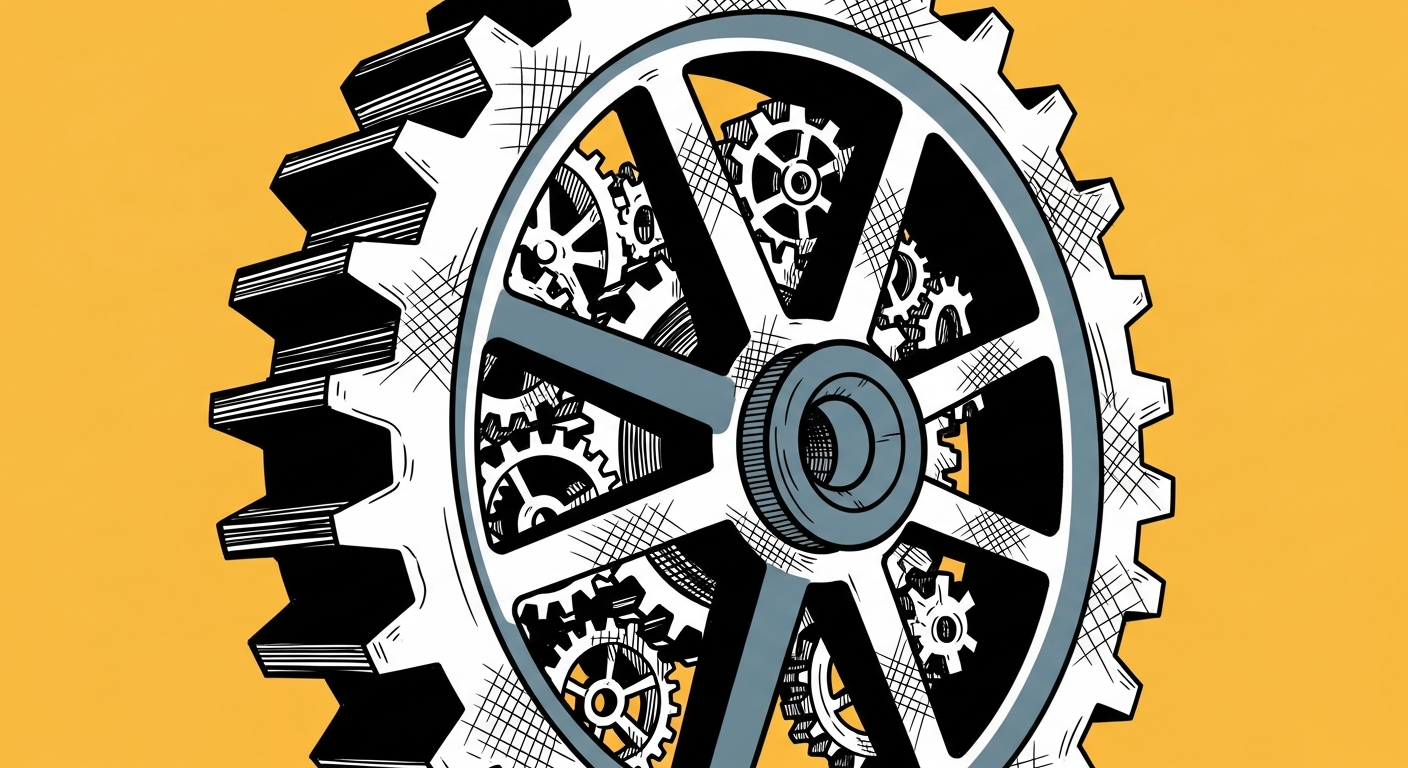
Former Disney CEO Bob Iger described the company’s growth model as a flywheel. Content creates characters. Characters drive merchandise and licensing. Merchandise drives park visits. Parks drive streaming subscriptions. Streaming drives content consumption, and the cycle restarts.
This is not a metaphor. It is the operational structure of the company.
Franchise Synergy in Practice
Disney’s five main content brands each feed the flywheel independently: Disney Animation, Pixar, Marvel, Star Wars (Lucasfilm), and National Geographic. When Marvel releases a film, the marketing mix extends far beyond traditional promotion. The film’s characters appear on cereal boxes, clothing lines, and LEGO sets within weeks.
Disney Parks open themed lands tied to those franchises. Star Wars: Galaxy’s Edge cost approximately $1 billion per park to build, totaling roughly $2 billion across Disneyland and Walt Disney World. Avengers Campus followed at Disneyland and Disneyland Paris.
Each investment amplifies the others.
Revenue Flow From a Single Franchise
| Revenue Channel | Frozen Example | Marvel Example |
|---|---|---|
| Box Office | $1.28B (Frozen 1) | $2.8B (Avengers: Endgame) |
| Merchandise & Licensing | $5.3B+ in 2 years | Multi-billion annually across MCU |
| Theme Parks | Frozen attractions in 3 parks | Avengers Campus (2 locations) |
| Streaming (Disney+) | Both films, shorts, series | 15+ MCU series |
| Broadway / Live | Frozen: The Musical | Marvel Universe LIVE |
| Video Games | Frozen Adventures mobile | Marvel’s Spider-Man franchise |
Brand Licensing: Disney’s Multi-Billion Dollar Revenue Engine
Disney is the world’s largest licensor. The company’s licensing revenue exceeded $61 billion in retail sales in 2023, according to License Global’s Top Global Licensors Report, dwarfing every competitor in the entertainment industry.
This revenue stream requires almost no manufacturing investment from Disney. Partners like LEGO, Hasbro, and Mattel produce the products, pay Disney a royalty, and handle distribution. Disney provides the intellectual property and brand guidelines.
It is the highest-margin marketing strategy in consumer products.
Disney’s Five Main Content Brands
Disney operates a brand architecture model that combines a master brand with distinct sub-brands. Disney Animation appeals to families and younger audiences. Pixar targets a broader demographic with emotionally sophisticated storytelling. Marvel captures the action and superhero market. Star Wars owns the science fiction space. National Geographic serves education and documentary audiences.
Each sub-brand has its own visual identity, tone, and target audience. The Disney master brand sits above them all, providing trust and consistency.
Strategic Licensing Partnerships
Disney’s licensing agreements are not passive. The company selects partners that reinforce brand quality. LEGO’s Disney sets consistently rank among the toy company’s best sellers. Hasbro produces action figures for both Marvel and Star Wars lines.
These partnerships function as co-marketing. Every LEGO Star Wars set on a toy store shelf is a Disney advertisement that someone else paid to produce and distribute.
Theme Parks as Experiential Marketing
Disney’s parks division generated a record $32.5 billion in revenue in fiscal 2023. Most analysts categorize this as “experiences.” Marketers should see it differently.
Every Disney theme park is a physical brand activation that lasts 12 to 14 hours per visitor per day.
Immersive Environments as Brand Storytelling
Star Wars: Galaxy’s Edge does not feel like a theme park. It feels like stepping into the Star Wars universe. Cast members speak in character. The food has fictional names. Guests build custom lightsabers for $250 each. Every detail reinforces the narrative, and every narrative reinforces the brand.
Avengers Campus follows the same model. Visitors interact with live characters, ride attractions tied to specific films, and purchase exclusive merchandise available nowhere else. The exclusivity drives urgency, and the experience drives brand awareness far beyond the park gates.
Visitors share their experiences on social media, generating millions of organic impressions.
Parks Drive Every Other Business Segment
A family that visits Walt Disney World develops deeper emotional attachment to the brand, which Disney leverages through its integrated data and analytics framework to drive engagement across streaming, merchandise, and theatrical releases. The park experience deepens emotional attachment to the brand in ways that no digital campaign can replicate.
This is why Disney invests billions in park expansions. The return is not limited to ticket revenue.
Disney’s Brand Architecture Model
Disney operates what branding experts call a “branded house with sub-brands.” The Disney name appears on everything, but each content brand maintains its own identity and audience. This is a deliberate brand positioning choice that allows Disney to serve multiple demographics without diluting any single brand.
Acquisitions as Brand Extension
Disney’s acquisition strategy is a masterclass in brand equity expansion. The company acquired Pixar in 2006 for $7.4 billion, Marvel in 2009 for $4 billion, and Lucasfilm in 2012 for $4.05 billion. Each acquisition brought established intellectual property with passionate fan bases.
The Marvel Cinematic Universe alone has grossed over $30 billion at the global box office since the acquisition, making it the highest-grossing film franchise in history. That represents a return of more than seven times the purchase price from theatrical revenue alone, before counting merchandise, parks, and streaming.
Disney paid $71.3 billion for 21st Century Fox in 2019, adding franchises like Avatar, The Simpsons, and the X-Men.
Maintaining Brand Consistency Across Portfolios
The challenge of operating five content brands is maintaining distinct identities while sharing a corporate parent. Disney solves this by giving each studio creative independence while centralizing marketing, distribution, and licensing under the Disney corporate umbrella.
Marvel Studios president Kevin Feige controls Marvel’s creative direction. Lucasfilm operates from its own headquarters. Pixar retains its Emeryville campus and culture. The corporate structure protects the creative differences that make each brand valuable.
Nostalgia Marketing and Emotional Connection
Disney is the world’s most effective practitioner of nostalgia marketing. The company systematically revisits its own catalog, remaking classic animated films as live-action features. The results speak in revenue.
The 2016 live-action Jungle Book grossed $966 million globally. The 2019 Lion King remake earned $1.66 billion. Beauty and the Beast (2017) collected $1.26 billion. These films target adults who grew up with the originals while simultaneously introducing the stories to new audiences.
Each remake triggers a licensing and merchandise cycle that mirrors the original release.
Multi-Generational Appeal and the “Disney Adults” Phenomenon
Disney’s market segmentation extends beyond children and families. The company actively markets to adults without children, a demographic sometimes called “Disney Adults.” This segment purchases premium merchandise, visits parks without kids, and subscribes to Disney+ for nostalgic content.
Disney’s marketing does not condescend to this audience. Annual pass programs, exclusive merchandise drops, and adults-only events like EPCOT’s Food & Wine Festival treat adult fans as a core demographic, not a novelty. Approximately 40% of Disney theme park visitors are adults without children.
Digital Marketing and Disney+
Disney+ launched in November 2019 and peaked at 164 million subscribers in late 2022, before stabilizing at approximately 150 million subscribers by 2024. The platform is more than a streaming service. It is a direct-to-consumer marketing channel that gives Disney first-party data on viewing habits, preferences, and engagement patterns.
Disney+ as a Direct-to-Consumer Marketing Platform
Before Disney+, the company relied on third-party distributors and theater chains for audience data. Now Disney knows exactly which content each subscriber watches, how long they watch, and what they search for. This data informs merchandise production, park attraction planning, and content development.
The platform also enables direct promotion of park tickets, merchandise, and theatrical releases to a captive audience of 164 million households.
User-Generated Content and Fan Communities
Disney encourages content marketing through fan communities. The #DisneyBounding trend, where fans create everyday outfits inspired by Disney characters, generates millions of social media posts annually. Disney does not pay for this content. Fans create it because the brand inspires genuine enthusiasm.
This earned media is more valuable than any paid campaign because it carries the credibility of authentic fan endorsement.
Social Media Strategy Across Platforms
Disney maintains distinct social media presences for each sub-brand. The Marvel Instagram account has over 65 million followers. Star Wars maintains its own accounts, as do Pixar, Disney Parks, and Disney Animation. Each account speaks in the voice of its brand, not the corporate parent.
This approach multiplies Disney’s total social media reach while keeping each brand’s identity sharp.
Disney’s Pricing Strategy
Disney uses a combination of market-oriented and value-based pricing that maximizes revenue across every business segment.
Dynamic Pricing at Parks
Disney theme parks introduced dynamic pricing in 2018, charging different admission rates based on demand. Peak holiday periods cost significantly more than low-traffic weekdays. The Genie+ system, which allows guests to pay extra for shorter wait times, adds another revenue layer. A family of four can easily spend $500 to $800 per day at Walt Disney World before food and merchandise.
The pricing communicates exclusivity and premium quality. Disney does not compete on price. It competes on experience.
Value-Based Pricing for Content
Disney+ launched at $6.99 per month in 2019, deliberately undercutting Netflix. By late 2024, the ad-free tier had risen to $15.99, with an ad-supported option at $9.99. The initial low price drove rapid subscriber acquisition. The subsequent increases reflect the growing content library and established habit formation among subscribers.
This value proposition works because Disney content is not interchangeable with competitors. Parents who want Marvel, Star Wars, and Disney Animation content have no substitute.
What Marketers Can Learn from Disney’s Marketing Strategy
Disney’s approach offers three principles that apply to brands of any size.
Build Emotional Connections Before Selling Products
Disney never leads with a product pitch. Every campaign, every park experience, and every streaming show starts with story and emotion. The products follow naturally. Marketers who reverse this order, leading with features and price, miss the mechanism that makes Disney’s marketing so durable.
Create Ecosystems, Not Campaigns
Most brands think in campaigns. Disney thinks in ecosystems. A single piece of content feeds merchandise, experiences, licensing, and digital engagement for decades. The Frozen franchise is 13 years old and still generating billions in revenue. When you build a flywheel, every investment compounds. When you build campaigns, every investment expires.
The distinction matters more than any tactical choice about channels or formats.
Turn Every Touchpoint into a Story
From the moment a guest enters a Disney park to the unboxing of a Disney merchandise purchase, every interaction tells a story. The queue lines at Disney rides are not waiting areas. They are narrative prologues. The packaging on Disney products is not functional. It is an experience. This obsession with storytelling at every touchpoint is what transforms customers into lifelong fans.
FAQ
What is Disney’s marketing strategy?
Disney’s marketing strategy centers on storytelling, franchise synergy, and brand licensing. The company creates emotionally resonant content, then extends that content across theme parks, merchandise, streaming, and live entertainment. Each touchpoint reinforces the others in a self-sustaining flywheel.
How does Disney use storytelling in marketing?
Disney leads with narrative in every marketing decision. Rather than promoting products or prices, Disney campaigns evoke emotion and nostalgia. The company’s theme parks, streaming content, and merchandise all function as extensions of its stories, not standalone commercial offerings.
What is Disney’s brand licensing strategy?
Disney is the world’s largest licensor, generating over $61 billion in retail sales through licensing agreements in 2023. Partners like LEGO, Hasbro, and Mattel produce Disney-branded products and pay royalties. Disney provides the intellectual property and brand guidelines while avoiding manufacturing costs.
How does Disney market to adults?
Disney targets adults through nostalgia marketing (live-action remakes of classic films), premium merchandise, adults-only park events, and sophisticated streaming content on Disney+ and Hulu. Approximately 40% of Disney park visitors are adults without children.
What makes Disney’s marketing so effective?
Disney’s effectiveness comes from its ecosystem approach. Unlike brands that run isolated campaigns, Disney builds self-reinforcing revenue loops where films drive merchandise, merchandise drives park visits, and park visits drive streaming subscriptions. This flywheel compounds over time rather than decaying like traditional advertising.
For a closer look at how other global brands build brand architecture systems, explore our analysis of brand positioning frameworks used by the world’s leading companies.