Products that are hard to find get replaced by products that are not. An extensive distribution strategy, also called intensive distribution, places products in as many retail outlets as possible to maximize availability and capture every potential sale.
What Is an Extensive Distribution Strategy?
Extensive distribution is a channel strategy where a company sells its products through every available retail outlet. The goal is simple: put the product within arm’s reach of every potential customer.
Philip Kotler, marketing professor at Northwestern University’s Kellogg School of Management, defines intensive distribution as placing goods in as many outlets as possible to provide maximum brand exposure and consumer convenience.
The terms “extensive distribution” and “intensive distribution” refer to the same approach. Both describe a strategy of saturating the market with product availability. In practice, most marketers use “intensive distribution” as the standard term, while “extensive” appears more frequently in academic contexts and international markets.
This strategy sits at one end of the distribution spectrum within the marketing mix.
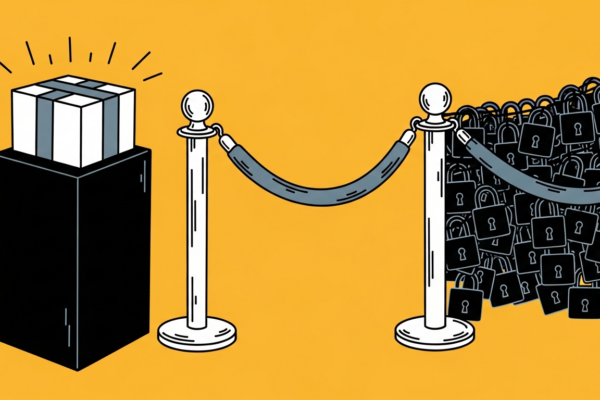
At the opposite end sits exclusive distribution, where a brand limits availability to a handful of authorized dealers. Between them is selective distribution, where companies choose a moderate number of outlets based on specific criteria. A Snickers bar uses intensive distribution. A Rolex watch uses exclusive distribution. A Nike running shoe uses selective distribution. Understanding where your product falls on this spectrum determines your entire channel strategy.
When to Use Intensive Distribution
Not every product belongs in every store. Intensive distribution works for products that meet three conditions: low unit price, high purchase frequency, and minimal brand loyalty switching costs.
Consumers buying a bottle of water will not drive across town to find their preferred brand.
They will grab whatever is available at the nearest shelf. This is the fundamental insight behind intensive distribution. When your target audience makes low-involvement purchase decisions, availability beats preference. Research consistently shows that a majority of FMCG purchase decisions are made at the point of sale. If your product is not on the shelf, you lose the sale entirely.
Intensive vs Selective vs Exclusive Distribution
The three distribution strategies serve fundamentally different business models. Choosing the wrong one creates a mismatch between product positioning and channel reality.
Here is how they compare across seven critical dimensions.
| Criteria | Intensive (Extensive) | Selective | Exclusive |
|---|---|---|---|
| Number of Outlets | Maximum (thousands+) | Moderate (dozens to hundreds) | Minimal (1-5 per market) |
| Market Coverage | Mass market saturation | Targeted geographic/demographic coverage | Highly restricted availability |
| Price Point | Low to mid-range | Mid-range to premium | Premium to luxury |
| Brand Control | Low | Moderate | High |
| Margin per Unit | Low (volume compensates) | Moderate to high | High |
| Channel Conflict Risk | High (price wars between retailers) | Moderate | Low |
| Best For | FMCG, snacks, beverages, batteries | Electronics, apparel, appliances | Luxury goods, cars, designer fashion |
| Brand Examples | Coca-Cola, Colgate, Mars | Nike, Samsung, Bosch | Rolex, Tesla, Hermès |
The pattern is clear. As you move from intensive to exclusive, you trade volume for control.
Companies pursuing a market positioning strategy built on accessibility need intensive distribution. Companies built on scarcity need exclusive distribution. Getting this alignment wrong is expensive. A luxury brand that distributes intensively destroys its premium perception. A commodity brand that distributes exclusively leaves revenue on the table. Understanding market segmentation helps clarify which approach fits your product.
Advantages of Intensive Distribution
The benefits of intensive distribution compound over time. Higher availability creates higher trial, which creates higher repeat purchase, which justifies further distribution expansion.
Maximum Market Coverage
Intensive distribution puts your product everywhere your customer might look.
Coca-Cola operates in more than 200 countries and territories, selling through approximately 30 million retail outlets globally. This level of coverage means a consumer can find a Coke in a New York bodega, a Lagos street kiosk, and a Tokyo vending machine. That ubiquity is the strategy. High brand awareness only converts to revenue when the product is available at the moment of intent.
For FMCG brands, distribution coverage directly correlates with market share. A product available in 90% of outlets will outsell an identical competitor available in 60%, assuming equal quality and pricing.
Higher Sales Volume
More outlets mean more purchase opportunities.
PepsiCo generates approximately $92 billion in annual revenue across its snack and beverage portfolio. That figure is not driven by premium pricing. It is driven by sheer volume across hundreds of thousands of retail touchpoints worldwide. The math is straightforward: even a small average sale per outlet, multiplied across millions of locations, produces enormous aggregate revenue.
Brand Visibility and Everyday Presence
Shelf space is advertising. Every retail placement functions as a brand impression, reinforcing recognition without additional media spend.
This is why types of advertising discussions should include distribution as a visibility channel.
Colgate-Palmolive’s toothpaste sits on shelves in supermarkets, pharmacies, convenience stores, dollar stores, and gas stations. Each placement is a reminder that Colgate exists. Over time, this omnipresence creates what researchers call the “mere exposure effect,” where familiarity breeds preference. Consumers choose brands they recognize, and intensive distribution ensures continuous recognition.
Disadvantages of Intensive Distribution
Intensive distribution is not free. The strategy carries real costs that erode profitability if not managed carefully.
Lower Margins Per Unit
When you sell through every possible outlet, you negotiate with thousands of retailers who each demand competitive wholesale pricing.
Large retailers like Walmart and Carrefour have significant bargaining power. They push for lower wholesale prices, volume discounts, promotional allowances, and slotting fees. These costs accumulate. A manufacturer might earn a 40-60% gross margin selling direct to consumer but only 15-20% selling through mass retail channels.
Volume compensates, but only if demand holds.
Reduced Brand Control
You cannot control how 30,000 retailers display your product.
Some will place it at eye level. Others will bury it on the bottom shelf. Some will run unauthorized discounts. Others will pair it with competitors in unflattering ways. This loss of control is the primary reason luxury brands avoid intensive distribution entirely. For brands that depend on brand architecture consistency, intensive distribution introduces risk at every touchpoint.
In practice, FMCG companies deploy field merchandising teams specifically to audit and correct in-store presentation across thousands of locations.
Channel Conflict and Price Erosion
When the same product appears in a supermarket, a convenience store, a pharmacy, and an online marketplace, price competition between channels becomes inevitable.
A consumer who sees Tide detergent priced at $12 in Target and $9.50 on Amazon will buy from Amazon.
This creates a race to the bottom that frustrates brick-and-mortar retailers, damages wholesale relationships, and compresses margins industry-wide. Channel conflict is the most persistent operational challenge in intensive distribution. Channel conflict costs consumer goods companies significant revenue annually through price erosion and retailer pushback, as documented in academic research linking channel conflict directly to reduced channel performance.
Extensive Distribution Examples: 5 Brands That Win Through Availability
The following companies demonstrate how intensive distribution operates at scale. Each example reveals a different facet of the strategy.
1. Coca-Cola: The Gold Standard
Coca-Cola is the most widely distributed consumer product on Earth. The company’s distribution system reaches approximately 30 million retail outlets across more than 200 countries.
This did not happen by accident.
Coca-Cola uses a franchise bottling model where independent bottlers manufacture, package, and distribute products locally. This structure allows Coca-Cola to achieve intensive distribution without owning every warehouse and delivery truck. The company maintains brand control through concentrate supply and marketing oversight while local partners handle physical distribution. This model lets Coca-Cola reach gas stations, vending machines, restaurants, movie theaters, airports, and street vendors simultaneously. The result is a product available virtually everywhere humans gather.
2. Procter & Gamble: Category Domination
P&G distributes products across more than 180 countries through millions of retail outlets.
The company’s portfolio, including Tide, Gillette, Pampers, and Crest, spans dozens of household and personal care categories. Each brand uses intensive distribution because P&G’s products are daily necessities with low switching costs. If Tide is not on the shelf, the consumer buys Persil.
P&G’s distribution advantage comes from retailer dependency. A supermarket cannot afford to not carry Tide. Consumers expect it. This gives P&G negotiating leverage despite the margin pressure of intensive distribution.
3. Mars: Impulse Purchase Mastery
Mars places Snickers, M&M’s, and Twix in every checkout aisle, vending machine, and convenience store counter it can reach.
Confectionery is the textbook intensive distribution category.
Candy purchases are almost entirely impulse-driven. The buying decision happens in seconds at the point of sale. Mars understands this. The company invests heavily in checkout placement, end-cap displays, and vending machine contracts to ensure its products appear precisely where impulse decisions happen. Industry data shows that the vast majority of confectionery purchases are impulse-driven, making physical availability the single most important driver of sales.
4. Unilever: Emerging Market Distribution Innovation
Unilever reaches over 3.4 billion consumers daily across more than 190 countries. In emerging markets, where formal retail infrastructure is sparse, Unilever pioneered micro-distribution models.
In India, Unilever’s Project Shakti has enlisted over 200,000 rural women as direct-to-consumer distributors.
These “Shakti Ammas” sell Unilever products door-to-door in villages where no organized retail exists. This model extended Unilever’s reach into communities that traditional distribution channels could not access. It also created economic opportunities for the distributors themselves. The lesson for marketers is that intensive distribution sometimes requires inventing entirely new channel structures rather than relying on existing retail infrastructure.
5. Nestlé: Multi-Channel Saturation
Nestlé distributes products through supermarkets, convenience stores, pharmacies, vending machines, hotels, airlines, hospitals, and e-commerce platforms simultaneously.
The company’s strategy demonstrates how intensive distribution extends beyond traditional retail.
Nestlé’s Nescafé brand sells in over 180 countries. The company uses different pack sizes for different channels: single-serve sachets for convenience stores, family packs for supermarkets, and bulk formats for food service. This channel-specific packaging strategy maximizes distribution width without creating direct price comparisons across outlets. Products at different stages of the product life cycle may require different distribution intensities. Nestlé adjusts its approach accordingly.
How to Implement an Extensive Distribution Strategy
Implementing intensive distribution requires more than signing up every willing retailer. The strategy demands operational infrastructure, pricing discipline, and ongoing performance monitoring.
Assess Product Suitability
Start with an honest evaluation of whether your product actually fits intensive distribution.
Ask three questions. Is the unit price under $20? Is the purchase frequency weekly or more? Would consumers substitute a competitor if your product is unavailable? If the answer to all three is yes, intensive distribution is likely appropriate. If any answer is no, consider selective distribution instead.
Premium products lose value perception when they appear everywhere.
Build a Scalable Retailer Network
Intensive distribution requires partnerships with multiple retailer types: mass merchandisers, grocery chains, convenience stores, drug stores, and online marketplaces.
Each channel type has different margin expectations, slotting fee requirements, and merchandising standards.
The most common mistake is expanding distribution faster than your supply chain can support. A stockout in a new retail account is worse than never being stocked there at all. Retailers penalize suppliers for poor fill rates, sometimes permanently delisting products after repeated stockouts. Build supply chain capacity before signing distribution agreements, not after.
Manage Pricing Across Channels
Establish minimum advertised price (MAP) policies to prevent destructive price competition between retailers.
Without MAP enforcement, online retailers will consistently undercut brick-and-mortar stores. This creates channel conflict, erodes margins, and frustrates retail partners who invest in shelf space and in-store promotion. Major FMCG companies employ dedicated trade teams that monitor pricing compliance across channels and address violations directly with retail partners.
Price consistency protects both your margins and your retailer relationships.
Monitor Distribution Metrics
Two metrics matter most in intensive distribution: numeric distribution and weighted distribution.
Numeric distribution measures the percentage of total outlets that carry your product. If 800 out of 1,000 grocery stores stock your product, your numeric distribution is 80%.
Weighted distribution accounts for store size and sales volume. Being stocked in 10 high-volume hypermarkets may generate more revenue than being in 100 small convenience stores. Weighted distribution captures this reality by indexing against total category sales per outlet.
Track both metrics monthly. A high numeric distribution with low weighted distribution means you are in many small stores but missing the large ones. A high weighted distribution with low numeric distribution means you are in the big stores but missing geographic coverage.
Digital Distribution: The New Frontier
Intensive distribution now extends beyond physical retail into e-commerce, quick commerce, and direct-to-consumer channels.
Amazon, Instacart, Walmart.com, and dozens of regional e-commerce platforms have created new distribution touchpoints.
For FMCG brands, digital shelf optimization is becoming as important as physical shelf placement. A product’s ranking on Amazon’s search results page functions identically to shelf position in a supermarket. Brands must invest in product listing optimization, sponsored product ads, and review management to maintain visibility in digital channels. Quick commerce platforms like Gopuff and Getir add another layer, delivering products within 15 minutes. These platforms create intensive distribution in the truest sense, making products available almost instantly. Marketers exploring social media brand awareness should recognize that digital distribution and social visibility now reinforce each other.
Frequently Asked Questions
What Is the Difference Between Intensive and Extensive Distribution?
There is no practical difference. Both terms describe the same strategy of maximizing product availability across as many retail outlets as possible.
“Intensive distribution” is the more common term in North American marketing literature. “Extensive distribution” appears more frequently in European and Asian academic contexts. Philip Kotler’s Marketing Management uses “intensive distribution” as the standard term.
Regardless of the label, the strategy is identical: saturate the market to ensure your product is available wherever and whenever consumers want to buy.
What Products Are Best Suited for Intensive Distribution?
Products with four characteristics fit intensive distribution: low price, high purchase frequency, minimal differentiation, and low brand loyalty switching costs.
This includes beverages, snacks, toiletries, batteries, cleaning products, basic stationery, and over-the-counter medications.
Products that require explanation, demonstration, or a premium buying experience should avoid intensive distribution. A consumer buying toothpaste needs zero sales assistance. A consumer buying a $3,000 espresso machine needs product education, comparison shopping, and post-purchase support. The first product belongs in intensive distribution. The second belongs in selective distribution.
How Do You Measure Distribution Effectiveness?
Three metrics define distribution effectiveness: numeric distribution (percentage of outlets carrying the product), weighted distribution (share of category sales in stocked outlets), and out-of-stock rate (frequency of stockouts).
Leading FMCG companies target numeric distribution above 80% in core markets and weighted distribution above 90%.
The out-of-stock rate is equally critical. Industry research estimates that out-of-stocks and overstocks cost retailers and manufacturers hundreds of billions of dollars annually worldwide. Every empty shelf is a lost sale and a potential permanent switch to a competitor.
Can Intensive Distribution Hurt a Brand?
Yes. Intensive distribution can damage brands that depend on exclusivity, prestige, or controlled customer experience.
Coach, the American luxury handbag brand, learned this lesson directly. In the early 2010s, Coach expanded distribution into factory outlet stores and department store discount sections. The brand’s availability in discount channels eroded its luxury perception, and more than half of its market cap disappeared in two years. Coach subsequently pulled back distribution in 2014 to restore brand positioning.
The rule is straightforward: intensive distribution amplifies what your brand already is. If your brand is about convenience and value, ubiquity reinforces that. If your brand is about exclusivity, ubiquity destroys it.
Build Your Distribution Strategy
Distribution strategy is one element of a broader marketing mix. Getting it right requires aligning channel decisions with product positioning, pricing strategy, and promotional approach.
For more on related marketing frameworks, explore these resources on Advergize:
- Market Segmentation: Understand your audience segments before choosing distribution channels
- Market Positioning Strategy: Align your distribution intensity with your positioning
- Product Life Cycle Stages: Adjust distribution strategy as products mature
- Target Audience: Match channel selection to where your customers actually shop
- Brand Awareness: Understand how distribution drives recognition