Abraham Maslow published “A Theory of Human Motivation” in 1943. Eight decades later, his five-level hierarchy remains the most widely used framework for understanding what drives consumer behavior. Every product, from bottled water to luxury watches, corresponds to a level in the pyramid.
The marketers who use this framework deliberately outperform those who guess at what their audience cares about.
What Is Maslow’s Hierarchy of Needs?
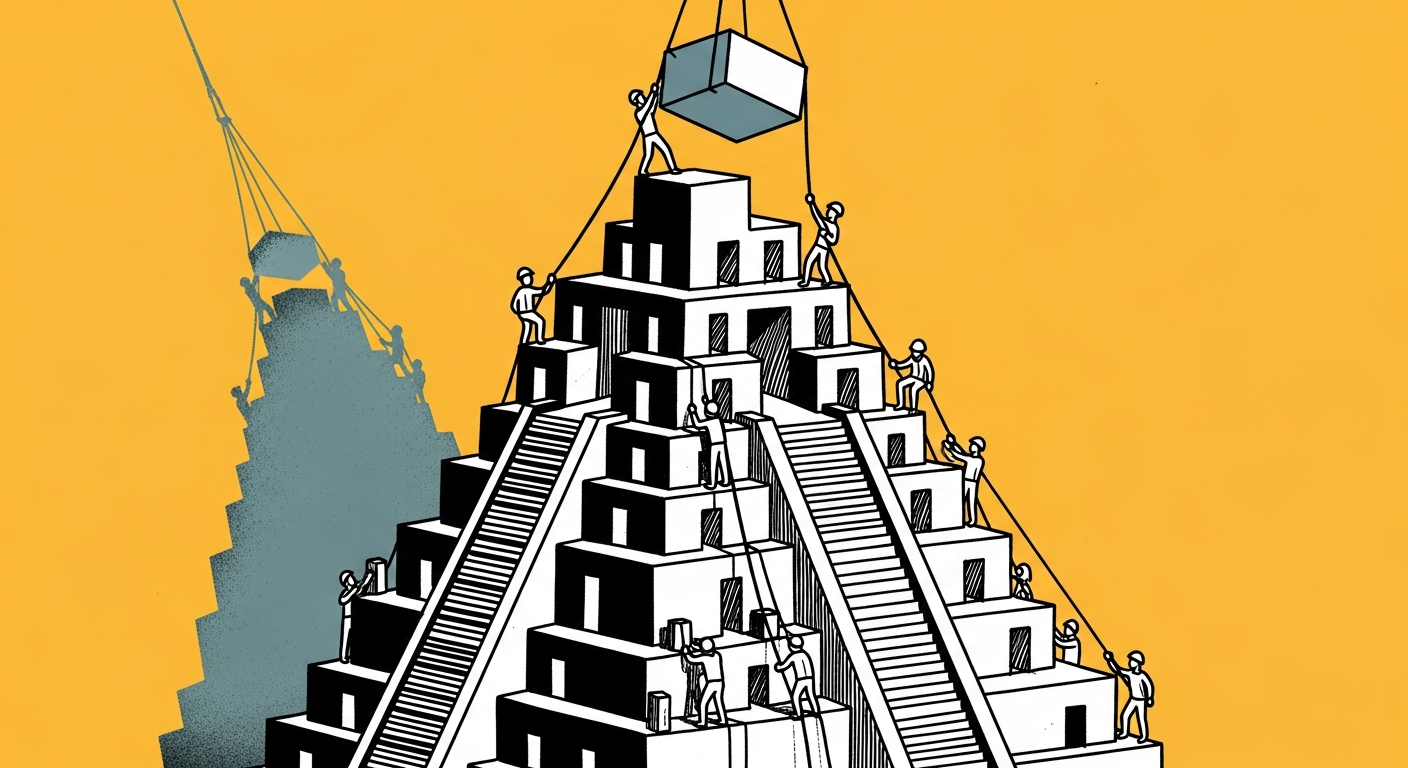
Maslow’s hierarchy is a psychological theory that arranges human needs in a pyramid structure. The theory proposes that basic needs (food, water, shelter) must be substantially met before higher needs (belonging, esteem, purpose) become motivating forces.
The five levels, from base to peak, are physiological needs, safety needs, love and belonging, esteem, and self-actualization.
Why Marketers Should Care
The hierarchy provides a diagnostic tool for two critical marketing decisions. First, which need does your product actually serve? Not the need you wish it served, but the one that motivates your buyer. Second, is your messaging aligned with that need level, or is there a mismatch?
A home security company that leads with product features (camera resolution, app interface) is speaking to esteem-level concerns. Their customer is motivated by safety-level fear. The features matter, but the message must address the fear first. This mismatch, common across industries, is exactly what Maslow’s framework prevents.
The Five Levels and What They Mean for Marketing
Physiological Needs: Food, Water, Shelter
The base of the pyramid covers survival requirements. Marketing at this level focuses on accessibility, availability, and essential function. The messaging is direct and practical: this product meets your basic need efficiently.
Grocery retailers, fast-food chains, bottled water brands, and affordable housing developers operate primarily at this level. Subway’s “$5 Footlong” campaign succeeded because it addressed a physiological need (hunger) with a clear, affordable solution. The messaging was not aspirational. It was functional.
In developing markets, physiological-level marketing dominates. Unilever’s sachet strategy in India, selling single-use shampoo and detergent packets for a few cents, is physiological-level marketing executed at scale. The product meets a basic need at an accessible price point.
Safety Needs: Security, Stability, Protection
Once physiological needs are met, consumers seek safety, predictability, and protection from threats. Insurance, home security, healthcare, financial planning, and automotive safety features all operate at this level.
Volvo has built its entire brand positioning around safety for over six decades. The brand does not sell driving pleasure or luxury. It sells the assurance that your family will survive a crash. Allstate’s “Are You in Good Hands?” campaign addresses safety anxiety directly. The emotional hook is fear. The product is reassurance.
Safety-level marketing uses risk language: “protect,” “secure,” “guarantee,” “reliable,” “trusted.” Money-back guarantees, warranties, and free trials all reduce perceived risk and serve safety motivation.
Love and Belonging: Community, Connection, Acceptance
Belonging-level marketing taps into the human need for social connection, community, and acceptance. This is where social media platforms, dating apps, team sports brands, and community-driven companies operate.
Coca-Cola’s “Share a Coke” campaign replaced the brand logo with personal names, transforming a beverage into a social object. The campaign generated a 2% volume increase after a decade of decline because it activated belonging: this drink connects me to the people I share it with.
Harley-Davidson’s HOG community, Apple’s ecosystem-driven identity, and CrossFit’s box culture all serve belonging needs. The product is not the primary value. The community the product provides access to is the value. This explains why these brands command loyalty that pure product quality cannot explain.
Esteem Needs: Status, Recognition, Achievement
Esteem-level marketing appeals to the need for self-respect, recognition from others, and signals of achievement. Luxury brands, premium products, professional certifications, and achievement-oriented fitness brands operate here.
Rolex does not sell timekeeping. Timekeeping is a physiological-level commodity. Rolex sells the visible signal that you have achieved enough to deserve one. L’Oreal’s “Because You’re Worth It” speaks directly to esteem: you deserve this product because of who you are.
Dove’s “Real Beauty” campaign operates at esteem level by addressing the gap between societal beauty standards and individual self-worth. The campaign generated over $1.5 billion in sales growth because it spoke to a universal esteem need: feeling worthy and valued regardless of appearance.
Self-Actualization: Purpose, Growth, Fulfillment
The pyramid’s peak represents the need to fulfill one’s potential, pursue purpose, and achieve personal growth. Self-actualization marketing appeals to consumers who have substantially met all lower needs and are motivated by meaning.
Nike’s “Just Do It” is the definitive self-actualization campaign. It does not describe a product. It describes the customer’s highest aspiration: becoming their best self through action. The tagline works because Nike’s target audience has already addressed their lower-level needs and is motivated by growth and achievement.
Patagonia’s environmental mission, Apple’s “Think Different” campaign, and TED Talks’ “Ideas Worth Spreading” all operate at self-actualization level. The purchase is not about the product’s function. It is about the buyer’s identity and purpose.
Brand Examples at Every Level
| Need Level | Brand | Campaign/Slogan | How It Works |
|---|---|---|---|
| Physiological | Subway | “$5 Footlong” | Addresses hunger affordably |
| Physiological | Evian | “Live Young” | Basic hydration with vitality positioning |
| Safety | Volvo | “For Life” | Family protection through engineering |
| Safety | Allstate | “Are You in Good Hands?” | Fear reduction through insurance |
| Belonging | Coca-Cola | “Share a Coke” | Product as social connector |
| Belonging | Harley-Davidson | HOG Community | Purchase grants community membership |
| Esteem | Rolex | “A Crown for Every Achievement” | Visible status and achievement signal |
| Esteem | L’Oreal | “Because You’re Worth It” | Self-worth validation through purchase |
| Self-Actualization | Nike | “Just Do It” | Product enables personal potential |
| Self-Actualization | Patagonia | “Don’t Buy This Jacket” | Purchase aligns with higher purpose |
How to Build a Marketing Campaign Using Maslow’s Framework
Step 1: Identify Your Audience’s Dominant Need Level
Analyze your customer data to determine which need level drives purchasing behavior. Survey responses, review analysis, and behavioral data all provide signals. Customers who mention “reliability” and “peace of mind” are safety-motivated. Customers who mention “community” and “belonging” are affiliation-motivated. Customers who mention “achievement” and “growth” are self-actualization-motivated.
Most products serve multiple need levels simultaneously. A gym membership serves physiological needs (health), safety needs (health protection), belonging needs (community), and esteem needs (appearance). The question is not which need exists but which need is primary for your specific audience segment.
Step 2: Craft Messaging That Speaks to That Level
Each need level demands different emotional tones, vocabulary, and proof points. Safety messaging uses reassurance language and risk reduction. Belonging messaging uses inclusive language and community imagery. Esteem messaging uses aspiration and achievement. Self-actualization messaging uses purpose and transformation.
A common mistake is messaging at a higher level than the audience’s actual motivation. A budget mattress brand messaging about “achieving your dream sleep” (self-actualization) when the buyer just needs affordable comfort (physiological/safety) creates a disconnect that hurts credibility.
Step 3: Choose Channels That Match the Need
Channel selection should align with the need level. Physiological and safety needs are best served through search (high intent, problem-solving), comparison sites, and practical content. Belonging needs are best served through social media, community platforms, and events. Esteem needs are served through aspirational content, influencer partnerships, and premium placements. Self-actualization needs are served through thought leadership, documentary-style content, and purpose-driven platforms.
The channel reinforces the message. A luxury brand running coupon ads on a deal site undermines its esteem positioning. The channel contradicts the need level the brand should serve.
Maslow’s Hierarchy in Digital Marketing
SaaS and Safety Needs
B2B SaaS companies operate primarily at the safety level. Their customers fear data loss, security breaches, downtime, and workflow disruption. Effective SaaS marketing leads with reliability, uptime guarantees, security certifications, and case studies that demonstrate risk reduction. Salesforce’s “No software” campaign and Slack’s “Where work happens” both address the safety need for reliable, stable work tools.
Social Media and Belonging
Every social media platform is a belonging engine. Facebook’s “connecting people,” Instagram’s shared visual identity, LinkedIn’s professional community, and Discord’s interest-based servers all serve the belonging need at scale. Brands that build engaged communities on these platforms tap into the same motivation that drives platform usage itself.
Personal Branding and Self-Actualization
The personal branding industry, from LinkedIn thought leadership to creator economy platforms, serves self-actualization needs. Consumers invest in courses, coaching, and tools that help them become their most authentic, accomplished selves. Masterclass, Skillshare, and Notion all market at this level: tools for people who want to grow.
Criticisms and Alternatives
ERG Theory (Alderfer)
Clayton Alderfer’s ERG Theory (1969) compressed Maslow’s five levels into three: Existence (physiological + safety), Relatedness (belonging + external esteem), and Growth (internal esteem + self-actualization). More importantly, ERG theory rejected the strict hierarchy. Alderfer argued that multiple needs can operate simultaneously and that frustration at a higher level can increase the importance of a lower level.
For marketers, ERG is more practical than Maslow’s strict hierarchy because consumer behavior rarely follows a neat progression. A consumer can simultaneously be motivated by safety (insurance), belonging (community membership), and self-actualization (personal development) in a single purchasing session.
Cross-Cultural Limitations
Maslow developed his theory based on Western, individualist culture. Research by Geert Hofstede and others demonstrates that collectivist cultures (common in Asia, the Middle East, and Latin America) may prioritize belonging and community over individual esteem and self-actualization. In these markets, campaigns targeting individual achievement may underperform relative to campaigns emphasizing family, community, and social harmony.
Marketers operating across cultures should validate which need levels resonate in each market rather than assuming a universal hierarchy. What motivates a consumer in New York may not motivate a consumer in Tokyo, Riyadh, or São Paulo.
FAQ
What is Maslow’s hierarchy of needs in marketing?
Maslow’s hierarchy in marketing is the application of Abraham Maslow’s five-level need framework to understand consumer motivation. Marketers use the hierarchy to identify which need (physiological, safety, belonging, esteem, or self-actualization) their product serves and align their messaging accordingly. For the broader theory behind consumer motivation, see our guide to motivation theory in consumer behavior.
How do marketers use Maslow’s hierarchy?
Marketers use the hierarchy in three steps. First, identify which need level the product serves. Second, craft messaging that speaks to that specific need. Third, choose channels and creative approaches that match the need level. A safety-focused brand uses reassurance language and practical proof points. An esteem-focused brand uses aspirational imagery and exclusivity cues.
What are examples of Maslow’s hierarchy in advertising?
Volvo advertises at the safety level (“For Life”). Coca-Cola’s “Share a Coke” operates at the belonging level. Rolex’s “A Crown for Every Achievement” targets esteem. Nike’s “Just Do It” speaks to self-actualization. Each brand has identified its primary need level and built consistent messaging around it across decades of campaigns.
What are the limitations of Maslow’s theory for marketing?
Three main limitations apply. First, the strict hierarchy is oversimplified: consumers pursue multiple need levels simultaneously, as Alderfer’s ERG theory demonstrates. Second, the model reflects Western, individualist values and may not apply universally across cultures. Third, the theory lacks empirical rigor by modern psychological standards. Despite these limitations, Maslow’s framework remains useful as a diagnostic starting point for audience segmentation and message development.
Maslow’s hierarchy is a starting point, not a finish line. For the psychological frameworks that complement it, explore our guides to intrinsic versus extrinsic motivation and psychodynamic theory in marketing.