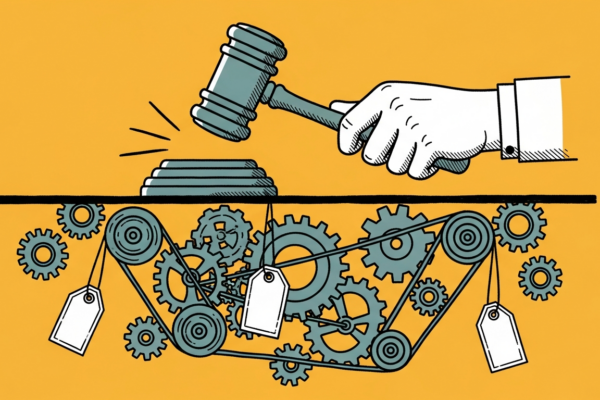
Every advertisement you see uses at least one propaganda technique, whether the creative team behind it would admit that or not. The line between persuasion and propaganda is thinner than most marketers acknowledge, and understanding where your campaigns fall on that spectrum is a professional obligation.
The same methods governments have used to rally nations, recruit soldiers, and demonize enemies now drive brand campaigns worth billions of dollars annually.
What Is Propaganda and Why Should Marketers Care?
Propaganda is the deliberate, systematic attempt to shape perceptions, manipulate cognitions, and direct behavior toward a desired outcome. Garth S. Jowett and Victoria O’Donnell established this definition in their foundational text Propaganda & Persuasion, and it remains the standard used in communication research today.
That definition should sound familiar to anyone who has written a creative brief.
The difference between propaganda and advertising is not technique. It is intent, transparency, and the degree of factual manipulation involved. Advertising sells products through persuasion. Propaganda sells ideas, ideologies, or political positions, often through selective truth or outright distortion. The mechanics, however, are identical. Emotional appeals, social proof, fear, authority, and repetition power both systems.
The word itself traces back to 1622, when the Roman Catholic Church established the Congregatio de Propaganda Fide (Congregation for Propagation of the Faith) to coordinate missionary activity. The original meaning was neutral. It simply meant spreading a message. The negative connotation developed during the 20th century, when governments weaponized mass communication techniques during two world wars and the Cold War.
Marketers should care because consumers are more media-literate than ever.
The 2023 Edelman Trust Barometer found that only one-third of consumers trust most of the brands they buy, reflecting widespread skepticism about corporate honesty. When your audience can spot manipulation, clumsy propaganda-style tactics will destroy trust rather than build it. The brands that thrive are those that use persuasion techniques transparently, giving the audience enough information to make genuine choices while still framing the message persuasively.
The solution is not to avoid persuasion. It is to understand every technique at your disposal and deploy them with honesty.
The 7 Classic Propaganda Techniques (With Modern Advertising Examples)
In 1937, the Institute for Propaganda Analysis (IPA) classified propaganda into seven core techniques. The IPA was founded by Edward Filene, Kirtley Mather, and Clyde R. Miller specifically to help the American public recognize and resist manipulation. Their framework remains the most widely referenced classification system 89 years later.
Each of these seven techniques appears daily in modern advertising campaigns.
1. Bandwagon
The bandwagon technique pressures the audience to conform by suggesting that “everyone” is already on board. It exploits the psychological need to belong and the fear of being left behind.
In advertising, bandwagon messaging takes the form of “Join millions who already switched” or “America’s #1 choice.” Apple’s “Shot on iPhone” campaign is a masterclass in bandwagon propaganda. By showcasing user-generated photos from millions of everyday owners, Apple creates the impression that iPhone photography is a universal cultural activity. The implicit message: if you are not part of this, you are missing out.
McDonald’s “Billions Served” counter uses the same principle at its most literal.
2. Testimonial
Testimonial propaganda uses endorsements from respected, admired, or famous figures to transfer their credibility to a product, cause, or idea.
Nike’s entire brand strategy rests on testimonial propaganda. When Michael Jordan endorsed Air Jordans in 1984, the association between athletic greatness and a shoe was purely manufactured. Nike did not invent superior footwear technology. They invented a brand association between performance excellence and their product by borrowing credibility from an athlete the target audience already worshipped. The same logic drives every Nike slogan and campaign to this day.
Political campaigns use the identical technique when they parade celebrity endorsements at rallies.
3. Plain Folks
The plain folks technique positions the messenger as an ordinary person who shares the audience’s values, struggles, and daily experiences. It builds trust by signaling “I am one of you.”
Insurance companies use this technique relentlessly. Progressive’s “Flo” character is not a celebrity spokesperson. She is an ordinary-looking, slightly quirky employee who talks to you like a neighbor. The character’s entire purpose is to make a massive corporation feel approachable and relatable. Politicians shaking hands at diners and rolling up their sleeves on factory floors deploy the exact same psychology.
In practice, plain folks is the most effective technique for brands selling to middle-income demographics.
4. Transfer
Transfer propaganda takes the positive feelings, authority, or prestige associated with one symbol and attaches them to something else entirely. It works through visual and emotional association rather than logical argument.
When brands wrap themselves in national flags, use patriotic music, or align with military appreciation campaigns, they are executing transfer propaganda. Budweiser’s Fourth of July advertising transfers the emotional power of American patriotism directly onto a beer brand. Coca-Cola’s decades-long association with Christmas, Santa Claus, and family togetherness is another textbook example. The warm feelings attached to holiday memories transfer onto the product without any rational connection between cola and seasonal joy.
This technique is fundamental to brand building at scale.
5. Name-Calling
Name-calling attaches a negative label to a competitor, opponent, or opposing idea to make the audience reject it without examining evidence.
In advertising, direct name-calling is risky and often violates advertising standards. But comparative advertising frequently walks this line. Samsung’s “Next Big Thing” campaign series mocked iPhone users as sheep standing in lines, elderly people who did not understand technology, and trend followers rather than innovators. The ads never called Apple “bad.” They called Apple users outdated, which accomplished the same goal.
Political campaigns use name-calling with far less subtlety, attaching labels like “radical,” “extreme,” or “out of touch” to opponents.
6. Card Stacking
The card stacking technique presents only the facts that support one side of an argument while deliberately omitting contradictory evidence. It creates an incomplete but convincing picture.
Every pharmaceutical advertisement uses card stacking. The primary messaging highlights benefits and relief. Side effects are disclosed in rapid-fire small print or quiet voiceovers because regulations require it, not because the advertiser wants balanced information. The same technique appears when a hotel chain advertises “Award-Winning Rooms” without mentioning that the award came from an obscure publication or was given five years ago.
Card stacking is arguably the most common propaganda technique in modern advertising, and it is the one most likely to damage brand credibility when audiences discover the omitted information.
7. Glittering Generalities
Glittering generalities use emotionally powerful, vague, and positive words to create favorable impressions without committing to specific claims. Words like “freedom,” “innovation,” “natural,” and “premium” carry enormous emotional weight while meaning almost nothing in concrete terms.
This technique saturates brand taglines. “Think Different” from Apple. “Open Happiness” from Coca-Cola. “The Best a Man Can Get” from Gillette. None of these slogans make a falsifiable claim. They generate positive emotional associations through language that sounds important and feels aspirational but commits the brand to nothing measurable.
In my experience across 17 years of advertising and marketing work, glittering generalities are the technique most marketers deploy without realizing they are using propaganda at all. The next time you write a tagline, count how many of your words carry emotional weight versus concrete meaning.
Propaganda Techniques Comparison Table
| Technique | Psychological Lever | Advertising Example | Risk Level for Brands |
|---|---|---|---|
| Bandwagon | Conformity, fear of missing out | “Join 10 million subscribers” | Low |
| Testimonial | Authority, trust transfer | Celebrity endorsements | Medium (if endorser falls from favor) |
| Plain Folks | Relatability, in-group belonging | Insurance “neighbor” spokespersons | Low |
| Transfer | Emotional association | Patriotic branding, cause marketing | Medium (if perceived as exploitative) |
| Name-Calling | Fear, disgust, ridicule | Comparative attack ads | High |
| Card Stacking | Selective evidence bias | Highlighting benefits, burying risks | High (regulatory and trust risk) |
| Glittering Generalities | Aspiration, positive emotion | Vague brand taglines | Low |
6 Advanced Propaganda Techniques Used in Modern Marketing
The IPA’s seven categories are essential, but they were defined in the 1930s. Modern propaganda and digital advertising have evolved well beyond them. The following six techniques are equally important for today’s marketers to understand.
8. Fear Appeal (Appeal to Fear)
Fear appeal propaganda builds support or drives action by instilling anxiety about what will happen if the audience does not comply.
Insurance, cybersecurity, and home security companies build entire marketing strategies around fear. ADT’s advertising shows families threatened by break-ins. LifeLock warns of catastrophic identity theft. The message is always the same: a terrible outcome is imminent, and only this product stands between you and disaster. Anti-smoking campaigns like “Truth” used graphic imagery of diseased lungs to generate visceral fear responses that drove measurable behavior change.
Fear appeal works because the human brain processes threats faster than rewards. Neuroscience research has shown that the amygdala, which governs fear responses, activates before the prefrontal cortex, which handles rational evaluation, even has time to engage. Effective fear appeal campaigns exploit this biological timing gap to generate action before the audience thinks critically about the message.
9. Repetition (Ad Nauseam)
The repetition technique hammers a simple message or slogan until it becomes accepted truth through sheer familiarity. The more you hear something, the more likely you are to believe it. Psychologists call this the “illusory truth effect.”
A 2015 study published in the Journal of Experimental Psychology confirmed that repeated exposure to a statement increases perceived truthfulness, even when the statement is labeled as false. This finding has profound implications for marketers. It means that reach and frequency are not just media efficiency metrics. They are persuasion mechanisms. The more often your audience encounters your core message, the more they accept it as true, regardless of whether they consciously evaluate the claim.
Head & Shoulders did not become the world’s top-selling shampoo because of product superiority. It became number one by repeating its name and dandruff-fighting claim across every medium, in every market, for decades. Coca-Cola spends roughly $4 billion annually on advertising, ensuring that its brand name appears more frequently than any competitor’s in virtually every market worldwide.
Repetition is the bluntest propaganda instrument, and it remains the most reliable.
10. Appeal to Authority
Appeal to authority goes beyond celebrity testimonials. It uses credentials, institutional prestige, and expert status to make claims feel unquestionable.
“4 out of 5 dentists recommend” is the most iconic appeal to authority in advertising history. The audience does not know which dentists, what the study methodology was, or whether the fifth dentist had a valid objection. The statistic sounds authoritative, and that is enough. Skincare brands citing “dermatologist-tested” formulas and supplement companies referencing “clinical studies” employ the same approach.
The technique is effective precisely because most consumers lack the expertise or time to verify authority claims.
11. Scapegoating
Scapegoating directs blame toward a specific group, competitor, or external force to distract from internal weaknesses or to create a common enemy that unifies the audience.
In brand positioning, scapegoating often takes the form of framing an entire industry as the villain. Dollar Shave Club’s launch video positioned Gillette and traditional razor companies as greedy corporations exploiting consumers with overpriced blades. The “villain” was not a single competitor. It was an entire category’s pricing structure. This strategy created instant solidarity between the brand and its audience.
The technique works when the scapegoat is genuinely disliked by the target audience.
12. False Dilemma (Black-and-White Thinking)
The false dilemma presents only two options when many exist, forcing the audience to choose between the propagandist’s preferred option and an obviously undesirable alternative.
“You’re either with us or against us” is the political version. In advertising, the false dilemma appears as “You can keep struggling with [old method] or switch to [our product].” SaaS companies use this constantly. Slack’s early marketing essentially presented two worlds: chaotic email chains or organized Slack channels. The reality that dozens of communication tools existed with varying strengths was irrelevant. The binary framing made the decision feel simple and obvious.
False dilemmas are persuasive because they reduce cognitive load.
13. Emotional Appeal (Pathos)
Pure emotional appeal bypasses rational evaluation entirely and drives decisions through feelings. It is the broadest propaganda technique and the one that overlaps most with legitimate advertising strategy.
Thai Life Insurance has produced some of the most-viewed emotional appeal advertisements in history. Their “Unsung Hero” ad (2014) accumulated over 30 million YouTube views by telling a story of anonymous generosity that had almost nothing to do with insurance. The ad made viewers cry, and then it showed the logo. Google’s “Parisian Love” Super Bowl ad told an entire love story through search queries. Viewers felt the romance, and Google became associated with life’s meaningful moments. P&G’s “Thank You, Mom” Olympic campaign generated massive emotional response by honoring mothers of athletes.
The most effective emotional appeals never mention the product’s features at all.
Historical Propaganda Examples Every Marketer Should Study
History provides the most instructive examples of propaganda at scale. These campaigns shaped nations, and the techniques behind them remain active in commercial marketing today.
Uncle Sam “I Want You” (1917)
James Montgomery Flagg’s iconic poster used the dictat technique, which is a direct command from an authority figure. The pointing finger, direct eye contact, and imperative language (“I Want YOU”) created personal accountability. The viewer felt individually addressed rather than part of an anonymous mass audience.
More than 4 million copies of the poster were printed between 1917 and 1918. The U.S. Army reported a measurable increase in volunteer enlistment during periods of heavy poster distribution, demonstrating that propaganda’s effectiveness is not theoretical.
Modern advertising copies this format constantly. Military recruitment campaigns still use direct address. Brands like Nike use second-person commands: “Just Do It.” The technique transforms mass communication into what feels like a personal conversation, and that perceived intimacy is what makes it effective.
Rosie the Riveter (1943)
“We Can Do It!” combined transfer propaganda (patriotic duty), bandwagon (other women are already working), and glittering generalities (empowerment language) into a single visual. The poster convinced millions of American women to enter the industrial workforce during World War II.
The campaign’s success was measurable. Between 1940 and 1945, the number of women in the U.S. workforce increased by approximately 6.5 million. That is the kind of behavior change most brand campaigns can only dream about achieving. The poster has since been repurposed by feminist movements, corporate diversity campaigns, and consumer brands, which is itself an example of transfer propaganda applied in reverse.
World War I and II Recruitment and War Bond Campaigns
Allied and Axis powers used propaganda posters, films, and radio broadcasts to maintain public support for war efforts spanning years. The techniques were comprehensive. Fear appeals warned citizens about enemy atrocities. Bandwagon messaging normalized rationing and sacrifice. Testimonial propaganda featured soldiers and celebrities urging bond purchases.
The U.S. War Advertising Council, established in 1942, coordinated private sector advertising agencies to produce government propaganda. This organization later became the Ad Council, which still produces public service campaigns today. The institutional connection between wartime propaganda and peacetime advertising is not metaphorical. It is organizational and direct.
Soviet Constructivist Posters (1920s-1930s)
Soviet propaganda pioneered the use of bold graphic design, simplified messaging, and repetitive visual motifs to communicate with largely illiterate populations.
The design principles that made Soviet posters effective, including high-contrast colors, geometric shapes, strong diagonals, and minimal text, became the foundation of modern graphic design and advertising art direction. Shepard Fairey’s Obama “Hope” poster in 2008 drew directly from this visual tradition. So does virtually every startup pitch deck using bold sans-serif typography and flat illustration.
The aesthetics of propaganda became the aesthetics of branding. Any creative director who studies Soviet poster design will recognize the visual grammar that drives modern brand identities.
Nazi Germany’s Ministry of Propaganda (1933-1945)
Joseph Goebbels, Hitler’s Minister of Propaganda, systematized every technique on this list at an industrial scale. His methods included total media control, repetition of simple messages, scapegoating, fear appeals, and the “big lie” technique, which involves repeating a fabrication so massive and so often that people accept it because they cannot believe anyone would lie that boldly.
Studying Nazi propaganda is uncomfortable but necessary. The techniques Goebbels refined did not disappear after 1945. They migrated into advertising, public relations, and political communication. Understanding them is the best defense against their misuse.
Propaganda vs. Advertising: Where Is the Line?
This is the question that matters most for working marketers.
Propaganda and advertising share identical persuasion techniques. The differences lie in three areas: intent, transparency, and relationship to truth. Advertising at its best informs consumers about genuine product benefits through persuasive framing. Propaganda at its worst fabricates reality to serve the propagandist’s agenda regardless of the audience’s interests.
Most marketing falls somewhere between these extremes.
| Dimension | Ethical Advertising | Propaganda |
|---|---|---|
| Intent | Inform and persuade toward a purchase | Manipulate beliefs and behavior for the propagandist’s gain |
| Transparency | Audience knows they are being marketed to | Often disguised as news, education, or organic content |
| Relationship to truth | Selective but factual | Distorts, omits, or fabricates as needed |
| Audience benefit | Product or service provides genuine value | Serves the propagandist, not the audience |
| Accountability | Regulated by advertising standards bodies | Operates outside or above regulatory frameworks |
The practical test is straightforward. Ask yourself: if my audience knew exactly what I am doing and why, would they still find my message acceptable? If the answer is yes, you are advertising. If the answer is no, you have crossed into propaganda.
Consider the spectrum in practice. A car manufacturer highlighting fuel efficiency data in an ad is ethical persuasion. Omitting known safety defects while emphasizing safety ratings is card stacking that crosses into propaganda territory. Fabricating customer reviews to create artificial social proof is outright deception.
This distinction becomes especially important with subliminal advertising techniques and digital advertising methods like microtargeting, where the audience may not fully understand the persuasion mechanisms being used on them. The emergence of AI-generated content and deepfake technology will make these boundaries even harder to police in the years ahead.
Propaganda Techniques in Digital Marketing and Social Media
Social media has created the most powerful propaganda distribution system in human history.
Traditional propaganda required control of mass media, printing presses, and broadcast infrastructure. Governments needed to own or co-opt radio stations, newspapers, and film studios. The cost of propaganda was enormous, and only state actors or major institutions could operate at scale.
Today, anyone with a social media account can deploy propaganda techniques to a global audience at zero cost.
This democratization has made propaganda literacy more important than ever for both marketers and consumers. The same platforms brands use for audience reach are simultaneously being exploited by state-sponsored disinformation operations, conspiracy movements, and bad-faith commercial actors. Marketers who do not understand how propaganda operates in digital channels risk having their brands associated with, or drowned out by, manipulative content that uses identical distribution mechanisms.
The techniques that have found new life in digital channels deserve specific attention.
Algorithmic Amplification
Social media algorithms reward content that generates strong emotional reactions. Content designed for maximum engagement naturally gravitates toward propaganda techniques because fear, outrage, and tribal belonging generate more clicks, shares, and comments than balanced analysis.
Facebook’s own internal research, revealed in the 2021 Facebook Papers, confirmed that content provoking anger received disproportionately higher distribution in News Feed. Marketers who optimize purely for engagement metrics are, by definition, incentivized to use propaganda-style emotional manipulation.
The algorithmic structure rewards the behavior.
Astroturfing
Astroturfing creates the appearance of grassroots support that does not actually exist. In digital marketing, this takes the form of fake reviews, bot-generated social media engagement, and manufactured “viral” moments.
The technique combines bandwagon propaganda (look how many people support this) with deception (the support is fabricated). Major brands have been caught astroturfing, and the reputational damage is severe. Samsung paid a $340,000 fine in Taiwan in 2013 after hiring people to post fake reviews criticizing HTC products and praising Samsung phones.
Astroturfing is propaganda in its purest modern form.
Microtargeting and Filter Bubbles
Digital platforms allow propagandists and advertisers to deliver different messages to different audience segments based on psychological profiles, browsing history, and demographic data. This is card stacking at industrial scale. Each audience segment receives only the information designed to move them, never the complete picture.
The Cambridge Analytica scandal in 2018 demonstrated how Facebook user data could be weaponized for political propaganda through psychographic microtargeting. The firm harvested data from approximately 87 million Facebook users without consent, then used personality models to craft tailored political messages for the 2016 U.S. presidential election and the Brexit referendum.
The same targeting capabilities are available to every brand running Facebook ads today. The tools are identical. The ethical boundaries are set by the marketer.
Influencer Marketing as Modern Testimonial Propaganda
Influencer marketing is testimonial propaganda adapted for the social media era. Instead of a single celebrity endorsement on television, brands distribute testimonial messaging across hundreds or thousands of content creators, each speaking to a niche target audience with perceived authenticity.
The FTC has issued updated guidelines requiring influencers to disclose paid partnerships, but enforcement remains inconsistent. The FTC has continued to issue enforcement actions against influencers who fail to adequately disclose paid partnerships. When audiences discover undisclosed sponsorships, the trust damage extends beyond the individual influencer to the brand itself.
The technique works because influencers combine testimonial authority with plain folks relatability, layering two propaganda techniques simultaneously.
How to Identify Propaganda Techniques in Practice
Whether you are analyzing a competitor’s campaign, auditing your own messaging, or developing media literacy as a consumer, use this framework to identify propaganda techniques in any piece of communication.
Step 1: Identify the Emotional Trigger
Every propaganda technique targets a specific emotion. Fear, belonging, pride, disgust, aspiration, and anger are the six most commonly targeted emotions. Ask yourself what feeling the message is trying to create before examining its factual content. If the emotional response comes before rational evaluation, you are looking at a propaganda technique.
Step 2: Check for Missing Information
Card stacking is the most prevalent technique in commercial advertising. Look for what the message does not say. What competing products exist? What are the downsides? What conditions or limitations apply? Omission is the subtlest and most dangerous form of manipulation.
Step 3: Evaluate the Source’s Credibility
Testimonial and appeal to authority techniques rely on borrowed credibility. Ask whether the endorser has genuine expertise in the relevant domain. A famous actor endorsing a financial product has celebrity status but no financial credentials. A dermatologist endorsing a skincare product has relevant authority. The distinction matters.
Step 4: Look for Binary Framing
False dilemmas appear constantly in marketing copy. “The old way vs. our way” presentations eliminate nuance and competing alternatives. Any message that presents exactly two options, one clearly inferior, is likely deploying the false dilemma technique.
Step 5: Measure the Claim-to-Evidence Ratio
Glittering generalities make sweeping positive claims without evidence. Count the adjectives versus the data points in any advertisement. If the ratio skews heavily toward emotional language and away from verifiable facts, the technique is in play.
This framework applies equally to analyzing competitor campaigns and auditing your own. Run your next campaign brief through these five steps before production begins. Any technique you identify is not inherently wrong, but it should be deployed consciously rather than accidentally.
Using Propaganda Awareness in Your Marketing Strategy
Understanding propaganda techniques does not mean avoiding persuasion. It means wielding persuasion with precision, transparency, and ethical boundaries.
The most effective modern campaigns use propaganda techniques openly. Patagonia’s “Don’t Buy This Jacket” campaign used reverse psychology and plain folks authenticity to strengthen brand loyalty. The technique was visible, and consumers respected the brand more for it. Guerrilla marketing campaigns often use transfer and emotional appeal in transparent ways that audiences find creative rather than manipulative.
Three principles separate ethical persuasion from harmful propaganda in marketing practice.
First, maintain factual accuracy. You can frame facts persuasively. You cannot fabricate them. Second, preserve audience autonomy. Give people enough information to make a genuine choice rather than engineering a false one. Third, accept accountability. If your persuasion strategy would embarrass you on the front page of a trade publication, revise it.
Brands that follow these principles build durable trust.
In practical terms, this means auditing your campaigns against the 13 techniques outlined above. Identify which techniques you are using, confirm that your factual claims are verifiable, and ensure your audience would find your methods acceptable if fully disclosed. The Federal Trade Commission’s advertising guidelines provide a regulatory baseline, but ethical best practice goes further than compliance.
Brands that cross into propaganda territory eventually face the backlash. Volkswagen’s “Clean Diesel” campaign used card stacking and appeal to authority to position diesel vehicles as environmentally friendly, while the company actively concealed emissions test fraud. The resulting scandal cost Volkswagen over $33 billion in fines and settlements and destroyed years of carefully built brand equity.
The best brand positioning is built on genuine differentiation, not on manufactured perceptions. Propaganda can win a news cycle. Only truth can win a decade.
Frequently Asked Questions
What are the 7 types of propaganda techniques?
The seven classic propaganda techniques, classified by the Institute for Propaganda Analysis in 1937, are bandwagon, testimonial, plain folks, transfer, name-calling, card stacking, and glittering generalities. Each technique targets a different psychological lever. Bandwagon exploits conformity. Testimonial borrows authority. Plain folks creates relatability. Transfer associates unrelated positive symbols. Name-calling attaches negative labels. Card stacking presents selective evidence. Glittering generalities use vague positive language to create emotional impressions without making specific claims.
What is the difference between propaganda and advertising?
Propaganda and advertising use identical persuasion techniques, but they differ in intent, transparency, and relationship to truth. Advertising informs consumers about products through persuasive framing and operates within regulatory frameworks. Propaganda manipulates beliefs to serve the propagandist’s interests, often through distortion or fabrication, and frequently disguises itself as news, education, or organic content. The practical test: if the audience knew your full strategy, would they find it acceptable?
How is propaganda used in advertising today?
Modern advertising uses every propaganda technique identified in the 1930s, plus digital-era additions like algorithmic amplification, astroturfing, and psychographic microtargeting. Bandwagon messaging drives social proof in e-commerce reviews. Testimonial propaganda powers influencer marketing. Fear appeals drive insurance and security advertising. Glittering generalities dominate brand taglines. The techniques are legal and common. The ethical question is whether brands use them transparently and truthfully.
What is the most common propaganda technique in marketing?
Card stacking is the most pervasive propaganda technique in commercial marketing. Nearly every advertisement emphasizes benefits while minimizing or omitting drawbacks. This selective presentation is so normalized that most marketers do not recognize it as a propaganda technique. Glittering generalities rank second, appearing in virtually every brand tagline and mission statement that uses aspirational language without making verifiable claims.
How can consumers protect themselves from propaganda?
Consumers can build propaganda resistance by following a five-step evaluation process. First, identify the emotional trigger before engaging with the factual content. Second, ask what information is missing from the message. Third, evaluate whether the source has genuine expertise in the relevant domain. Fourth, look for false binary framing that eliminates alternatives. Fifth, compare the ratio of emotional language to verifiable evidence. Media literacy organizations like the News Literacy Project offer free resources for developing these critical evaluation skills.
The Bottom Line for Marketers
Propaganda techniques are the DNA of persuasive communication. Every marketer uses them, whether consciously or not, from the smallest social media post to the largest global brand campaign.
The seven techniques classified by the IPA in 1937 were not inventions. They were observations of patterns that have driven human persuasion for millennia. Bandwagon, testimonial, plain folks, transfer, name-calling, card stacking, and glittering generalities appear in every campaign brief, every brand strategy deck, and every piece of social proof on your website.
Knowing these techniques makes you more effective and more responsible.
The difference between a great marketer and a propagandist is not the toolkit. It is the commitment to truth, transparency, and genuine audience benefit. Study these propaganda techniques examples, recognize them in your own work, and decide which side of the line your campaigns will stand on. For more on persuasive advertising methods, explore our guide to subliminal advertising examples and guerrilla marketing techniques that push creative boundaries without crossing ethical ones.