
Baseball Slogans: Capturing the Game’s Rhythm
The crack of the bat, the roar of the crowd, and somewhere in between, a simple phrase that captures the soul of America’s pastime. Baseball slogans aren’t just cheerleader chants or motivational posters taped to locker room walls.
They’re the distilled essence of what makes nine innings feel like a lifetime and a season stretch across summer’s arc. From Little League diamonds to Yankee Stadium, the right slogan can transform a collection of players into a unified force.
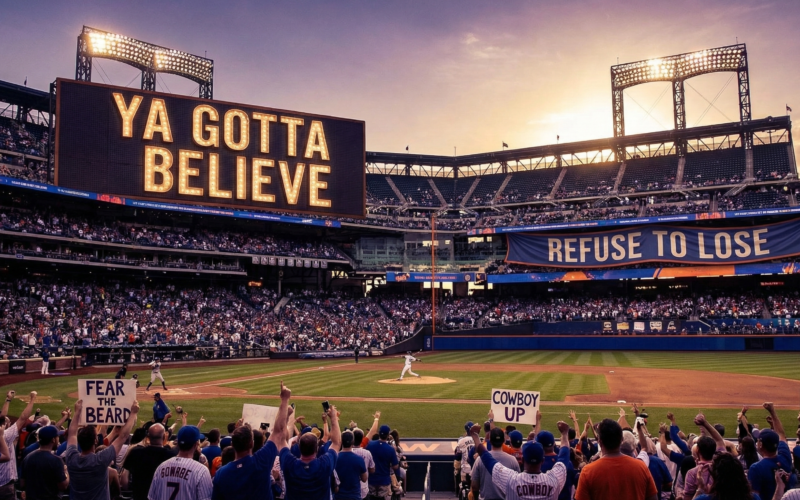
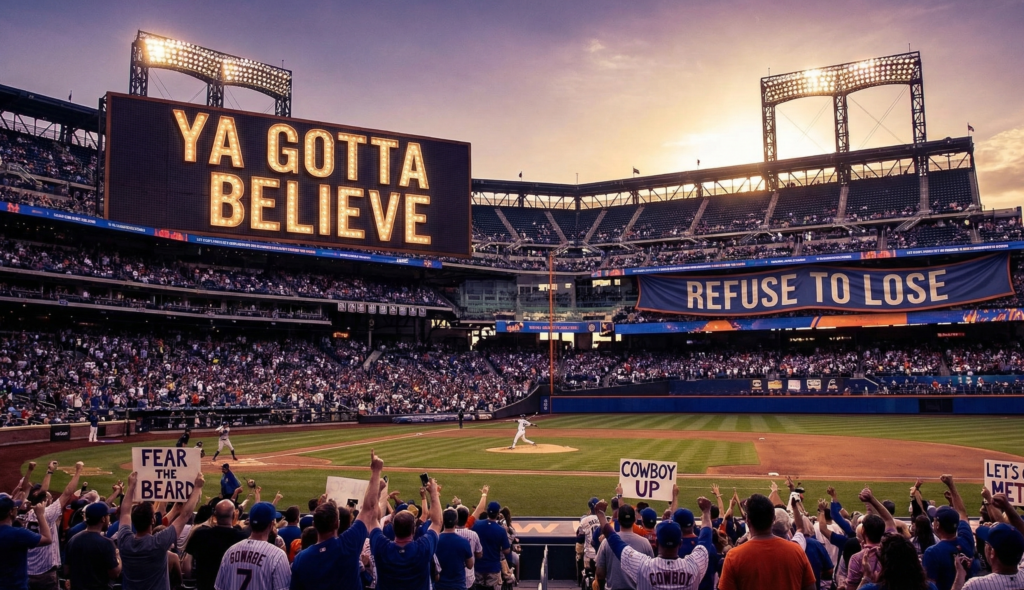
Consider the 1973 New York Mets, whose “Ya Gotta Believe” rallied a franchise from last place to the World Series. Or the way “Refuse to Lose” became Seattle’s battle cry during their historic 1995 playoff run. These aren’t accidents of marketing.
They’re carefully crafted expressions of brand positioning that can shift momentum, galvanize fan bases, and occasionally, alter the trajectory of entire seasons.
What separates memorable baseball slogans from forgettable motivational speak?
The best ones capture something specific about the game’s rhythm, its psychology, or its unique brand of pressure. They acknowledge that baseball, unlike other sports, gives you time to think between pitches, to doubt, to overthink.
The most powerful taglines speak directly to that mental game. These slogans span decades of professional and amateur baseball, from MLB franchises to high school teams that understood the power of the right rallying cry:
50 Great Baseball Team Slogans and Taglines
| Slogan | Context/Origin |
|---|---|
| Ya Gotta Believe | 1973 New York Mets, popularized by Tug McGraw |
| Refuse to Lose | 1995 Seattle Mariners playoff campaign |
| Fear the Beard | 2012 San Francisco Giants, referencing Brian Wilson |
| Cowboy Up | 2003 Boston Red Sox postseason run |
| Rally Together | 2019 Washington Nationals World Series campaign |
| Believe in Blue | Los Angeles Dodgers recurring theme |
| Orange October | San Francisco Giants playoff branding |
| Team of Destiny | 2002 Anaheim Angels World Series run |
| Grit and Grind | Baltimore Orioles rebuild era |
| Cardiac Kids | 1982 Atlanta Braves late-game heroics |
| Every Game is Game Seven | Universal playoff mentality slogan |
| Deeds Not Words | Classic team accountability motto |
| Hit, Run, Score! | Fundamental baseball strategy simplified |
| Out Hustle, Out Work, Out Play | Triple emphasis on competitive advantage |
| Respect All, Fear None | Confident humility balance |
| Practice Like a Champion Today | Daily excellence mindset |
| Championships Are Won at Practice | Preparation over performance focus |
| Hard Work Beats Talent When Talent Doesn’t Work Hard | Effort over ability philosophy |
| Don’t Let Fear of Striking Out Hold You Back | Babe Ruth-inspired confidence building |
| It’s About Playing Catch and Throwing Strikes | Back-to-basics fundamentals |
| Life is a Game. Baseball is Serious. | Priority inversion humor |
| There’s No Place Like Home | Home field advantage emphasis |
| United We Play, United We Win | Team unity over individual talent |
| Sweat Plus Sacrifice Equals Success | Mathematical approach to achievement |
| Whatever It Takes | Unlimited commitment statement |
| We Want a Pitcher, Not a Belly Itcher | Classic fan taunt turned team motivation |
| Stand Tall, Talk Small, Play Ball | Confidence with humility formula |
| Shut Up and Pitch! | Performance over discussion directive |
| Practice Winning Every Day | Habit formation strategy |
| Teamwork Makes the Dream Work | Collective achievement focus |
| All It Takes is All You’ve Got | Maximum effort expectation |
| Attitude is Everything | Mental game priority |
| Batter Up! | Ready position call to action |
| Look Up, Get Up, Never Give Up | Resilience through adversity |
| Never Let Good Enough Be Enough | Continuous improvement mandate |
| Winning is a Habit, Success is a Choice | Behavioral psychology approach |
| If It’s Gotta Be, It Starts With Me | Individual responsibility within team |
| Got Game? | Skill confidence challenge |
| Play Ball Like Your Hair’s on Fire | Urgency and intensity visualization |
| Champions Train, Losers Complain | Work ethic versus excuse mentality |
| Diamond Dreams, Stadium Screams | Aspiration meets crowd energy |
| Bat Around, Win the Crown | Offensive production goal |
| Hustle On, Hustle Off | Consistent effort standard |
| No Mercy, No Regrets | Competitive ruthlessness |
| Strike Fear, Not Out | Intimidation over failure |
| Leave Everything on the Field | Complete effort commitment |
| Winners Never Quit, Quitters Never Win | Persistence philosophy |
| Baseball is Life, Everything Else is Details | Priority hierarchy statement |
| One Team, One Dream | Unified purpose declaration |
| Play Hard or Go Home | Effort ultimatum |
| Diamond Dynasty | Legacy building aspiration |
The Psychology Behind “Ya Gotta Believe”
No baseball slogan has penetrated American culture quite like “Ya Gotta Believe.” Coined by New York Mets reliever Tug McGraw during the team’s improbable 1973 pennant chase, the phrase transformed from clubhouse motivation to citywide rally cry in just six weeks.
The genius lies in its grammatical imperfection. “Ya Gotta Believe” deliberately abandons proper English for street-level authenticity. McGraw, a Louisiana native with a philosophy degree from Stanford, understood something that Madison Avenue often misses: perfect grammar can feel manufactured, while strategic imperfection signals genuine passion.
The slogan’s psychological power stems from its implicit acknowledgment of doubt. Most motivational phrases pretend uncertainty doesn’t exist.
“Ya Gotta Believe” admits that belief requires effort, that faith must be chosen rather than assumed. This resonates particularly well in baseball, where failure happens 70% of the time even for the best hitters.
McGraw first used the phrase during a team meeting in August 1973, when the Mets sat 12 games behind the division-leading Cardinals. Manager Yogi Berra had just finished explaining their mathematical chances of reaching the playoffs. McGraw stood up and shouted, “Ya gotta believe!”
The room erupted in laughter, then slowly transformed into genuine conviction. The slogan worked because it matched the Mets’ underdog identity perfectly.
This wasn’t the Yankees’ imperial confidence or the Dodgers’ Hollywood glamour. This was blue-collar belief against overwhelming odds. The phrase became so associated with the franchise that it returned during their 1986 World Series championship run, proving its staying power across generations.
Emotional Differentiation for the Win
From a brand positioning perspective, “Ya Gotta Believe” succeeded because it created emotional differentiation in a commodity market. All teams want to win, but only the Mets represented the necessity of irrational faith. The slogan gave fans permission to hope despite evidence suggesting they shouldn’t.
The phrase’s influence extends far beyond Queens. Political campaigns, startup companies, and motivational speakers have borrowed its structure and sentiment.
Yet none have matched its original impact, largely because the slogan emerged organically from genuine desperation rather than marketing calculation.
From Babe Ruth to Social Media: How Baseball Slogans Evolved
Baseball slogans have evolved through distinct eras, each reflecting the broader cultural context of American sports marketing. The transformation reveals how teams learned to weaponize language as effectively as any fastball.
The Mythology Era (1920s-1960s)
Early baseball slogans focused on larger-than-life personalities and mythical achievements. “The Sultan of Swat,” “The Iron Horse,” and “Joltin’ Joe” weren’t just nicknames but brand equity builders that elevated players to folkloric status. Teams relied on individual star power rather than collective identity.
This approach worked when baseball faced minimal competition for America’s atte ntion. Radio broadcasts needed colorful language to paint pictures for listeners who couldn’t see the action.
Slogans from this era emphasized heroic story over psychological motivation.
The Television Era (1960s-1990s)
Television changed everything. Suddenly, fans could see players’ humanity alongside their he roics. Slogans shifted from mythological to motivational, addressing teams rather than individuals. “We Are Family” (1979 Pittsburgh Pirates) and “Gotta Have Heart” became anthems that acknowledged baseball as a collective enterprise.
This period also introduced the concept of seasonal campaign slogans. Teams began hiring advertising agencies specifically to develop memorable phrases for playoff runs.
The investment paid off: merchandise sales tied to specific slogans often exceeded regular season totals.
The Analytics Era (2000s-2010s)
As sabermetrics changed how teams evaluated players, slogans began incorporating data-driven concepts disguised as emotional appeals. “Moneyball” wasn’t just a book title but a philosophy that influenced how teams talked about efficiency and value creation.
Phrases like “Process over Results” and “Trust the Process” emerged from organizations that had embraced analytical approaches to team building.
These slogans served dual purposes: reassuring fans during rebuilding years while signaling organizational sophistication. Twitter, Instagram, and TikTok compressed attention spans while expanding platforms for slogan distribution.
The Social Media Era (2010s-Present)
Modern baseball slogans must work as hashtags, memes, and 15-second video captions. “Let’s Go Mets” becomes #LFGM. “Orange October” spawns thousands of user-generated content pieces.
Teams now develop slogans with viral potential in mind. The best recent examples achieve dual functionality: they motivate players and fans while generating social media engagement. This explains why contemporary slogans often feature wordplay, alliteration, or memorable abbreviations.
The shift also democratized slogan creation. Fan-generated phrases can gain more traction than official team marketing.
“This is Our City” started as an organic rally cry before teams adopted it as official branding.
What Makes a Baseball Slogan Stick: Five Marketing Lessons
Analyzing successful baseball slogans reveals patterns that extend beyond sports marketing. These lessons apply to any organization trying to create memorable brand awareness and emotional connection.

Authenticity Trumps Polish
The most enduring baseball slogans feel discovered rather than designed. “Ya Gotta Believe” succeeded precisely because it sounded like something a player would actually say in a moment of genuine emotion. Compare this to manufactured phrases like “Passion, Pride, Tradition” that could apply to any team in any sport.
Authentic slogans often contain grammatical imperfections or regional dialect that reflects their origin community. “Cowboy Up” resonated with Boston Red Sox fans because it matched the team’s blue-collar identity, even though the phrase came from Western rodeo culture.
Specificity Creates Connection
Generic motivational language fails because it lacks contextual relevance. “We Want a Pitcher, Not a Belly Itcher” works because it addresses a specific baseball situation with humor that acknowledges the game’s peculiar rhythms. The specificity makes it memorable and shareable.
Teams that understand their unique position create slogans that couldn’t work for anyone else. “There’s No Place Like Home” uses baseball’s distinctive emphasis on returning to home plate while playing into Kansas City’s cultural identity.
Emotional Permission Over Rational Arguments
The best baseball slogans give fans and players permission to feel something they might otherwise suppress. “Refuse to Lose” acknowledges that losing is possible while declaring it unacceptable. This emotional permission proves more powerful than logical arguments about team strength.
“Fear the Beard” worked for the San Francisco Giants because it gave fans permission to be playfully intimidating rather than respectfully supportive. The slogan transformed facial hair into psychological warfare.
Rhythm and Repetition Drive Retention
Memorable slogans often feature internal rhyme, alliteration, or rhythmic patterns that make them easy to chant. “Rally Together” uses the double ‘R’ sound and equal syllable count to create natural cadence. “Grit and Grind” uses alliteration with hard consonants that sound aggressive when shouted.
This isn’t accidental. Teams increasingly test slogan candidates with focus groups, measuring both comprehension and vocal repeatability.
A phrase that reads well but sounds awkward when chanted won’t survive October crowds.
Cultural Moment Amplification
The most successful baseball slogans capture something already happening in the broader culture and amplify it through sports context. “Cowboy Up” borrowed from country music’s resurgence during the early 2000s. “Fear the Beard” rode the hipster facial hair trend.
This requires teams to understand not just their roster but their cultural moment. Slogans that feel disconnected from contemporary language patterns quickly sound dated or forced.
How Baseball Slogans Compare to Other Sports
Baseball’s unique rhythm creates distinct advantages and challenges for slogan development compared to other major sports. Understanding these differences explains why certain approaches work better on the diamond than the court or field. Football slogans emphasize aggression and warfare metaphors: “Unleash Hell,” “Dominate,” “Defense Wins Championships.”
The sport’s violent nature and weekly game schedule create natural drama that slogans can amplify. Basketball relies on individual star power and urban culture: “We Believe,” “Strength in Numbers,” “All In.”
The fast pace and highlight-reel moments lend themselves to energy-focused messaging.

Baseball operates differently. The game’s contemplative pace allows for more nuanced psychological messaging. Where football might use “Destroy,” baseball succeeds with “Ya Gotta Believe.” The sport’s failure-friendly nature (even great hitters fail 70% of the time) creates space for slogans that acknowledge doubt while building confidence.
The 162-game season also changes slogan strategy. Football teams can maintain intensity around a single phrase for 16 games.
Baseball slogans must sustain motivation across summer’s long arc, requiring different emotional archite cture. This explains why successful baseball slogans often focus on process (“Practice Winning Every Day”) rather than outcome (“Win Now”).
Baseball’s generational fanbase creates additional complexity. Unlike basketball, which skews younger, or football, which attracts casual viewers, baseball must appeal to families spanning multiple generations. Effective slogans work for eight-year-olds and eighty-year-olds simultaneously, requiring careful balance between contemporary relevance and timeless appeal.
The unique failure rate in baseball also shapes slogan strategy. In no other major sport do the best performers fail 70% of the time.
This reality makes belief-based messaging particularly powerful, as both players and fans constantly need motivation to maintain confidence despite frequent setbacks. Football’s single-elimination playoffs create different pressure than baseball’s extended series format, requiring different psychological approaches to motivation.
Frequently Asked Questions
What makes a great baseball team slogan?
Great baseball slogans combine authenticity, specificity, and emotional resonance. They should sound like something players would naturally say, address the unique aspects of baseball culture, and give fans permission to feel passionate about their team.
The best examples often contain slight grammatical imperfections or regional dialect that reflects their origin community.
How do teams choose their official slogans?
Most MLB teams now work with advertising agencies or internal marketing departments to develop seasonal slogans, especially for playoff campaigns. The process typically involves focus group testing, social media analysis, and approval from both front office executives and player leadership.
However, the most memorable slogans often emerge organically from clubhouse culture before being officially adopted.
Why do baseball slogans often focus on belief and persistence?
Baseball’s unique failure rate creates natural opportunities for slogans about perseverance. Even the best hitters fail seven out of ten times, and every team loses roughly 60 games per season.
This reality makes belief-based messaging particularly relevant, as fans and players constantly need motivation to maintain confidence despite frequent setbacks.
Can amateur teams use MLB slogans legally?
Generic motivational phrases like “Never Give Up” or “Play Like Champions” are not trademarked and can be used freely. However, team-specific slogans associated with particular franchises (like “Ya Gotta Believe” with the Mets) may have trademark protection.
Amateur teams are generally safe using universal slogans but should create original phrases for official merchandise or promotional materials.
How has social media changed baseball slogan strategy?
Social media has compressed slogans into hashtag-friendly formats while expanded their reach potential. Modern teams develop phrases that work as both rally cries and viral content, often incorporating wordplay or abbreviations that translate well to Twitter and Instagram.
Fan-generated slogans can now gain more traction than official team marketing, forcing organizations to monitor and sometimes adopt grassroots phrases that resonate with their communities.