Coca Cola’s Slogans: 50+ Changes in 137 Years
Coca-Cola has burned through more than 50 slogans in its 137-year history, yet only a handful achieve true cultural penetration. “Open Happiness” ran for seven years before Coca-Cola quietly retired it in 2016, replacing it with “Taste the Feeling.”
The reason reveals everything about modern brand positioning.
While most brands chase viral moments, Coca-Cola’s slogan strategy demonstrates something more sophisticated: how market leaders adapt messaging without abandoning identity.
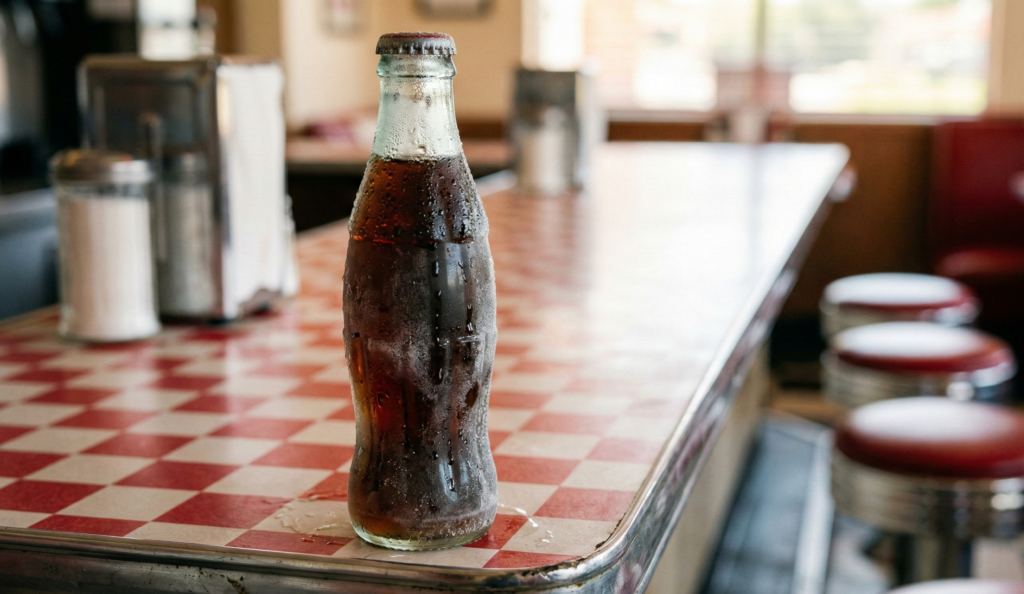
From “Delicious and Refreshing” in 1886 to today’s “Taste the Feeling,” each tagline reflects not just changing consumer preferences, but strategic responses to competitive pressure, cultural shifts, and internal brand philosophy evolution.
The company’s approach to slogan development offers a masterclass in maintaining relevance across multiple generations. Unlike brands that chase trends, Coca-Cola’s messaging evolution follows deliberate patterns that reveal how global brands navigate changing markets while preserving core equity.
Each era transition tells a story about American culture, advertising innovation, and the delicate balance between consistency and adaptation.
Coke Slogans and Taglines: Complete Timeline
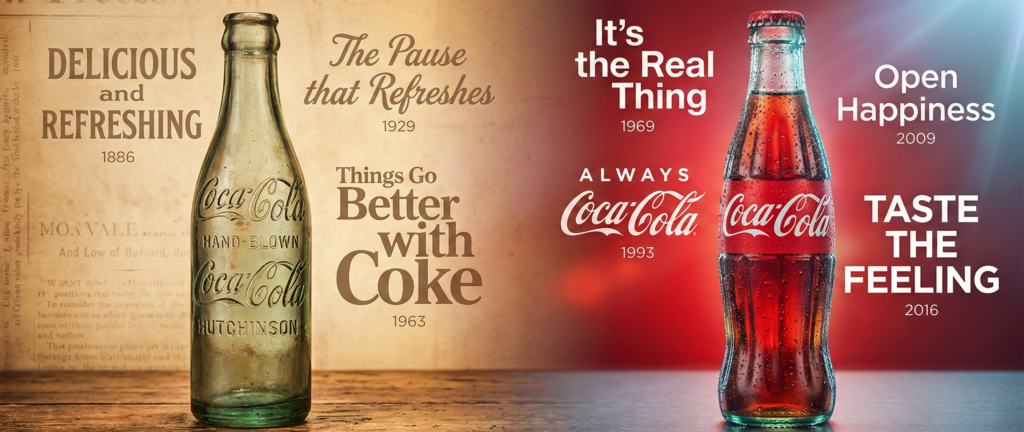
Here’s the complete evolution of Coca-Cola’s primary slogans, showing how the brand adapted its voice across 13 decades:
| Year | Slogan | Duration | Strategic Focus |
|---|---|---|---|
| 1886 | Delicious and Refreshing | 36 years | Product benefits |
| 1904 | Drink Coca-Cola | 1 year | Direct command |
| 1905 | Coca-Cola Revives and Sustains | 1 year | Functional benefits |
| 1906 | The Great National Temperance Beverage | 1 year | Social positioning |
| 1907 | Good to the Last Drop | 10 years | Quality promise |
| 1917 | Three Million a Day | 5 years | Popularity proof |
| 1922 | Thirst Knows No Season | 7 years | Year-round consumption |
| 1929 | The Pause that Refreshes | 21 years | Lifestyle integration |
| 1963 | Things Go Better With Coke | 6 years | Social enhancement |
| 1969 | It’s the Real Thing | 6 years | Authenticity claim |
| 1979 | Have a Coke and a Smile | 3 years | Emotional connection |
| 1982 | Coke Is It | 6 years | Cultural dominance |
| 1993 | Always Coca-Cola | 8 years | Ubiquity and permanence |
| 2009 | Open Happiness | 7 years | Global optimism |
| 2016 | Taste the Feeling | 8+ years | Sensory experience |
“It’s the Real Thing”: The Slogan That Defined an Era
“It’s the Real Thing” launched in 1969 and became Coca-Cola’s most culturally significant slogan, though few realize it came from creative desperation.
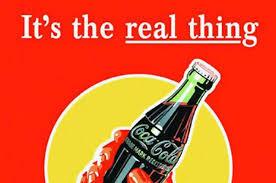
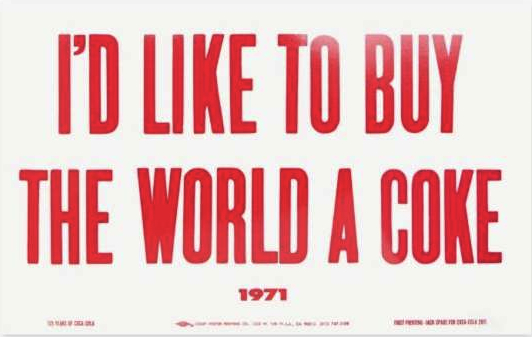
McCann Erickson’s Bill Backer created the line after watching frustrated travelers bond over Cokes during a London fog delay. The campaign that followed. “I’d Like to Buy the World a Coke”. turned a soft drink commercial into a cultural anthem.
The genius lay not in the words themselves, but in their timing. As Americans questioned authenticity across politics, culture, and commerce, Coca-Cola positioned itself as genuinely real.
The slogan worked because it addressed competitive pressure from Pepsi’s “Pepsi Generation” campaign while capturing broader cultural anxieties about truth and authenticity in the Vietnam era.
Strategic Context and Competitive Response
Pepsi’s youth-focused messaging had gained significant traction throughout the 1960s, forcing Coca-Cola to defend its market position. Rather than match Pepsi’s demographic targeting, “It’s the Real Thing” made a bolder claim about fundamental authenticity.
The campaign suggested that while competitors might mimic Coca-Cola’s taste, only Coke delivered the genuine article.
Industry analysis from McCann Erickson’s internal documents reveals the strategic thinking: position Coca-Cola as the original against imitators, rather than competing on taste or demographics.
This approach proved smart as “It’s the Real Thing” became shorthand for authenticity across American culture, appearing in everything from political speeches to academic discussions about consumer psychology.
Cultural Impact and Legacy
The campaign’s cultural penetration exceeded typical advertising success. “I’d Like to Buy the World a Coke” reached #7 on the Billboard Hot 100, while the “Real Thing” concept influenced how Americans discussed authenticity for decades.
The slogan’s structure. simple declaration of genuineness. became a template that brands still follow today.
More importantly, “It’s the Real Thing” established Coca-Cola’s approach to handling competitive pressure: instead of matching competitors’ tactics, elevate the conversation to brand philosophy.
This strategy would reappear in later campaigns, from “Always Coca-Cola” through “Taste the Feeling,” showing how successful unique selling propositions create lasting strategic frameworks.
Evolution of Coca-Cola’s Brand Voice Through Slogans
Coca-Cola’s slogan evolution reveals four distinct brand voice phases, each responding to specific market conditions and cultural shifts. Understanding these phases explains how global brands maintain relevance while preserving core identity across generational changes.
Phase 1: Functional Benefits (1886-1950)
Early Coca-Cola slogans focused purely on product attributes. “Delicious and Refreshing” ran for 36 years because it matched how consumers evaluated beverages in an era with limited choices. The company could build brand awareness through straightforward benefit communication.
Slogans like “The Pause that Refreshes” (1929-1950) introduced lifestyle context but remained benefit-focused. This approach worked because Coca-Cola faced minimal competition and could rely on product quality differentiation.
The 21-year lifespan of this slogan shows how simple, benefit-driven messaging can achieve longevity when market conditions remain stable.
Phase 2: Social Integration (1950-1980)
Television’s rise forced Coca-Cola to adapt its messaging for audio-visual consumption. “Things Go Better With Coke” (1963-1969) marked the shift from product benefits to social enhancement. The slogan worked as both spoken line and jingle, showing how technological change drives messaging evolution.
This era established Coca-Cola’s strategy of positioning itself as social catalyst rather than mere refreshment. “Have a Coke and a Smile” (1979-1982) showed this approach, suggesting that Coca-Cola consumption improved interpersonal interactions.
These slogans built emotional connections that purely functional messaging couldn’t achieve.
Phase 3: Cultural Dominance (1980-2000)
“Coke Is It” (1982-1988) represented peak confidence in Coca-Cola’s market position. The slogan’s aggressive simplicity reflected Reagan-era assertiveness while establishing Coca-Cola as cultural standard.
This phase prioritized dominance messaging over benefit communication, assuming consumer familiarity with the product.
“Always Coca-Cola” (1993-2000) pushed this approach further, claiming permanence and ubiquity. The campaign’s success. generating multiple memorable jingles and visual campaigns. showed how confident brands can build extensive creative platforms around simple positioning statements.
Phase 4: Emotional Experience (2000-Present)
The digital era required more nuanced positioning as consumers gained access to unlimited choice and information. “Open Happiness” (2009-2016) positioned Coca-Cola as emotional catalyst, moving beyond refreshment to psychological benefits. This shift reflected post-recession consumer priorities emphasizing experience over consumption.
“Taste the Feeling” (2016-present) represents evolved thinking about experiential messaging.
Rather than promising happiness, the current slogan focuses on immediate sensory experience, suggesting that emotional benefits emerge naturally from product consumption rather than requiring explicit promise.
Marketing Lessons from Coca-Cola’s Slogan Strategy
Coca-Cola’s 137-year slogan history offers actionable insights for modern brand managers facing similar challenges around messaging evolution, competitive pressure, and cultural relevance.
Longevity Requires Strategic Patience
The most successful Coca-Cola slogans ran for extended periods:
- “Delicious and Refreshing”. 36 years of consistent reinforcement
- “The Pause that Refreshes”. 21 years building lifestyle association
- “Always Coca-Cola”. 8 years generating multiple creative executions
This contrasts sharply with brands that change messaging annually, suggesting that slogan effectiveness requires time to build cultural penetration. However, longevity doesn’t mean stagnation. Successful long-running slogans like “Always Coca-Cola” generated dozens of creative executions across multiple campaigns.
The lesson: commit to core messaging while varying creative expression. This approach builds brand equity through consistent reinforcement without creative fatigue.
Competitive Response Through Elevation
When Pepsi challenged Coca-Cola with youth-focused messaging, Coke didn’t match demographic targeting. Instead, “It’s the Real Thing” elevated the conversation to authenticity, making age-based positioning seem superficial.
This pattern repeated throughout Coca-Cola’s history: respond to competitive pressure by changing the conversation rather than matching tactics.
Modern brands can apply this approach by identifying higher-order benefits when competitors attack on specific attributes. If competitors focus on price, elevate to value. If they emphasize features, elevate to outcomes.
Coca-Cola’s success shows that market leaders win by setting conversation terms rather than responding to them.
Cultural Timing Beats Creative Execution
The most memorable Coca-Cola campaigns succeeded because they captured cultural moments rather than achieving creative excellence alone. “It’s the Real Thing” worked because it addressed 1960s authenticity concerns. “Coke Is It” reflected 1980s confidence and assertiveness. “Open Happiness” matched post-recession optimism needs.
This suggests that successful slogan development requires cultural analysis alongside creative development. Brands should evaluate current cultural tensions and anxieties when developing messaging strategy.
The most powerful slogans resolve consumer psychological conflicts rather than simply communicating product benefits.
How Coca-Cola Compares to Competitor Slogan Strategies
The Cola Wars produced some of advertising’s most memorable competitive messaging. While Coca-Cola focused on emotional connection, Pepsi slogans targeted rational choice and youth rebellion. “The Pepsi Generation” positioned Coke as outdated, while “Coke Is It!” responded with confident authority.
The contrasting approaches reflected different brand personalities: Coke as establishment comfort, Pepsi as challenger energy.
Dr Pepper took a completely different route with Dr Pepper slogans emphasizing uniqueness and individuality. “Be a Pepper” celebrated nonconformity while Coke promoted universal connection. Both strategies worked because they appealed to different consumer psychographics.
Coke captured mainstream happiness seekers, Dr Pepper attracted individualists who wanted to stand apart from the crowd.
Analyzing Coca-Cola’s approach against major competitors reveals distinct strategic differences that explain market positioning and consumer perception outcomes.
Coca-Cola vs. Pepsi: Stability vs. Innovation
Pepsi has changed slogans more frequently than Coca-Cola, cycling through “The Pepsi Generation,” “Pepsi. The Choice of a New Generation,” “The Joy of Cola,” and “For the Love of It” within periods when Coca-Cola maintained single campaigns.
This reflects different brand strategies: Pepsi chases cultural trends while Coca-Cola shapes them.
Pepsi’s approach generates more immediate cultural buzz but sacrifices long-term equity building. “The Pepsi Generation” achieved significant impact but lasted only five years compared to Coca-Cola’s longer campaigns. The trade-off reveals philosophical differences about brand building versus market share grabbing.
Learning from Dr Pepper’s Consistency
Dr Pepper’s “Be a Pepper” (1977-1985) and “What’s the worst that could happen?” (2004-2011) show how smaller brands can achieve disproportionate impact through distinctive positioning.
Unlike Coca-Cola’s broad appeal or Pepsi’s youth focus, Dr Pepper embraces quirky individualism, allowing for more creative risk-taking.
The competitive landscape forced each brand toward their strongest positioning. Coca-Cola’s emphasis on shared moments and emotional unity became more pronounced when contrasted against Pepsi’s youth rebellion and Dr Pepper’s quirkiness.
The result: three distinctly positioned brands sharing the same product category without direct overlap in consumer perception.
However, Coca-Cola’s challenge as market leader: messaging must appeal broadly without alienating specific segments. The company’s slogan choices reflect this constraint, favoring universal themes over niche positioning that might limit market reach.
Frequently Asked Questions About Coca-Cola Slogans
What is Coca-Cola’s current slogan?
Coca-Cola’s current global slogan is “Taste the Feeling,” which launched in January 2016. The campaign was developed by multiple agencies including Mercado-McCann, McCann London, McCann New York, and McCann Madrid. Unlike previous slogans that focused on emotional promises, “Taste the Feeling” emphasizes the immediate sensory experience of drinking Coca-Cola.
Why did Coca-Cola change from “Open Happiness” to “Taste the Feeling”?
Marcos de Quinto, Coca-Cola’s former Chief Marketing Officer, replaced “Open Happiness” because he felt it had become “too preachy” and disconnected from the product experience. Internal research suggested consumers found happiness-focused messaging less authentic as economic conditions improved post-recession. “Taste the Feeling” refocuses on the immediate, tangible experience of consuming the product rather than promising abstract emotional benefits.
What was Coca-Cola’s longest-running slogan?
“Delicious and Refreshing” holds the record as Coca-Cola’s longest-running primary slogan, appearing consistently from 1886 to 1922. a 36-year span. This longevity reflected the simpler competitive environment of early consumer marketing, when product benefit communication could sustain brands without frequent messaging updates. The slogan’s success established Coca-Cola’s early market position and brand recognition.
Which Coca-Cola slogan became a hit song?
“I’d Like to Buy the World a Coke,” created for the “It’s the Real Thing” campaign in 1971, became a Billboard Hot 100 hit when re-recorded as “I’d Like to Teach the World to Sing” by The New Seekers. The song reached #7 on the charts and showed how effective advertising jingles could achieve mainstream musical success. This crossover success helped establish the campaign as one of advertising’s most memorable achievements.
How does Coca-Cola develop new slogans?
Coca-Cola typically works with global advertising agencies, primarily McCann Worldgroup, to develop slogans through extensive consumer research, cultural analysis, and strategic planning processes. The company tests messaging across multiple markets before global rollouts, often spending 12-18 months in development phases. Recent campaigns like “Taste the Feeling” involved coordination between multiple McCann offices worldwide to ensure cultural relevance across different regions while maintaining consistent core messaging.