Wendy’s Slogans: One Question Worth $700 Million
Wendy’s discovered what Nike learned decades later: sometimes the best marketing campaigns aren’t about the product at all. When Clara Peller demanded “Where’s the beef?” in 1984, she wasn’t selling hamburgers.
She was selling attitude, skepticism, and the radical idea that consumers deserved better than industry mediocrity. The 81-year-old actress became more famous than most Hollywood stars, and Wendy’s sales jumped 31% that year.
Dave Thomas opened his first restaurant in Columbus, Ohio in 1969, naming it after his 8-year-old daughter Melinda Lou “Wendy” Thomas. But the slogans that followed tell a more complex story than most brand historians acknowledge.
Wendy’s has cycled through distinct brand personalities over five decades, from quality-focused craftsman to cheeky disruptor to premium fast-casual pioneer. Each shift reflected not just changing consumer tastes, but fundamental questions about what fast food could become in America.
The company’s current “Deliciously Different” tagline, adopted in 2016, represents their boldest positioning yet: an explicit rejection of the fast food category itself.
Whether this strategy can sustain growth against McDonald’s efficiency machine and Burger King’s provocative marketing remains the defining question of Wendy’s next chapter.
12 Wendy’s Slogans and Taglines Through the Years
| Slogan/Tagline | Year Introduced | Duration | Campaign Focus |
|---|---|---|---|
| Quality is our Recipe | 1969 | 15 years | Product quality differentiation |
| Where’s the beef? | 1984 | 6 years | Competitive attack on portion sizes |
| The best burgers and a whole lot more | 1990 | 14 years | Menu expansion beyond burgers |
| It’s Better Here | 2004 | 1 year | Experience-focused positioning |
| Eat Great, Even Late | 2004 | 1 year | Late-night dining occasions |
| Do What Tastes Right | 2005 | 3 years | Consumer empowerment and choice |
| It’s waaaay better than fast food. It’s Wendy’s | 2008 | 4 years | Fast-casual category separation |
| It’s waaaay delicious. It’s Wendy’s (Canada) | 2008 | 4 years | Regional taste-focused variant |
| Now that’s better | 2012 | 4 years | Continuous improvement narrative |
| Deliciously Different | 2016 | 8+ years | Premium differentiation strategy |
| Fresh, Never Frozen | 2018 | Ongoing | Product quality sub-campaign |
| 4 for $4 | 2015 | Ongoing | Value positioning sub-campaign |
The table reveals Wendy’s fundamental challenge: finding a consistent brand positioning in a category that rewards both innovation and familiarity.
Unlike McDonald’s, which has maintained “I’m Lovin’ It” since 2003, Wendy’s has searched for its voice across multiple brand personalities. The frequent changes between 2004-2012 suggest internal uncertainty about whether to compete on quality, convenience, or attitude.
The “Where’s the Beef?” Phenomenon: When Slogans Go Beyond Advertising
Clara Peller’s three-word question became more than a tagline. It became a cultural tool that politicians, journalists, and consumers used far beyond hamburgers. Walter Mondale used it against Gary Hart in the 1984 Democratic primaries. Congressional representatives quoted it during budget hearings. The phrase entered dictionaries as a synonym for demanding substance over style.
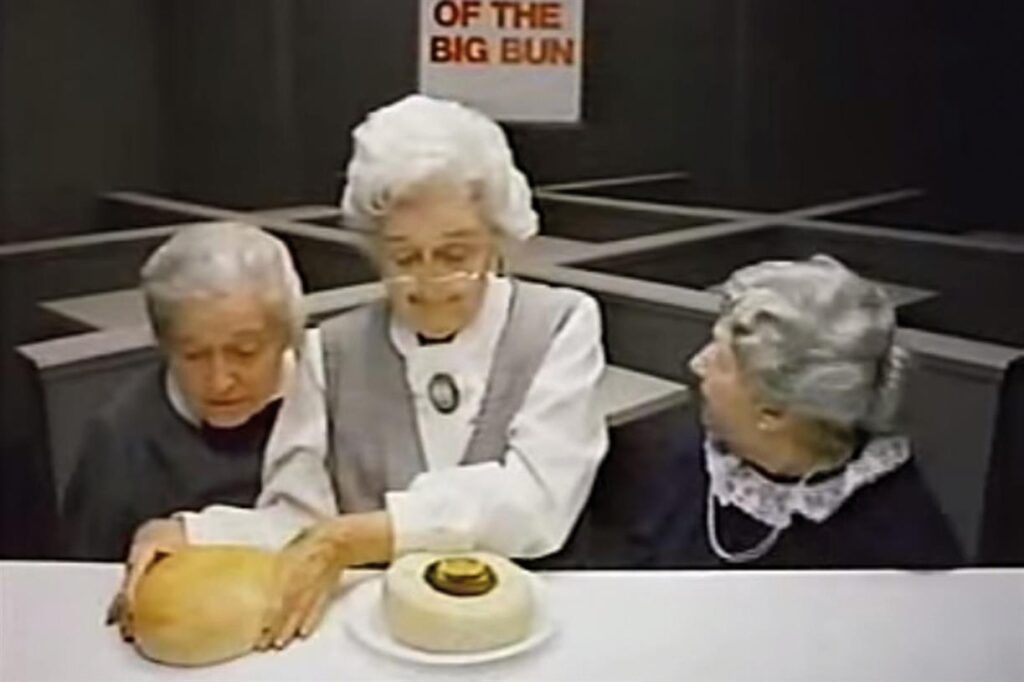
The campaign came from Dancer Fitzgerald Sample, Wendy’s agency at the time, led by creative director Joe Sedelmaier. Industry observers later suggested the concept’s power came from its perfect match of message and messenger.
Peller, found in a Chicago casting call, brought authentic disbelief to the script. Her delivery wasn’t performance; it was genuine consumer frustration given voice.
Sales impact was immediate and measurable. Wendy’s revenue jumped from $1.2 billion to $1.9 billion during the campaign’s peak years. More significantly, the brand claimed the third position in the burger category for the first time, beating established regional players.
The campaign’s effectiveness lay not in promoting Wendy’s quarter-pound patties, but in reframing competitor offerings as not good enough.
The Risks of Cultural Phenomenon Status
Success created unexpected problems. Peller became so tied to Wendy’s that her death in 1987 effectively ended the campaign. The brand struggled to find equally memorable successors.
More problematically, “Where’s the beef?” established expectations for provocative, attention-grabbing campaigns that later efforts couldn’t match.
The slogan’s cultural reach also limited its commercial lifespan. Once politicians and comedians adopted the phrase, it became public property rather than brand equity. Wendy’s learned a crucial lesson about viral marketing decades before social media: campaigns that go beyond advertising can also go beyond control.
Post-campaign analysis suggested that “Where’s the beef?” succeeded because it attacked the category’s fundamental weakness rather than promoting Wendy’s specific strengths.
The insight proved durable; decades later, Wendy’s continues using competitive attacks in Twitter campaigns and promotional materials. The 1984 breakthrough established aggressive challenger positioning as core to the brand’s DNA.
Evolution of Wendy’s Brand Voice: From Craftsman to Disruptor
“Quality is our Recipe” reflected Dave Thomas’s original vision: positioning Wendy’s as the craftsman alternative in a manufacturing-driven industry. The slogan ran for fifteen years because it accurately described the brand’s operational reality.
Square patties, made-to-order assembly, and premium ingredients justified the quality claim in ways competitors couldn’t match.
The shift to “Where’s the beef?” marked a strategic pivot from product-focused to competitor-focused messaging. Thomas, appearing in over 800 commercials himself, had established trustworthy founder credentials. The Clara Peller campaign used that trust to launch attacks that would have seemed desperate from lesser-known brands.
The Experimental Years: 2004-2012
Wendy’s struggled with brand identity after Thomas’s death in 2002. The rapid succession of slogans between 2004-2012 reflected internal uncertainty about market positioning.
“It’s Better Here” lasted barely a year before focus groups revealed the message was too vague. “Eat Great, Even Late” targeted a specific daypart but limited the brand’s broader appeal.
“Do What Tastes Right” attempted to reclaim quality positioning while adding consumer empowerment themes. The campaign coincided with menu expansion beyond burgers, but research indicated consumers found the message confusing rather than inspiring.
Marketing executives later acknowledged the slogan tried to accomplish too many objectives simultaneously.
The “waaaay better than fast food” era represented Wendy’s most ambitious repositioning attempt. By explicitly rejecting the fast food category, the brand sought to compete with fast-casual concepts like Chipotle and Panera rather than traditional burger chains. The strategy succeeded in premium locations but confused value-conscious consumers who associated Wendy’s with affordable dining.
The Modern Wendy’s Voice
“Deliciously Different” attempts to resolve decades of positioning uncertainty by focusing on taste differentiation without category rejection.
Craig Bahner, Wendy’s Chief Marketing Officer during the transition, positioned the slogan as evolutionary rather than revolutionary. The campaign acknowledges fast food heritage while promising superior execution.
Social media has amplified Wendy’s challenger personality beyond traditional advertising. The brand’s Twitter account, known for roasting competitors and customers alike, extends the irreverent attitude established in the Clara Peller era.
This digital-first approach to brand awareness shows how classic positioning principles adapt to new media environments.
Marketing Lessons from Wendy’s Slogan Strategy
Wendy’s slogan history reveals both successful principles and cautionary examples for brand marketers. The most effective campaigns connected directly to operational realities rather than wishful messaging. “Quality is our Recipe” worked because Wendy’s actually used better ingredients. “Where’s the beef?” succeeded because competitor portions were genuinely smaller.
The Consistency Challenge
Frequent slogan changes between 2004-2012 showed the risks of reactive marketing. Each new tagline attempted to address previous campaigns’ perceived weaknesses without establishing consistent unique selling propositions.
The result was consumer confusion about what Wendy’s represented beyond generic quality claims.
Successful brands typically maintain core slogans for five to ten years minimum. McDonald’s “I’m Lovin’ It” has run since 2003. Nike’s “Just Do It” launched in 1988 and remains active.
Wendy’s most successful campaigns, “Quality is our Recipe” and “Where’s the beef?,” both maintained multi-year commitments that allowed consumer familiarity to develop.
Key Strategic Takeaways
- Attack category weaknesses, not competitor strengths: “Where’s the beef?” succeeded by highlighting an industry-wide problem rather than promoting Wendy’s advantages
- Align messaging with operational reality: Slogans that promise what the product can’t deliver create expectation gaps that damage customer satisfaction
- Maintain slogan consistency during growth phases: Frequent changes signal internal uncertainty and prevent consumer association development
- Consider regional variations carefully: The Canadian “waaaay delicious” variant watered down message consistency without meaningful local relevance
- Plan succession strategies for breakout campaigns: Cultural phenomena like “Where’s the beef?” require thoughtful transitions when effectiveness diminishes
The brand’s current social media strategy extends traditional slogan principles into digital environments. Wendy’s Twitter roasts maintain the challenger positioning established decades earlier while adapting to platform-specific communication styles. This shows how core brand personality can go beyond specific campaigns or media channels.
How Wendy’s Stacks Up Against Fast Food Competitors
McDonald’s has maintained “I’m Lovin’ It” since 2003, making it one of the longest-running campaigns in fast food history. The slogan’s emotional positioning contrasts sharply with Wendy’s rational, quality-focused messaging. While McDonald’s emphasizes feeling over thinking, Wendy’s consistently appeals to conscious consumer choice.
Burger King’s “Have It Your Way” ran for forty years before evolving to “Be Your Way” in 2014. The customization theme directly competed with Wendy’s made-to-order positioning, but BK focused on personal expression rather than product quality. Wendy’s competitive advantage lies in operational superiority rather than lifestyle positioning.
Taco Bell represents the opposite strategic approach from Wendy’s conservative messaging. Campaigns like “Think Outside the Bun” and “Live Más” embrace cultural disruption and youth appeal. Wendy’s quality-focused slogans target older, more affluent consumers who prioritize product attributes over brand personality.
KFC’s “Finger Lickin’ Good” dominated for decades before recent campaigns emphasized innovation and convenience. The taste-focused heritage parallels Wendy’s approach, but KFC’s messaging feels nostalgic while Wendy’s attempts contemporary relevance. Both brands struggle with modernizing classic positioning without losing authentic voice.
Frequently Asked Questions
What is Wendy’s current slogan?
Wendy’s current primary slogan is “Deliciously Different,” introduced in 2016. The brand also uses supporting campaign messages like “Fresh, Never Frozen” for specific product attributes and “4 for $4” for value positioning, but “Deliciously Different” serves as the overarching brand tagline across all marketing communications.
Why did Wendy’s change slogans so frequently in the 2000s?
Wendy’s changed slogans frequently between 2004-2012 following founder Dave Thomas’s death in 2002. The brand struggled to maintain consistent positioning without Thomas’s personal credibility anchoring campaigns. Multiple attempts to find new brand voice resulted in short-lived slogans that failed to resonate with consumers or differentiate from competitors effectively.
What made “Where’s the beef?” so successful?
“Where’s the beef?” succeeded because it attacked a genuine industry weakness rather than making unsubstantiated claims about Wendy’s superiority. Clara Peller’s authentic delivery made the complaint credible, while the phrase’s simplicity enabled cultural adoption beyond advertising. The campaign increased Wendy’s revenue by 58% and established lasting challenger brand positioning.
How does Wendy’s slogan strategy compare to McDonald’s?
Wendy’s emphasizes rational benefits like quality and taste, while McDonald’s focuses on emotional connection through “I’m Lovin’ It.” Wendy’s changes slogans more frequently, reflecting ongoing positioning uncertainty, whereas McDonald’s has maintained consistent messaging since 2003. Wendy’s targets conscious consumers making deliberate choices; McDonald’s appeals to habit and convenience-driven behavior.
Do Wendy’s slogans actually impact sales performance?
Wendy’s most successful slogans correlate with measurable sales increases. “Where’s the beef?” drove 31% revenue growth in 1984. “Quality is our Recipe” supported consistent expansion during the 1970s and early 1980s. However, frequent slogan changes during 2004-2012 coincided with market share stagnation, suggesting that campaign consistency impacts commercial effectiveness more than creative messaging alone.