 marketing mix 4Ps analysis covering product, price, place, and promotion strategies” width=”1200″ height=”630″ />
Zara sells over 450 million garments annually, generates €27.8 billion in revenue (FY2024, per Inditex), and spends almost nothing on traditional advertising. The Zara marketing mix 4Ps strategy behind that performance is unlike anything else in fashion retail.
While competitors pour billions into ad campaigns and celebrity endorsements, Zara’s parent company Inditex has built a model where the marketing mix is the product itself. Speed, scarcity, and store experience replace the billboards and TV spots that define most fashion brands. This article breaks down each of the 4Ps, compares Zara’s approach against H&M and Uniqlo, and explains why conventional marketing wisdom does not apply here.
Zara Marketing Mix Overview
About Zara and Inditex
Amancio Ortega founded Zara in 1975 in A Coruña, Spain. The brand now operates as the flagship of the Inditex group, the world’s largest fashion retailer by revenue.
Inditex owns eight brands total, including Massimo Dutti, Pull&Bear, and Bershka.
Zara alone accounts for roughly 72% of Inditex’s total revenue, per Statista. The company operates approximately 2,700 stores across 96 countries and employs over 165,000 people globally. Understanding Zara’s competitive analysis position requires grasping this scale.
| Metric | Detail |
|---|---|
| Founded | 1975, A Coruña, Spain |
| Parent Company | Inditex |
| Annual Revenue | €27.8 billion (FY2024) |
| Stores Worldwide | ~1,760 across 96 countries (per Inditex FY2024) |
| Design Output | ~50,000 new items per year |
| Design-to-Store Cycle | 2 to 3 weeks |
| Advertising Spend | ~0.3% of revenue |
| Key Competitors | H&M, Uniqlo, Shein, Mango, Gap |
Zara’s Fast Fashion Business Model
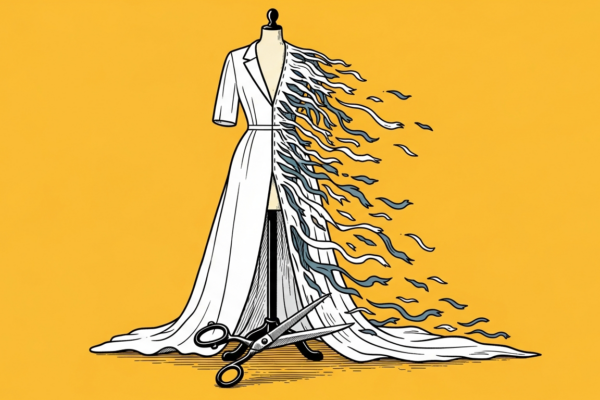
Most fashion retailers operate on two seasonal cycles per year. Zara operates on roughly 24.
The company’s vertically integrated supply chain moves a garment from design sketch to retail floor in 2 to 3 weeks. Traditional retailers take 4 to 6 months for the same journey. This compression is the foundation of every element in Zara’s marketing mix.
Zara’s value proposition is simple: current runway-inspired fashion at accessible prices, available right now, in limited quantities.

Product Strategy: Speed, Scarcity, and Volume
Fast Fashion Product Cycle
Zara introduces approximately 50,000 new items per year. H&M produces around 20,000, and most traditional retailers manage 2,000 to 4,000.
This volume is not about variety for its own sake. It is a deliberate strategy to create urgency. When customers know that a product will disappear within weeks, they buy on the spot rather than waiting for a sale.
The model works because of data. Zara store managers report real-time sales data and customer feedback directly to design teams in Spain, who adjust production within days. Harvard Business School researcher Zeynep Ton documented how this feedback loop allows Zara to respond to trends faster than any competitor in the fashion sector.
Design-to-Shelf in 2 to 3 Weeks
Zara’s 700-person design team works from the company’s headquarters in Arteixo, Spain.
They monitor runway shows, social media trends, and store-level sales data simultaneously. When a trend emerges, Zara can have a product interpretation on shelves in 15 days. Competitors like Gap and H&M typically need 3 to 5 months.
This speed is enabled by Zara’s vertical integration. The company owns its manufacturing facilities in Spain, Portugal, Turkey, and Morocco, keeping roughly 57% of production near-shore, according to Modaes. Outsourcing to Asia, which is standard for H&M and Gap, adds weeks of shipping time that Zara avoids.
Limited Quantities and Scarcity
Zara deliberately produces in small batches.
If a product sells out, the company does not always restock it. Instead, a new design takes its place. This artificial scarcity drives a fear-of-missing-out dynamic that traditional retailers cannot replicate without restructuring their entire supply chain.
The result is measurable. Zara customers visit stores an average of 17 times per year, compared to the industry average of 3 to 4 visits. Fewer markdowns follow as well. Zara discounts roughly 15% to 20% of inventory, while the industry average sits at 30% to 40%.
Sustainability and the Join Life Collection
Zara launched its Join Life collection in 2016 to address growing consumer concern over fast fashion’s environmental impact. The line uses organic cotton, recycled polyester, and Tencel lyocell.
By 2025, Inditex committed to using 100% sustainable cotton, linen, and polyester across all brands, per its official sustainability commitments.
This is not purely altruistic. Sustainability has become a purchase driver, particularly among Gen Z consumers who make up an increasing share of Zara’s market segment. Integrating sustainability into the product strategy protects Zara’s brand equity against competitors like H&M, which launched its Conscious Collection earlier, and against critics who position fast fashion as inherently wasteful.
Price Strategy: Accessible Luxury Positioning
Affordable Luxury Positioning
Zara occupies a specific position in the market. Its prices sit above Primark and Shein, roughly in line with H&M, and well below true luxury brands like Gucci or Prada.
The strategy is affordable luxury. Customers perceive Zara products as higher quality than the price suggests, driven by store design, product presentation, and runway-inspired aesthetics. This brand positioning allows Zara to command slightly higher margins than pure value competitors without competing on price with luxury houses.
In practice, a Zara dress averages around €42, while a comparable H&M dress sits at roughly €30 and a Mango equivalent at approximately €40, according to pricing data from Apart Style.
Regional Pricing Strategy
Zara adjusts prices by market.
Products in the United States and Asia typically carry a 60% to 100% premium over Spanish prices, according to FashionNetwork. This accounts for import duties, logistics costs, and local purchasing power. A coat priced at €79 in Spain might retail for $129 in New York and ¥15,900 in Tokyo.
This regional pricing model is common in fashion but Zara executes it with more precision than most. The company uses real-time sales data to adjust pricing thresholds by market, ensuring that each region’s price point maximizes both volume and margin.
Price vs Quality Perception
Zara’s pricing power comes from perception, not cost structure.
The brand invests heavily in store design, packaging, and visual merchandising to create a shopping experience that feels premium. Customers associate the environment with quality, which justifies prices that sit above the pure value segment. Research from Statista shows that Zara consistently ranks higher than H&M and Gap in consumer quality perception surveys, despite comparable manufacturing costs.
This is a textbook example of market positioning executed through experience rather than advertising.
Place (Distribution) Strategy in the Zara Marketing Mix
Flagship Store Strategy
Zara’s store locations are not random. The brand targets high-traffic, premium retail locations in major cities, often next to luxury brands.
You will find Zara on Fifth Avenue in New York, Oxford Street in London, and the Champs-Élysées in Paris.
This adjacency to luxury is intentional. By placing stores next to Gucci and Louis Vuitton, Zara borrows prestige through association. The store itself becomes the primary marketing channel, which is why the company invests heavily in real estate while spending almost nothing on advertising. Zara’s brand architecture relies on this physical presence as a brand-building tool.
Vertical Integration and Supply Chain
Zara’s supply chain is its competitive moat.
The company controls design, manufacturing, logistics, and retail under one corporate structure. Inditex operates 10 logistics centers in Spain, each capable of distributing garments to any store worldwide within 48 hours. Most competitors outsource manufacturing to third-party factories in Bangladesh, Vietnam, and China, creating lead times that prevent rapid response to trends.
This vertical integration means Zara can produce a new item in response to a trend spotted on Monday and have it in European stores by Friday of the following week. The supply chain is not a support function. It is the marketing strategy.
Ecommerce and Omnichannel Expansion
Zara launched online retail in 2010, later than many competitors. But the company has since invested aggressively in digital infrastructure.
The brand’s omnichannel model includes in-store pickup for online orders, real-time inventory visibility, and integrated returns across channels.
Online sales now represent approximately 25% to 30% of Inditex’s total revenue, per PYMNTS. The company has also experimented with technology-forward concepts like augmented reality displays in stores and self-checkout kiosks. These initiatives align Zara’s physical and digital presence, ensuring the product life cycle is compressed across all channels.
Global Store Footprint
Zara operates in 96 countries across every inhabited continent.
The brand enters new markets through company-owned stores rather than franchising, maintaining control over the customer experience. This approach is more capital-intensive but ensures consistency. When Zara opens in a new city, the store design, layout, and product presentation match global standards exactly.
In mature markets, Zara has been consolidating smaller stores into larger flagship locations. The strategy is to have fewer but more impactful physical locations, supplemented by ecommerce. Between 2020 and 2025, Inditex reduced its store count significantly while increasing total retail space by 1.5%, per Modaes.
Promotion Strategy: The Zero-Advertising Model
Why Zara Does Not Advertise
Zara spends approximately 0.3% of revenue on advertising. H&M spends roughly 3% to 4%. Nike spends over 10%.
This is not a budget constraint. It is a strategic choice.
Zara’s founder Amancio Ortega believed that advertising money is better spent on store locations and product quality. The logic is straightforward: if the product is good enough and available in the right place, customers will find it without being told. This anti-advertising philosophy has saved Inditex billions of euros over decades and forced the company to excel at the other three Ps, because without promotion as a crutch, product, price, and place must carry the entire burden. For a deeper look at Zara’s overall strategic position, see our SWOT analysis of Zara.
Store Design as Marketing
Walk into any Zara store and the design communicates luxury. Clean lines, minimal fixtures, white and neutral tones, and careful product spacing create an environment that resembles a high-end boutique more than a fast-fashion outlet.
Window displays change every two weeks and are designed centrally at headquarters.
This uniformity means a customer in Seoul has the same brand experience as a customer in Madrid. The store is the billboard. The store is the campaign. Every element of visual merchandising is calibrated to reinforce Zara’s brand positioning as accessible luxury, making traditional advertising unnecessary.
Social Media and Influencer Strategy
Zara maintains a significant social media presence. The brand has over 62 million Instagram followers, making it one of the most followed fashion accounts on the platform.
The content strategy favors editorial-style photography over promotional messaging.
Zara does not pay for traditional influencer partnerships at the scale of competitors like Fashion Nova or Shein. Instead, the brand benefits from organic influencer content. Fashion creators post Zara hauls and styling videos without paid incentives because the brand’s trend relevance and price accessibility make it naturally shareable. This earned media strategy generates millions of impressions at zero cost.
Word-of-Mouth and Earned Media
Zara’s scarcity model creates natural conversation.
When a product is limited and sells out quickly, customers talk about it. Social media posts about “Zara finds” and “before it sells out” drive urgency that no paid campaign could replicate. The brand’s approach to social media brand awareness is built on product desirability rather than advertising spend.
Business of Fashion has noted that Zara generates more earned media value per dollar of marketing spend than any other fashion retailer globally. The model works because the product and distribution strategies create stories worth sharing.

Zara vs H&M vs Uniqlo: 4Ps Comparison
Comparing Zara’s marketing mix against its closest competitors reveals how different strategic choices create distinct market positions. The table below highlights where each brand invests and where each chooses not to compete.
| 4P Element | Zara | H&M | Uniqlo |
|---|---|---|---|
| Product | 50,000 new items/year; trend-driven, limited runs, 2-3 week cycle | 25,000 items/year; trend-driven plus designer collabs, seasonal cycles | ~1,000 core items; basics-focused, functional innovation (Heattech, AIRism) |
| Price | Mid-range; affordable luxury positioning; regional pricing | Low to mid-range; value positioning; frequent sales | Mid-range; quality-for-price positioning; stable pricing |
| Place | Premium locations near luxury brands; company-owned; 96 countries | High-street and mall locations; franchise in some markets; 75+ countries | Urban flagship stores; company-owned; 25+ countries |
| Promotion | Near-zero advertising; store-as-marketing; earned social media | Heavy ad spend (~3.5% rev); celebrity collaborations; cause marketing | Moderate ad spend; brand ambassadors; technology-led messaging |
| Supply Chain | Vertically integrated; 50-60% near-shore production; 48-hour delivery | Outsourced to ~1,500 suppliers; Asia-centric; 3-6 month lead times | Partnership model; Japanese quality control; 6-12 month planning |
| Markdown Rate | 15-20% of inventory | 30-40% of inventory | ~20% of inventory |
| Sustainability | Join Life collection; 100% sustainable fabrics target by 2025 | Conscious Collection; garment recycling programs | RE.UNIQLO recycling; LifeWear philosophy |
The comparison reveals three fundamentally different approaches to the same market.
Zara wins on speed and scarcity. H&M wins on marketing reach and price accessibility. Uniqlo wins on product quality and functional innovation. Each brand has built its competitive advantage around a different P, and each would struggle to replicate the other’s model without dismantling its own.
What Makes Zara’s Marketing Mix Unique
Speed Over Advertising
In most marketing textbooks, promotion receives equal weight to product, price, and place. Zara’s model proves that is not always correct.
When your product cycle is fast enough to capture trends in real time, the product becomes its own promotion.
Customers do not need to be told about Zara’s latest collection because the collection changes so frequently that the act of visiting the store is discovery. This is the core insight of Zara’s marketing mix: speed replaces advertising. Every euro saved on ad spend is reinvested into supply chain speed and store experience, creating a self-reinforcing cycle that competitors cannot break into without fundamental structural change.
Data-Driven Inventory
Zara’s store managers act as market researchers.
They report daily on what customers are buying, what they are asking for, and what they are passing over. This data flows directly to the design team and production planning in Arteixo. The result is a marketing mix that adapts weekly, not seasonally.
Most retailers make product decisions 6 months before items reach stores. Zara makes product decisions 2 weeks before items reach stores. That difference in timing changes everything about pricing, placement, and promotion.
Store Experience as Brand
Zara’s stores do more marketing work than most brands’ entire advertising departments.
The company spends heavily on prime real estate, employs architects to design each location, and rotates visual merchandising on a biweekly cycle. A Zara flagship on a major shopping street generates more brand awareness than a television campaign because it reaches the right consumers in the right context, ready to purchase.
This approach ties directly to the concept of market positioning strategy. The store itself communicates where Zara sits in the competitive landscape, positioned between luxury and value, aspirational yet accessible. No advertisement can communicate that positioning as effectively as the physical experience of walking into the store.
Frequently Asked Questions
What is Zara’s marketing strategy?
Zara’s marketing strategy centers on speed, scarcity, and store experience rather than traditional advertising. The brand invests in a vertically integrated supply chain that delivers new products to stores in 2 to 3 weeks, creates urgency through limited quantities, and uses premium store locations as its primary marketing channel. Zara spends approximately 0.3% of revenue on advertising, compared to 3% to 5% for most fashion competitors.
Why doesn’t Zara advertise?
Zara’s near-zero advertising spend is a deliberate strategic choice, not a cost-cutting measure. Founder Amancio Ortega built the company on the principle that money spent on advertising is better invested in store locations and product quality. The model works because Zara’s rapid product turnover and scarcity-driven demand generate organic word-of-mouth and earned media that replace paid promotion.
How does Zara keep prices low while maintaining quality?
Zara keeps costs down through vertical integration and near-shore manufacturing. By owning production facilities in Spain, Portugal, and Morocco, the company avoids the markup chains associated with outsourced Asian manufacturing. Lower advertising costs also contribute. The savings are passed through as competitive pricing while store design and product presentation maintain a premium quality perception.
What is Zara’s target market?
Zara targets fashion-conscious consumers aged 18 to 40 who want current trends at accessible prices. The core demographic is urban, middle-income, and style-aware. Zara’s market segmentation focuses on customers who follow fashion but cannot or choose not to pay luxury prices. The brand skews slightly female but has expanded its menswear and children’s lines significantly.
How does Zara’s supply chain support its marketing mix?
Zara’s supply chain is the engine behind every element of its marketing mix. Vertical integration enables fast product cycles (product strategy), lower costs passed to consumers (price strategy), rapid replenishment of global stores (place strategy), and the scarcity model that generates free publicity (promotion strategy). Without this supply chain, none of the other strategic elements would function. Our analysis of Starbucks’ SWOT shows a similar pattern where operational infrastructure drives brand strategy.
Closing: Why Zara’s 4Ps Model Is Hard to Copy
Zara’s marketing mix works as a system, not as a set of individual decisions. Change one element, and the others collapse.
Remove the fast supply chain, and the scarcity model disappears.
Add traditional advertising, and the economics shift away from store investment. Outsource manufacturing to cut costs, and product speed drops to industry average. Competitors have tried to replicate individual pieces of Zara’s model for decades. H&M attempted faster production cycles. Gap invested in premium store design. None have succeeded in replicating the full system because the model requires structural commitment, not strategic imitation.
For marketers and strategists studying retail, the lesson is clear. The strongest marketing mix is one where every element reinforces every other element. Zara proves that you do not need to be good at all four Ps equally. You need to build a system where your strengths in one P eliminate the need for conventional approaches to the others.