The ALS Ice Bucket Challenge raised $115 million in eight weeks during the summer of 2014. The ALS Association’s annual budget before the campaign was $19.4 million.
That is viral marketing at its most transformative. A single campaign idea, amplified by voluntary sharing, generated six times the organization’s yearly revenue without a media buy. Understanding why some campaigns achieve this scale and others disappear requires more than luck. It requires a framework.
What Is Viral Marketing?
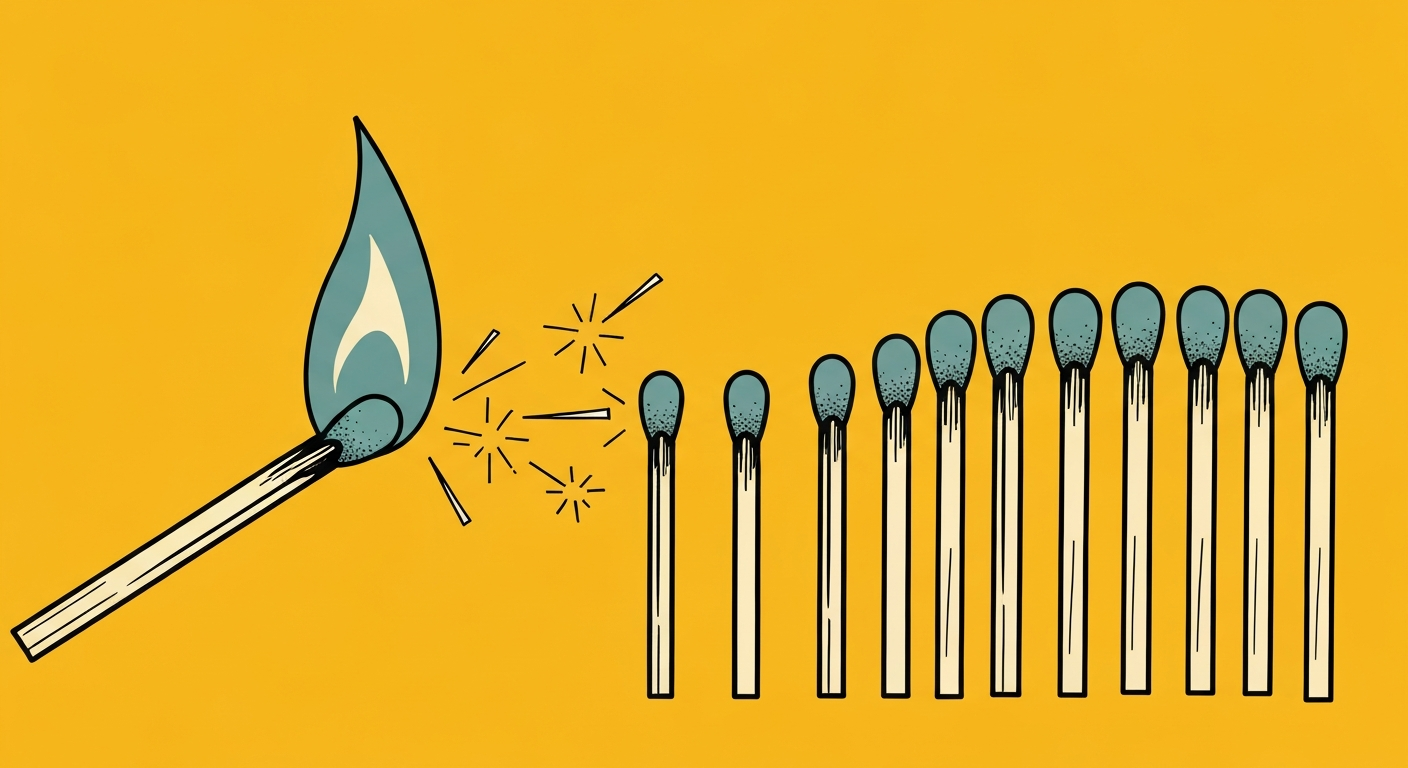
Viral marketing is a strategy that relies on individuals sharing content with their networks, creating exponential reach through organic distribution rather than paid media. The term borrows from epidemiology: like a virus, the content spreads person to person, with each new “host” exposing it to their own contacts.
The critical distinction between viral marketing and traditional brand awareness campaigns is the source of distribution. In traditional advertising, the brand pays to place messages in front of audiences. In viral marketing, the audience becomes the distribution channel. Every share is an unpaid impression delivered with the implicit endorsement of the person sharing it.
That endorsement is what makes viral content more trusted than paid advertising.
How Viral Marketing Works
Viral campaigns follow a predictable distribution pattern: seed, spike, plateau, and tail.
The seed phase involves placing content with initial audiences, often through influencers, owned channels, or small paid boosts. The spike phase occurs when sharing velocity exceeds new organic discovery, creating exponential growth. The plateau happens when the addressable audience saturates. The tail phase is the long-term residual sharing that continues at lower rates. Most “failed” viral attempts never exit the seed phase because the content lacks the psychological triggers that drive sharing.
Viral vs. Traditional Marketing
The economics are fundamentally different.
| Factor | Traditional Marketing | Viral Marketing |
|---|---|---|
| Distribution cost | Paid per impression (CPM) | Organic sharing (near-zero marginal cost) |
| Trust level | Brand-sourced (lower trust) | Peer-sourced (higher trust) |
| Reach control | Predictable, budget-dependent | Unpredictable, quality-dependent |
| Creative lifespan | Flight duration (weeks) | Indefinite (evergreen sharing) |
| Measurement | Established attribution models | Complex, multi-touch |
| Risk | Financial (wasted spend) | Reputational (loss of message control) |
The Science Behind Viral Campaigns
Wharton professor Jonah Berger spent a decade studying why certain content gets shared. His research, published in his book Contagious: Why Things Catch On, identified the STEPPS framework: six principles that drive sharing behavior.
Social Currency
People share things that make them look good. Content that makes the sharer appear funny, informed, or culturally aware provides social currency.
Spotify Wrapped succeeds because sharing your listening data signals identity and taste to your network. Sharing a viral campaign early, before everyone else has seen it, provides social currency through being “in the know.” Berger’s research found that social currency was the single strongest predictor of sharing for content that spreads within tight social networks rather than across the general public.
Triggers
Content linked to everyday environmental cues gets shared more frequently because those cues remind people of the content repeatedly.
Kit Kat associated itself with coffee breaks. Every time someone takes a coffee break, the brand gets a mental trigger. Berger found that products with strong environmental triggers received 15% more word-of-mouth than those without. The most effective viral campaigns attach themselves to recurring situations, emotions, or cultural moments that serve as ongoing triggers for sharing.
Emotion
High-arousal emotions drive sharing. Low-arousal emotions suppress it.
Berger and his colleague Katherine Milkman analyzed 7,000 New York Times articles and found that content evoking awe, anger, or anxiety (high-arousal emotions) was significantly more likely to be shared than content evoking sadness (a low-arousal emotion). This is why the most viral campaigns tend to be either deeply inspiring or deliberately provocative. Content that makes you feel “meh” does not get shared, regardless of its quality.
Public Visibility, Practical Value, and Stories
The remaining three STEPPS principles complete the framework.
Public means making behavior visible. The Ice Bucket Challenge worked partly because pouring ice water on yourself is inherently visible and filmable. Practical value means sharing useful information. “How to” content goes viral because sharing it makes the sharer helpful. Stories means wrapping the message in narrative. People do not share ads. They share stories that happen to contain brands. The most reliable viral campaigns activate at least three of these six drivers.
12 Viral Marketing Campaigns That Changed the Game
Each example below includes the specific metrics that define its viral success, because a campaign without measurement data is just a story.
1. ALS Ice Bucket Challenge (2014)
Participants filmed themselves dumping ice water on their heads, donated to ALS research, and nominated three friends to do the same. The nomination mechanic was the viral engine, creating social obligation to participate.
The campaign raised $115 million in eight weeks. Over 17 million people uploaded challenge videos to Facebook. The ALS Association’s research funding increased 187% year over year. The campaign activated five of Berger’s six STEPPS: social currency (participating showed you cared), triggers (summer heat), emotion (awe and amusement), public (highly visible), and stories (each video was a personal narrative).
2. Dove Real Beauty Sketches (2013)
An FBI-trained forensic artist drew women based on their own descriptions, then drew them based on strangers’ descriptions. The stranger’s sketch was consistently more flattering, revealing the gap between self-perception and reality.
The video accumulated 114 million views in its first month, making it the most-watched ad on YouTube at the time. The campaign generated an estimated $150 million in earned media value through news coverage, talk show appearances, and industry discussion, according to Unilever data. It worked because the emotional revelation, that you are more beautiful than you think, was universally relatable and deeply moving. Sharing the video became an act of affirmation.
3. Dollar Shave Club: “Our Blades Are F***ing Great” (2012)
Founder Michael Dubin starred in a low-budget, irreverent 90-second video that cost $4,500 to produce.
The video generated 12,000 orders in the first 48 hours and crashed the company’s website. Within five years, Unilever acquired Dollar Shave Club for $1 billion. The campaign succeeded through social currency (sharing it made you look culturally savvy), emotion (humor is high-arousal), and practical value (a genuine alternative to overpriced razors). The production budget proved that virality is driven by the idea, not the investment.
4. Old Spice: “The Man Your Man Could Smell Like” (2010)
Isaiah Mustafa delivered a continuous monologue as the scene transformed around him, from bathroom to boat to horse.
The original ad generated 55 million YouTube views. Old Spice then created 186 personalized video responses to fans, celebrities, and influencers in real time, extending the viral cycle for weeks. Body wash sales increased 125% within six months. The campaign demonstrated that viral success can be sustained and amplified through rapid, authentic engagement with the audience that is sharing the content.
5. Spotify Wrapped (2016-Present)
Spotify transforms user listening data into personalized, shareable graphics each December.
In 2023, Spotify Wrapped engaged over 225 million monthly active users and generated more than 2 billion social media impressions globally, according to Spotify’s newsroom. The campaign succeeds every year because it provides maximum social currency. Sharing your music taste is identity signaling. The format is designed for social media sharing, with each slide optimized for Instagram Stories dimensions. Spotify does not need to ask people to share. The content is designed so that not sharing feels like missing out.
6. Coca-Cola: Share a Coke (2011)
Coca-Cola replaced its logo with 250 popular names in each market, turning every bottle into a personalized, shareable artifact.
Consumers shared 500,000 photos using the #ShareACoke hashtag. US sales increased 2.5% after a decade of decline. The campaign ran in over 80 countries. It activated social currency (finding your name felt special), public (carrying a personalized bottle was visible), and stories (each name sparked a personal connection narrative). The content marketing implications were profound: Coca-Cola turned its packaging into user-generated media.
7. Duolingo: “Death of Duo” (2025)
Duolingo announced the “death” of its mascot owl in a social media stunt that generated 1.7 billion impressions across platforms.
The campaign was designed for maximum shareability on TikTok, where Duolingo had already built a following through irreverent, character-driven content. The “death” announcement triggered an outpouring of memes, tributes, and reaction videos. It demonstrated that brands with established social media personalities can generate viral moments through narrative risks that would be impossible for brands with more conservative identities.
8. ALS Ice Bucket Challenge: Coors Light “Chill Face Roller” (2025)
Coors Light created a face roller made from recycled aluminum cans, designed to combat the flushed-face look caused by drinking.
The product generated 12.6 billion media impressions and was covered by major outlets including Today and People. The campaign worked because it solved a relatable problem (red face from drinking) with an absurd but functional product. The humor drove social sharing while the practical angle gave people a reason beyond entertainment to pass it along.
9. TOMS: #WithoutShoes (2015)
TOMS asked people to post barefoot photos on Instagram with the hashtag #WithoutShoes, donating a pair of shoes for each post.
The campaign generated 296,243 Instagram posts in a single day, resulting in an equivalent number of shoe donations. The campaign activated emotion (empathy for children without shoes), social currency (participating signaled generosity), and public (barefoot photos were visually distinctive in social feeds). The donation mechanic transformed sharing from a passive act into a charitable one.
10. Oreo: “Dunk in the Dark” Super Bowl Blackout (2013)
When the Super Bowl experienced a 34-minute power outage, Oreo’s social media team posted: “You can still dunk in the dark.”
The tweet was retweeted 15,000 times in the first hour. It became the most discussed ad moment of the 2013 Super Bowl despite costing nothing to produce. The campaign demonstrated that real-time marketing, responding to cultural moments as they happen, can generate viral impact that rivals multimillion-dollar Super Bowl spots. Speed was the competitive advantage. Oreo’s agency had a pre-approved rapid response process that enabled the tweet within minutes.
11. Gap: “Better in Denim” (2025)
Gap’s campaign featuring celebrities and everyday people in denim generated 576 million views across platforms.
The campaign revitalized Gap’s cultural relevance after years of brand stagnation. By combining celebrity social currency with an inclusive message (everyone is “better in denim”), the campaign achieved viral distribution that repositioned the brand for younger audiences. The result was double-digit growth in the adult denim category, according to Gap CEO Richard Dickson’s third-quarter earnings call.
12. Liquid Death: Ozzy Osbourne DNA (2024)
Liquid Death released a limited run of canned water infused with Ozzy Osbourne’s DNA, priced at $10 per can.
The stunt generated global media coverage and sold out immediately. Liquid Death’s brand strategy relies on viral shock value paired with genuine product quality. Every campaign is designed to provoke conversation and sharing. The brand reached a $1.4 billion valuation in 2024 largely through viral marketing rather than traditional paid media campaigns.
Viral Marketing Strategy Framework
Engineering virality is not guaranteed, but the probability increases dramatically when campaigns follow a systematic approach.
Audience Research and Emotional Mapping
Before creating content, identify which high-arousal emotions resonate most with your target audience.
Map your audience’s emotional triggers: what makes them laugh, what makes them angry, what inspires awe? Different demographics respond to different emotional drivers. Gen Z shares humor and irony. Millennials share inspiration and nostalgia. B2B audiences share practical value and industry insight. The emotional mapping determines your creative direction before a single frame is shot or word is written.
Content Creation for Shareability
Design for sharing, not viewing.
Every piece of viral content must pass one test: does the sharer gain something by sharing this? Social currency, practical value, emotional connection, or identity signaling. If sharing does not benefit the sharer, the content will be viewed but not distributed. Format the content for the platform where sharing will occur. Vertical video for TikTok and Instagram Stories. Square for feed posts. Horizontal for YouTube. The format should feel native to the platform, not repurposed from another channel.
The first three seconds determine whether someone watches or scrolls.
Influencer and Seeding Strategy
Viral campaigns rarely go viral organically from zero. They are seeded strategically with audiences most likely to share.
Influencer marketing serves as the ignition system for viral campaigns. The Ice Bucket Challenge was seeded through Pete Frates’ personal network of Boston-area athletes before spreading to celebrities. Dollar Shave Club sent the video to tech bloggers and Reddit communities before it reached mainstream audiences. Identify 50-100 micro-influencers in your category. Give them early access. Their initial shares create the critical mass needed for the spike phase.
Timing and Platform Selection
The same content performs differently depending on when and where it is released.
Oreo’s “Dunk in the Dark” worked because it was released in the exact cultural moment when the audience was paying attention. Spotify Wrapped launches in December because that is when year-in-review content dominates social feeds. Align your campaign with cultural moments, platform-specific trends, or audience behavior patterns. Launching viral content on a random Tuesday with no contextual hook reduces sharing probability regardless of content quality.
How to Measure Viral Campaign Success
View counts are vanity metrics. Effective measurement connects viral distribution to business outcomes.
Reach and Share Velocity
Track total impressions, but more importantly, track share velocity, the rate at which shares generate new shares.
A campaign with 10 million views from paid distribution is not viral. A campaign with 10 million views where 80% came from organic sharing is. Calculate the viral coefficient: the average number of new viewers generated by each existing viewer’s share. A coefficient above 1.0 means the campaign is genuinely viral. Below 1.0 means it depends on paid amplification to sustain reach.
Earned Media Value
Earned media value estimates what the organic coverage would have cost if purchased as paid media.
Calculate by multiplying organic impressions by your category’s average CPM. Dove’s Real Beauty Sketches generated an estimated $150 million in earned media, according to Unilever data, from a relatively modest production investment. That kind of return ratio is what makes viral marketing worth the inherent unpredictability.
Brand Lift and Sales Attribution
Measure brand awareness, favorability, and purchase intent before and after the viral campaign through brand lift studies.
Old Spice measured a 125% increase in body wash sales within six months of the campaign’s viral peak. Dollar Shave Club tracked 12,000 orders in 48 hours directly attributable to the video. Connect viral campaigns to sales through time-series analysis, promo codes, or direct-response landing pages included in the viral content. A campaign that generates 100 million views but zero sales lift is entertainment, not marketing.
Risks and Challenges of Viral Marketing
Virality is a neutral force. It amplifies good campaigns and bad ones with equal efficiency.
Loss of Message Control
Once content goes viral, the brand loses control of its context, interpretation, and evolution.
Pepsi’s 2017 Kendall Jenner ad went viral for the wrong reasons. The intended message of unity became a symbol of corporate tone-deafness. Memes, parodies, and critical commentary overwhelmed the original intent within hours. The brand could not recall, edit, or reframe the content once it entered public discourse. Viral distribution means the audience owns the narrative.
Negative Virality and Crisis Management
Some campaigns go viral as cautionary tales rather than success stories.
Brands must have crisis communication plans ready before launching campaigns with viral ambitions. This means pre-approved response templates, designated spokespeople, and clear escalation protocols. The time between a campaign going negatively viral and permanent brand damage is measured in hours, not days. Preparation is the only reliable defense.
Sustainability Beyond the Viral Moment
A single viral campaign does not build a brand. The challenge is converting viral attention into sustained brand equity.
Dollar Shave Club followed its viral video with a subscription model that retained the customers the video attracted. Spotify Wrapped returns annually, building cumulative brand association. Brands that achieve one viral hit and then return to conventional advertising waste the attention they earned. Build a content engine that can sustain the relationship the viral moment initiated.
Frequently Asked Questions
What is viral marketing?
Viral marketing is a strategy where content spreads through voluntary sharing by audiences rather than through paid distribution. The term comes from the way viruses spread: each person who encounters the content shares it with multiple others, creating exponential reach. Successful viral campaigns rely on psychological triggers like social currency, emotion, and practical value to motivate sharing. The result is massive reach at minimal distribution cost.
What makes a marketing campaign go viral?
Jonah Berger’s STEPPS framework identifies six drivers: Social Currency (makes the sharer look good), Triggers (connected to everyday cues), Emotion (high-arousal feelings like awe or humor), Public (visible behavior), Practical Value (useful information), and Stories (narrative wrapper). Campaigns that activate three or more of these drivers have significantly higher sharing rates than those relying on a single element.
Can you plan a viral campaign?
You can engineer the conditions for virality, but you cannot guarantee it. Strategic seeding with influencers, emotional content design based on the STEPPS framework, platform-native formatting, and cultural timing all increase the probability. However, the audience ultimately decides what gets shared. The brands with the most consistent viral success, like Duolingo and Liquid Death, build viral thinking into their ongoing content strategy rather than treating it as a one-time gamble.
How do you measure if a campaign went viral?
Calculate the viral coefficient: the average number of new viewers generated by each viewer’s share. A coefficient above 1.0 indicates genuine virality. Beyond that, measure share velocity (how fast shares generate new shares), earned media value (what the organic reach would have cost as paid media), and business impact (sales lift, sign-ups, or brand awareness changes). View counts alone do not distinguish viral organic reach from paid distribution.
What are the risks of viral marketing?
The primary risks are loss of message control (audiences reinterpret content in unintended ways), negative virality (campaigns that go viral as cautionary tales), and unsustainability (one-hit-wonder attention that does not convert to long-term brand value). Pepsi’s 2017 Kendall Jenner ad demonstrated all three risks simultaneously. Mitigation requires crisis communication plans, authentic brand alignment, and a content strategy that extends beyond the viral moment.
Viral marketing campaigns represent the highest-upside, highest-uncertainty strategy in advertising. The brands that succeed consistently, from Duolingo to Spotify, treat virality as a systematic discipline rather than a lucky accident. For more on the advertising strategies that complement viral campaigns, explore our analysis of guerrilla marketing examples and the evolution of digital advertising techniques.