In 2009, Domino’s ranked last for pizza taste among major U.S. chains. By 2021, its stock had risen over 9,000% from its 2008 low of approximately $2.20 per share, making it one of the greatest brand turnarounds in modern business history. The Domino’s marketing strategy is a case study in what happens when a brand chooses radical transparency over corporate spin.
What makes Domino’s remarkable is not any single campaign, but the strategic thread connecting honest self-criticism, relentless digital investment, and operational discipline into a unified growth engine.
From Ypsilanti to Global Empire: The Domino’s Origin Story
Understanding the Domino’s marketing strategy requires understanding where the brand started and why speed, not quality, defined its early identity.
The Monaghan Brothers and the 30-Minute Promise
Tom Monaghan and his brother James bought a small pizza shop called DomiNick’s in Ypsilanti, Michigan, in 1960. James sold his share back to Tom within months for a used Volkswagen Beetle, a transaction that became one of the worst deals in business history.
Tom Monaghan built the brand around a single promise: delivery in 30 minutes or less. This guarantee became Domino’s unique selling proposition and defined the brand for three decades. The promise was eventually retired in 1993 after a series of delivery-related accidents and lawsuits, but the speed-first positioning had already cemented Domino’s reputation.
The 30-minute promise established a critical brand lesson. A strong value proposition can build a national brand, but it must evolve before it becomes a liability.
Growth to 19,500+ Locations in 90+ Countries
Domino’s operates over 21,000 stores in more than 90 countries, making it the largest pizza company in the world by store count. The franchise model accounts for approximately 98% of all locations, keeping corporate capital expenditure low while generating consistent royalty revenue.
This scale matters for marketing. Every franchise location is both a revenue generator and a local advertising platform.
The Turnaround: How Domino’s Embraced Its Worst Reviews
The Domino’s turnaround is the most important case study in crisis marketing from the past two decades. No other major brand has publicly admitted its core product was bad and survived, let alone thrived.
The Problem: Ranked Last in Taste
By 2008, consumer surveys consistently ranked Domino’s last for pizza quality among major chains. A Brand Keys survey placed Domino’s behind Pizza Hut, Papa John’s, and even frozen pizza brands. Internal focus groups produced devastating feedback: customers described the crust as “like cardboard” and the sauce as “like ketchup.”
The stock price reflected the brand’s struggles. Shares fell to an all-time low of approximately $2.20 in November 2008.
Most brands facing this situation would launch a quiet product reformulation. Domino’s chose a radically different path.
The “Pizza Turnaround” Campaign (2009-2010)
Under CEO Patrick Doyle, Domino’s launched a documentary-style advertising campaign that showed real focus group footage of customers criticizing the pizza. The ads featured Domino’s chefs watching the feedback, visibly uncomfortable, then committing to a complete recipe overhaul.
The new recipe changed the crust, the sauce, and the cheese. Domino’s reformulated every component of its core product and invited customers to taste the difference.
The campaign was a gamble. Admitting publicly that your product was bad violates every instinct in corporate marketing. Patrick Doyle, then Domino’s CEO, later said the company had nothing to lose because the existing perception could not get worse.
Radical Honesty as Marketing Strategy
The Pizza Turnaround campaign worked because it combined vulnerability with action. Domino’s did not simply apologize. The brand showed its work: new ingredients, new recipes, new training across all 9,000 franchise locations.
This approach created a template that other brands have since tried to replicate. The key distinction is that Domino’s fixed the product before asking customers to give them another chance. Honesty without improvement is just confession.
The Times Square Real-Time Review Billboard
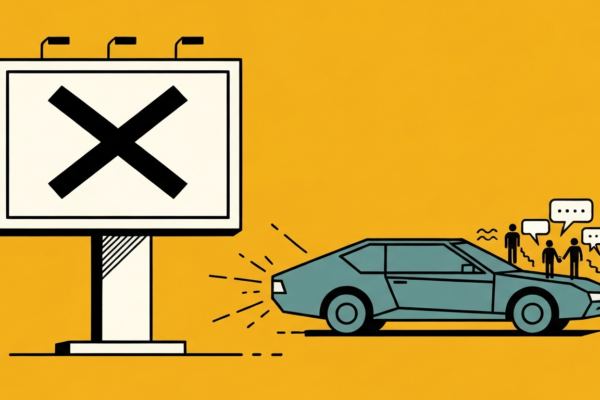
To prove its confidence in the new product, Domino’s installed a billboard in Times Square that displayed unfiltered customer reviews in real time. Positive and negative reviews appeared without corporate editing.
The billboard was a brand awareness masterstroke. It signaled confidence in the product while generating massive media coverage.
In practice, brands that show unfiltered feedback earn more trust than those that curate only positive testimonials. The Times Square billboard became a physical manifestation of the brand’s transparency positioning.
| Metric | Before (2008) | After (2021) |
|---|---|---|
| Stock Price | ~$2.20 | ~$530+ |
| Brand Perception (Taste) | Last among major chains | Top tier in consumer surveys |
| U.S. Same-Store Sales | Declining | Consistent positive growth |
| Digital Sales % | Near zero | Over 85% |
| Global Store Count | ~8,773 | ~21,000+ |
| Annual Revenue | ~$1.43B | ~$4.5B |
Digital Transformation: From Pizza Company to Tech Company
Domino’s describes itself as a technology company that happens to sell pizza. This is not a marketing tagline. It is an accurate description of where the company invests its resources.
Online Ordering System (2007)
Domino’s launched online ordering in 2007, earlier than most QSR competitors. The system was built to reduce friction at every step, from menu browsing to payment. By prioritizing digital ordering before smartphones were ubiquitous, Domino’s established first-mover advantage in a channel that would later define the industry.
Early investment in digital infrastructure created a compounding advantage. Every year of accumulated user data and system optimization widened the gap between Domino’s and competitors.
Pizza Tracker and the Transparency Revolution
The Domino’s Pizza Tracker, launched in January 2008, lets customers follow their order from preparation through delivery in real time. The feature addresses the core anxiety of food delivery: uncertainty about when the food will arrive.
The Tracker was a marketing innovation disguised as a product feature. It reduced customer service calls, decreased perceived wait times, and gave Domino’s a technological brand image that no competitor matched at the time.
This is a pattern worth studying. The best marketing features are those that solve a real customer problem while simultaneously reinforcing the brand’s positioning.
Domino’s AnyWare: Ordering From Anywhere
The AnyWare platform allows customers to order Domino’s pizza through virtually any connected device. Ordering integrations include Amazon Alexa, Google Home, smart TVs, smartwatches, Slack, Facebook Messenger, and even Twitter (now X) via pizza emoji.
The engineering investment behind AnyWare is substantial. Each new channel requires API development, testing, and ongoing maintenance.
The strategic purpose is reducing friction to zero. Every additional ordering channel removes one more excuse not to order Domino’s. The customer journey from craving to confirmation should take seconds, not minutes.
AI Chatbots and Voice Ordering
Domino’s deployed its AI ordering assistant, “Dom,” across multiple channels. The chatbot handles ordering, upselling, and basic customer service inquiries. Voice ordering through smart speakers represents a growing percentage of digital orders.
Over 85% of Domino’s U.S. retail sales now come through digital channels, according to company filings. This percentage has increased consistently year over year, driven by app improvements, loyalty program integration, and AI-assisted ordering.
Technology Investment at Scale
GlobalData estimates that Domino’s invests over $225 million annually in information and communications technology. This figure puts Domino’s ICT spending closer to a mid-size software company than a pizza chain.
The investment pays for itself through operational efficiency, customer data collection, and marketing precision. Domino’s knows what each customer orders, when they order, and what promotions drive repeat visits. That data fuels the entire marketing mix.
Domino’s Marketing Mix (4Ps) Analysis
The Domino’s marketing mix balances aggressive value pricing with technology-driven convenience and a promotional strategy built on transparency.
| Element | Strategy | Key Details |
|---|---|---|
| Product | Core pizza + innovation | Reformulated recipe (2009), pasta, wings, sandwiches, desserts. Localized menus globally. |
| Price | Value-driven bundles | Mix-and-match deals, coupons, loyalty rewards. Competes on value without racing to the bottom. |
| Place | Franchise + digital | 19,500+ locations, 98% franchised. 75%+ digital orders. Delivery, carryout, and aggregator platforms. |
| Promotion | Transparency + digital + humor | Radical honesty campaigns, social media engagement, loyalty programs, local marketing support for franchisees. |
Product Strategy and Menu Innovation
Beyond the 2009 reformulation, Domino’s has steadily expanded its menu to include pasta bowls, chicken wings, sandwiches, and desserts. Each addition increases average order value without diluting the pizza-first brand identity.
Menu localization is critical for international markets. In India, Domino’s offers paneer-topped pizzas and tandoori chicken options through franchisee Jubilant FoodWorks. In Japan, the menu features squid ink and teriyaki chicken varieties.
Value-Based Pricing and Bundle Deals
Domino’s pricing strategy centers on perceived value rather than lowest price. The $6.99 mix-and-match deal lets customers choose multiple items at a set price, creating a sense of value while maintaining margin through careful menu engineering.
This pricing approach avoids the race-to-the-bottom trap that has damaged other QSR brands. Domino’s competes on convenience and consistency, not just cost.
Promotion Mix: From TV to TikTok
Domino’s promotional strategy has evolved from television-heavy spending to a diversified mix that emphasizes digital channels, social media content, and loyalty program activation. The Domino’s Rewards program drives repeat purchases by giving customers points toward free pizza.
The shift to digital promotion is not just a channel preference. It reflects a strategic decision to invest in measurable, data-driven marketing rather than broad-reach awareness campaigns.
Television still plays a role in Domino’s media mix, particularly for national promotions and brand campaigns. The difference is that TV now drives customers to digital channels rather than to phone ordering.
Landmark Advertising Campaigns
Beyond the Pizza Turnaround, Domino’s has produced several campaigns that demonstrate creative marketing at scale.
“Paving for Pizza” (2018): Local Marketing at Scale
Domino’s launched a program to help municipalities fill potholes, arguing that poor road conditions damage delivered pizzas. Customers nominated their towns for road repairs, and Domino’s funded the paving work, complete with branded “Oh yes we did” stencils on the repaired surfaces.
The campaign turned infrastructure improvement into branded content. It earned extensive local news coverage in every market it entered.
The genius of Paving for Pizza is that it solved a real problem (bad roads damage delivery quality) while generating goodwill and media impressions that no traditional ad buy could match. By 2019, the program had expanded to all 50 U.S. states after receiving over 137,000 nominations.
“Tweets for Treats” (2012): Social Media Sales Driver
The UK-based campaign allowed customers to tweet a pizza emoji to receive a promotional offer. The campaign coincided with a period when Domino’s UK reported 43% growth in online sales for 2011, according to The Drum.
The simplicity of the mechanic was the strategy. Lowering the barrier to engagement from “visit our website” to “send a tweet” expanded the potential customer pool dramatically.
“The Last Slice” (2022): Social Experiment
Domino’s placed a single slice of pizza in a public space and filmed people’s reactions as they debated whether to take it. The social experiment format generated organic sharing on TikTok and Instagram.
The campaign cost almost nothing to produce relative to its reach. It relied on human behavior and social dynamics rather than production value.
Financial Impact: The Numbers Behind the Strategy
Domino’s financial performance validates its marketing strategy with hard numbers that are difficult to argue against.
Stock Price: From $3 to Over $400
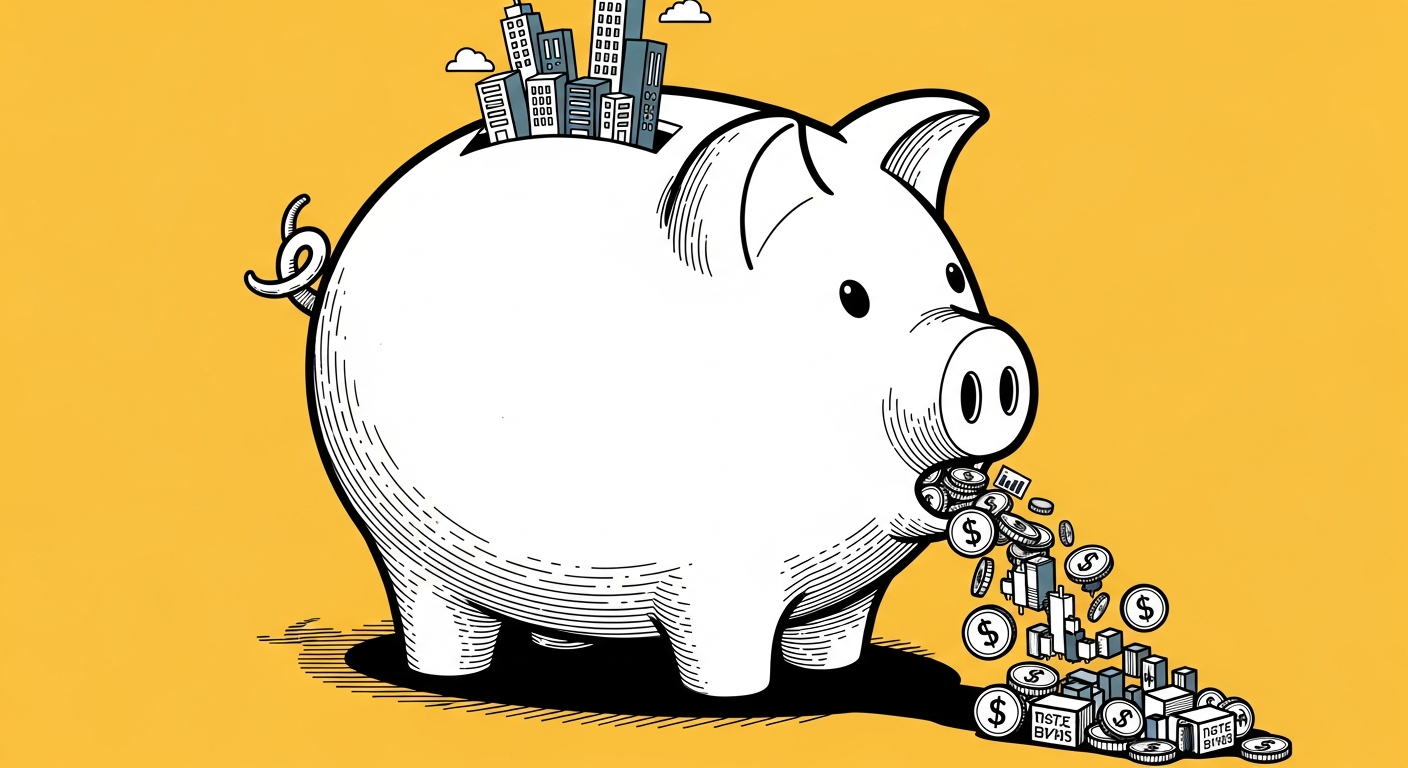
Domino’s stock hit an all-time low near $2.20 in November 2008. By late 2021, shares exceeded $530. That represents a return of over 9,834% for investors who bought at the bottom. Even from the 2009 turnaround starting point, the returns dwarf the S&P 500 over the same period.
Few brand turnarounds produce this level of shareholder value creation. The stock performance proves that marketing strategy, when connected to product improvement and operational excellence, drives real financial returns.
Revenue Growth and Market Share
Domino’s global revenue reached approximately $4.5 billion in fiscal year 2022, per company filings. The brand holds the number one position in global pizza delivery by market share, ahead of Pizza Hut.
U.S. same-store sales growth has been part of a streak that, combined with international, has delivered over 30 consecutive years of positive same-store sales growth globally, a streak that few restaurant brands can match. International same-store sales have shown similar consistency, driven by expansion in India, Europe, and Asia-Pacific.
Digital Sales Dominance
Over 85% of Domino’s U.S. retail sales now flow through digital channels. This percentage positions Domino’s as the most digitally advanced QSR brand globally.
Digital orders have higher average values than phone orders, better accuracy rates, and lower labor costs per transaction. The shift to digital is not just a marketing narrative. It is the primary driver of margin improvement.
Domino’s vs. Pizza Hut vs. Papa John’s: Competitive Positioning
The pizza category’s top three brands each pursue distinct brand positioning strategies.
| Dimension | Domino’s | Pizza Hut | Papa John’s |
|---|---|---|---|
| Positioning | Tech-forward delivery leader | Dine-in tradition + delivery | Premium ingredients |
| Core Message | Convenience and value | Gathering and variety | “Better ingredients, better pizza” |
| Digital Maturity | Industry leading (75%+ digital) | Catching up (50%+ digital) | Growing digital focus |
| Global Stores | 21,000+ | 20,000+ | 5,900+ |
| Key Strength | Technology infrastructure | Brand recognition | Quality perception |
| Key Weakness | Premium perception | Aging store fleet | Founder controversy hangover |
Domino’s won the pizza wars by redefining the competitive arena. While Pizza Hut and Papa John’s competed on taste and ingredients, Domino’s shifted the battle to convenience, technology, and speed. The brand that owns the ordering experience owns the customer.
International Strategy: Localization at Scale
Domino’s international business now exceeds its U.S. revenue, a milestone that reflects the effectiveness of its localization approach.
India: Jubilant FoodWorks and the Second-Largest Market
Jubilant FoodWorks operates Domino’s in India, where the brand has over 2,000 stores as of mid-2024. The Indian menu is heavily localized with vegetarian options, paneer toppings, and regional flavor profiles that bear little resemblance to the U.S. menu.
India represents Domino’s most successful international adaptation. The brand holds the number one position in organized pizza delivery in the country.
The Indian success story illustrates a principle that applies across marketing: global brands win locally by adapting, not by transplanting.
Menu Localization Examples
Japan features seafood and teriyaki flavors. Australia emphasizes premium toppings and gourmet positioning. Middle Eastern markets offer halal-certified menus with regional flavor profiles.
Each market adaptation requires balancing global brand consistency with local relevance. Domino’s manages this through strong franchisee relationships and flexible menu guidelines that allow regional innovation within brand standards.
What Marketers Can Learn from Domino’s
Domino’s offers three strategic lessons that apply to brands in any industry.
Radical Transparency Builds Trust Faster Than Spin
The Pizza Turnaround proved that admitting failure publicly, when paired with genuine product improvement, builds more trust than decades of positive advertising. Consumers are sophisticated enough to recognize corporate spin. They reward brands that treat them as adults.
This lesson applies to any brand facing a quality or perception problem. The instinct to hide problems is strong, but the turnaround data proves that honesty, backed by action, is the faster path to recovery.
Technology Is a Marketing Strategy, Not Just a Tool
Domino’s does not use technology to support its marketing. Technology is the marketing. The Pizza Tracker, AnyWare platform, and AI ordering assistant are all product features that simultaneously function as brand differentiators and campaign content.
Brands that treat technology as a separate department from marketing miss this insight. The most effective marketing innovations in the next decade will blur the line between product experience and brand communication.
Crisis Is an Opportunity If You Move First
Domino’s owned its crisis before competitors or media could define the narrative. By speaking first and speaking honestly, the brand controlled the story of its transformation.
Waiting for a crisis to blow over is the default corporate response. Domino’s proved that moving first, with transparency and substance, converts a vulnerability into a competitive advantage.
The brand’s brand equity is now higher than it was before the crisis, a result that would have been impossible without the turnaround campaign.
Frequently Asked Questions
What is Domino’s marketing strategy?
Domino’s marketing strategy combines radical transparency, digital innovation, and value-driven promotions. The brand positions itself as a technology company that delivers pizza, investing over $225 million annually in ICT infrastructure according to GlobalData. Key elements include the Pizza Tracker, AnyWare ordering platform, loyalty programs, and campaigns that prioritize honesty over polish.
How did Domino’s turn around its brand?
In 2009, CEO Patrick Doyle launched the “Pizza Turnaround” campaign, which publicly acknowledged that Domino’s pizza tasted bad. The brand reformulated its entire recipe, retrained staff across 9,000 locations, and documented the process in documentary-style ads. The honesty paired with genuine product improvement rebuilt consumer trust and drove years of same-store sales growth.
What percentage of Domino’s sales are digital?
Over 85% of Domino’s U.S. retail sales come through digital channels, including the mobile app, website, and voice assistants. This makes Domino’s the most digitally advanced QSR brand in the world.
Who are Domino’s main competitors?
Domino’s primary competitors include Pizza Hut (owned by Yum! Brands), Papa John’s, and Little Caesars. In the broader QSR delivery market, Domino’s also competes with aggregator platforms like DoorDash and Uber Eats that deliver from multiple restaurants.
What was the Pizza Turnaround campaign?
The Pizza Turnaround was a 2009 advertising campaign where Domino’s showed real focus group footage of customers criticizing its pizza. The brand acknowledged the criticism, reformulated its recipe, and invited customers to taste the new product. The campaign is widely studied as the most successful crisis marketing turnaround in QSR history.
For more brand marketing case studies, explore our analysis of Burger King’s challenger brand strategy and our deep dive into KFC’s marketing playbook, including the legendary FCK crisis campaign.