Spotify turned first-party user data into the most effective marketing engine in consumer technology. The company’s annual Wrapped campaign alone generates over 200 million user engagements within 24 hours (Wrapped 2025 data), without a dollar of direct ad spend.
The Spotify marketing strategy is built on a single insight: the most powerful marketing makes the user the channel.
From its founding in Stockholm in 2006 by Daniel Ek and Martin Lorentzon, Spotify has grown to over 750 million monthly active users across 180+ markets. That growth was not driven by traditional advertising budgets or celebrity endorsements. It was driven by a marketing mix that turns listening behavior into shareable content, free users into paying subscribers, and data into creative campaigns that competitors cannot replicate.
This article breaks down how Spotify built its marketing strategy, from the freemium conversion model to the Wrapped phenomenon, and what every marketer can learn from their approach.
How Spotify Became the World’s Largest Audio Streaming Platform
From Swedish Startup to 600M+ Users
Spotify launched in Sweden in 2008 with a clear value proposition: give people instant access to every song ever recorded, legally and affordably.
At the time, piracy through services like Napster and LimeWire was decimating the music industry. Spotify’s founders recognized that piracy was not a pricing problem but a convenience problem. People pirated music because buying individual tracks on iTunes was slower and more expensive than downloading them for free. Spotify’s solution was to make legal streaming even more convenient than piracy. The freemium model, offering a free ad-supported tier alongside premium subscriptions, removed every barrier to adoption.
That value proposition drove explosive growth.
By end of 2025, Spotify had surpassed 751 million monthly active users and 290 million premium subscribers. The company operates in 180+ markets, making it the largest audio streaming platform globally. Apple Music, its closest competitor, has approximately 100 million subscribers. YouTube Music, Amazon Music, and Tidal trail further behind.
The Freemium Model as a Marketing Strategy
Spotify’s free tier is not a product. It is a marketing channel.
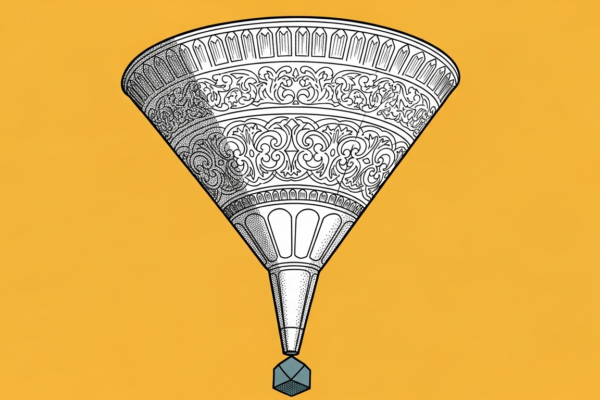
Every free user is a potential premium subscriber experiencing the product daily. The free tier creates habitual usage, builds playlist libraries, and establishes Spotify as the default music app. Ads on the free tier serve dual purposes: they generate revenue AND they create friction that motivates upgrades. The conversion rate from free to premium sits at approximately 40%, a figure that has improved from 26.6% over seven years of optimization.
This is the marketing funnel as product design.
Most companies build products and then figure out marketing. Spotify built marketing into the product architecture. The free tier is top-of-funnel awareness. Personalized playlists are mid-funnel engagement. Premium trials are bottom-funnel conversion. The entire user experience is a conversion engine disguised as a music app.
Spotify’s Marketing Mix
| Element | Spotify Strategy | Key Details |
|---|---|---|
| Product | Personalized audio streaming (music, podcasts, audiobooks) | Discover Weekly, Daily Mix, Release Radar, Wrapped |
| Price | Freemium model with tiered subscriptions | Free (ad-supported), Individual ($10.99), Duo, Family ($16.99), Student ($5.99) |
| Place | Multi-platform, multi-device global distribution | iOS, Android, desktop, web, smart speakers, car integrations, 180+ markets |
| Promotion | Data-driven campaigns, user-generated sharing, Wrapped | Billboard campaigns, social-first creative, partnership marketing |
Product: Personalization as Core Feature
Spotify’s product marketing centers on algorithmic personalization features that no competitor has matched in quality.
Discover Weekly delivers 30 songs every Monday based on listening history and taste profiles. Release Radar surfaces new music from followed artists and related acts. Daily Mix playlists combine familiar favorites with algorithmic recommendations. Each feature serves a marketing function: they increase listening time, reduce churn, and give users a reason to open the app daily. Spotify’s algorithmic recommendations drive a significant share of all listening on the platform, with features like Discover Weekly, Daily Mix, and Release Radar serving as primary discovery engines for hundreds of millions of users.
The algorithm is Spotify’s most valuable marketing asset.
Price: Freemium, Premium, Family, Student Tiers
Spotify’s pricing strategy balances accessibility with revenue growth.
The free tier removes all barriers to trial. Student pricing at $5.99 captures users during the habit-forming college years, betting that they will convert to full-price subscriptions after graduation. The Family plan at $16.99 for up to six accounts reduces per-user cost and increases household lock-in. Each tier is priced to maximize customer lifetime value rather than per-transaction revenue.
Spotify raised individual subscription prices to $11.99 in June 2024, and again to $12.99 in early 2026, the third increase in four years, signaling growing pricing power.
Promotion: Data-Driven Campaigns at Scale
Spotify’s promotional strategy flips the traditional model.
Instead of spending hundreds of millions on media to push messages at consumers, Spotify creates content that consumers voluntarily share. Wrapped is the pinnacle of this approach, but the philosophy extends to billboard campaigns, social media, and partnership marketing. The common thread is using proprietary listening data to create content that feels personal, specific, and shareable. No other company in the world has this combination of data depth and creative willingness to use it.
Place: Global Multi-Platform Distribution
Spotify is available on virtually every connected device, from smartphones to smart refrigerators.
The distribution strategy focuses on being present wherever audio consumption happens. Integrations with Apple CarPlay, Android Auto, Amazon Echo, Google Nest, PlayStation, and smart TVs ensure Spotify is the default choice. The “Connect” feature, which allows seamless switching between devices mid-song, reinforces platform stickiness. Global expansion follows a market-by-market localization strategy, with curated playlists, local artist partnerships, and culturally specific marketing in each new territory.
Data-Driven Marketing: Spotify’s Secret Weapon
First-Party Data Collection and Usage
Spotify collects more first-party behavioral data than almost any consumer app on the planet.
Every song played, skipped, saved, or shared generates a data point. Spotify knows what users listen to at 6 AM versus 10 PM, whether they prefer discovery or repetition, which moods correlate with which genres, and which life events trigger listening pattern changes. This data powers product recommendations, advertising targeting on the free tier, and the creative campaigns that define Spotify’s brand. In an era where third-party cookies are disappearing, Spotify’s first-party data advantage is growing, not shrinking.
The depth of this data creates a moat competitors cannot easily cross.
Machine Learning for Personalized Recommendations
Spotify’s recommendation engine uses collaborative filtering, natural language processing, and audio analysis in combination.
Collaborative filtering identifies patterns across millions of users: “people who listen to X also listen to Y.” Natural language processing scans blogs, reviews, and social media to understand how music is described and categorized culturally. Audio analysis examines the acoustic properties of tracks (tempo, energy, danceability) to find sonic similarities. The three signals combined produce recommendations that feel eerily personal, which is precisely the point.
Personalization at this level is both a product feature and a brand awareness driver.
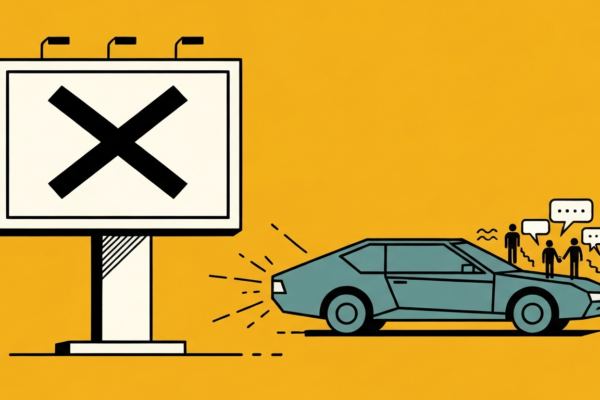
Turning Listener Data into Billboard Campaigns
Spotify pioneered the use of anonymized listener data as billboard creative.
“Dear person who played ‘Sorry’ 42 times on Valentine’s Day, what did you do?” This style of data-driven outdoor advertising launched in 2016 and became a cultural phenomenon. The billboards worked because they were funny, specific, and human. They turned Spotify’s data capabilities into a visible brand personality. The campaigns generated massive earned media as people photographed and shared the billboards on social media, multiplying the reach far beyond the physical locations.
Spotify Wrapped: The Greatest Annual Marketing Campaign in Tech
How Wrapped Works
Every December, Spotify delivers a personalized year-in-review to each user, visualizing their listening habits in a shareable, story-format presentation.
Users see their top artists, top songs, total minutes listened, top genres, and listening personality types. The experience is designed for mobile sharing, with each slide formatted as an Instagram Story, TikTok post, or Twitter image. Spotify begins collecting data on January 1 and processes over 500 million user profiles to generate individualized Wrapped experiences by early December. The technical and creative scale is enormous.
The execution improves every year, adding new features like “Listening Personality” types and AI DJ summaries.
The Psychology Behind Sharing
Wrapped exploits three psychological triggers simultaneously.
First, identity expression: music taste is deeply tied to personal identity, and sharing Wrapped is a way to tell the world “this is who I am.” Second, FOMO: when social feeds fill with Wrapped posts in early December, non-Spotify users feel excluded from a cultural moment. Third, social proof: seeing hundreds of friends share Wrapped normalizes Spotify as the default music platform. The combination creates a self-reinforcing viral loop that no competitor has replicated.
Apple Music launched “Replay” as a Wrapped competitor. It failed to generate comparable engagement because it lacked the shareability design and cultural momentum.
200M+ Engaged Users in 24 Hours
Wrapped 2025 generated over 200 million users engaging with the feature within the first 24 hours of launch, a 19% increase over 2024.
That number represents roughly one-third of Spotify’s entire user base voluntarily creating and distributing brand content. The earned media value is incalculable. Every Instagram Story, every tweet, every TikTok video featuring a Wrapped screenshot is an unpaid advertisement for Spotify. The campaign cost Spotify engineering and design resources but zero media dollars. For context, Super Bowl advertisers pay $7-8 million for 30 seconds of exposure. Wrapped delivers days of global social media saturation for the cost of internal product development.
From Digital to Physical: Immersive Wrapped Installations
In recent years, Spotify has extended Wrapped into physical experiences.
Pop-up installations in cities like New York, London, and Sao Paulo let fans walk through immersive, data-driven environments themed around their listening habits. These physical activations generate additional press coverage and social content, extending the Wrapped conversation beyond the initial digital launch. The installations demonstrate that digital-native brands can create powerful physical marketing experiences when the concept is strong enough.
Iconic Spotify Campaigns Beyond Wrapped
| Campaign | Year | Strategy | Results |
|---|---|---|---|
| “Thanks 2016, It’s Been Weird” | 2016 | Data-driven billboards with humorous listener insights | Global earned media, established data-as-creative approach |
| “I’m With the Banned” | 2017 | Playlists from banned and censored artists during travel ban | Cultural relevance, press coverage, brand values signal |
| “Everywhere” Billboard Series | 2018-2023 | Localized data-driven OOH in dozens of markets | Consistent brand personality across regions |
| Podcast Launch Campaign | 2019-2020 | Exclusive content deals (Joe Rogan, Gimlet) as acquisition plays | $200M+ Rogan deal, positioned Spotify as audio, not just music |
| “Tunetorials” | 2025 | Short-form tutorial content set to popular music | TikTok-native format, high engagement rates |
“Thanks 2016, It’s Been Weird”
This campaign established Spotify’s voice as a brand that could be funny, human, and data-smart simultaneously.
Billboards like “Dear person in Theater District who listened to the Hamilton Soundtrack 5,376 times this year, can you get us tickets?” made Spotify feel like a friend who knew you slightly too well. The campaign ran in 14 markets and generated press coverage worth multiples of the out-of-home media buy. It also proved a concept that shaped all future Spotify campaigns: proprietary data is a creative asset, not just a targeting tool.
“I’m With the Banned” (2017)
During the US travel ban controversy, Spotify created playlists featuring artists from the affected countries.
The campaign positioned Spotify as a platform that stood for cultural openness and musical diversity. It generated significant press coverage and social engagement without being overtly political. The brand took a position without alienating half its user base, which is a difficult balance that most brands fail to achieve. The campaign demonstrated that brand values can be expressed through product features (playlists) rather than corporate statements.
The Podcast Play as Marketing Strategy
Acquiring Gimlet Media and Anchor FM
In 2019, Spotify acquired podcast production company Gimlet Media and podcast hosting platform Anchor FM for a combined $340 million, according to Spotify’s financial filings.
The acquisitions were not just content investments. They were marketing strategy. By owning podcast creation tools (Anchor) and premium podcast content (Gimlet), Spotify repositioned itself from “music streaming app” to “audio platform.” This broader positioning expanded the target audience to include podcast listeners who might not have considered Spotify for music alone. The word “audio” replaced “music” in Spotify’s corporate messaging almost overnight.
The repositioning increased total addressable market without diluting the core brand.
Exclusive Deals as User Acquisition
The $200 million+ exclusive deal with Joe Rogan, confirmed by Billboard, was the most expensive podcast acquisition in history at the time.
It was also a user acquisition play disguised as a content deal. Rogan’s audience, predominantly male, 25-45, and not necessarily existing Spotify users, represented a new demographic for the platform. The deal brought millions of new users to Spotify who came for Rogan and stayed for music. Subsequent exclusive deals with other creators followed the same playbook: use exclusive content to acquire audiences that organic marketing cannot reach.
Video Podcasts and the YouTube Challenge
Spotify has invested heavily in video podcast capabilities to compete directly with YouTube.
The shift to video reflects a market reality: podcast audiences increasingly expect visual content. Clips from video podcasts perform well on TikTok and Instagram, creating a promotional flywheel. The strategic challenge is competing with YouTube’s established video infrastructure and creator relationships. Spotify’s advantage is its audio-first brand and superior music integration. The competition between Spotify and YouTube for podcast dominance will shape content marketing strategy across the audio industry for years.
How Spotify Markets to Artists and Advertisers
Spotify for Artists Platform
Spotify for Artists is a B2B marketing platform that serves musicians, labels, and managers.
The platform provides real-time streaming analytics, audience demographics, playlist placement tools, and promotional features. By making artists successful on Spotify, the company ensures a steady supply of exclusive content and early releases. Artists who understand their Spotify analytics become advocates for the platform, recommending it to fans over competitors. This B2B marketing creates a supply-side flywheel that complements the consumer-side demand.
Spotify Ad Studio
Spotify Ad Studio is a self-serve advertising platform that lets brands of any size create and run audio, video, and display ads targeting Spotify’s free-tier users.
The platform offers targeting based on listening behavior, demographics, and contextual signals (workout playlists, study sessions, commute times). For marketers, Spotify Ad Studio provides access to audiences in high-attention audio environments where brand recall rates exceed those of traditional digital display. The self-serve model also positions Spotify as an advertising technology company, not just a subscription business.
Ad revenue now represents a meaningful and growing share of Spotify’s total income.
Spotify vs. Apple Music vs. YouTube Music
| Dimension | Spotify | Apple Music | YouTube Music |
|---|---|---|---|
| Subscribers (2025) | 290M+ premium | ~100M | ~125M (Music + Premium combined) |
| Free Tier | Yes (ad-supported) | No (trial only) | Yes (limited) |
| Key Differentiator | Personalization, social sharing, Wrapped | Apple ecosystem integration, lossless audio | Music videos, YouTube integration |
| Marketing Approach | Data-driven, user as channel | Hardware bundle, ecosystem lock-in | Content breadth, algorithm-driven discovery |
| Podcast Strategy | Aggressive (exclusive deals, video) | Modest (Apple Podcasts separate) | Integrated via YouTube |
| Pricing (Individual) | $12.99/month | $10.99/month | $13.99/month (YouTube Premium) / $10.99 (Music only) |
Spotify’s competitive advantage is not catalog size, audio quality, or pricing.
It is the network effect created by social features. When your friends share Wrapped, when you see collaborative playlists on social media, when an artist tells fans to follow them “on Spotify,” the platform’s cultural position reinforces itself. Apple Music competes on technology and ecosystem. YouTube Music competes on content breadth. Neither competes on the social and cultural dimensions where Spotify dominates.
This is a positioning advantage that compounds over time.
What Marketers Can Learn from Spotify
Turn User Data into Shareable Content
Every company with a digital product sits on behavioral data that could become marketing content.
Spotify’s insight was that aggregated, anonymized user data is inherently interesting and shareable. Fitness apps could create “Year in Running” summaries. E-commerce platforms could generate “Your Shopping Personality” profiles. Financial apps could produce “Year in Spending” reviews. The framework is transferable. The question is whether your team has the creative ambition to turn data into stories, not just dashboards.
Make Users Your Marketing Team
Wrapped’s genius is that users do the distribution work voluntarily.
When 200 million people share branded content on the same day, the effective media value dwarfs any paid campaign. The key is creating content that enhances the sharer’s identity rather than promoting the brand overtly. People share Wrapped because it says something about them, not because it says something about Spotify. This principle applies to any brand: if sharing your content makes the user look good, they will share it. If sharing your content makes your brand look good, they will not.
Personalization Drives Retention
Spotify’s churn rate is among the lowest in subscription technology.
Personalized playlists create switching costs that are emotional, not contractual. A user’s Discover Weekly gets better over time as the algorithm learns their taste. That accumulated personalization represents years of data that would be lost by switching to Apple Music or YouTube Music. For any subscription business, the lesson is that personalization is not just a feature. It is a retention strategy that becomes more valuable the longer a customer stays.
The compounding value of personalization data is Spotify’s deepest competitive moat.
Frequently Asked Questions
What is Spotify’s marketing strategy?
Spotify’s marketing strategy centers on turning first-party user data into shareable content, using the freemium model as a customer acquisition channel, and making users the primary distribution engine through campaigns like Wrapped. The approach prioritizes personalization, social sharing, and data-driven creative over traditional advertising spend.
How does Spotify Wrapped work as marketing?
Wrapped transforms each user’s annual listening data into a visually engaging, story-format presentation optimized for social sharing. When 200 million+ users share their Wrapped results on Instagram, TikTok, and Twitter simultaneously, it creates a global brand awareness event with zero media spend. The campaign drives new user sign-ups, re-engages dormant users, and generates massive earned media coverage.
What data does Spotify use for marketing?
Spotify collects listening behavior data including songs played, skipped, saved, and shared, along with time of day, device type, playlist preferences, and genre affinities. This first-party data powers personalized recommendations (Discover Weekly, Daily Mix), advertising targeting on the free tier, and creative campaigns like the data-driven billboard series.
How does Spotify compete with Apple Music?
Spotify competes through superior personalization algorithms, social features (collaborative playlists, Wrapped), a free tier that Apple Music lacks, and a stronger cultural presence among younger demographics. Apple Music competes on audio quality (lossless, spatial audio) and ecosystem integration with Apple devices. The two platforms have different strengths and attract partially overlapping audiences.
What is Spotify’s pricing strategy?
Spotify uses a freemium model with tiered pricing. The free ad-supported tier serves as a customer acquisition channel. Premium subscriptions are offered at Individual, Duo, Family, and Student tiers, each designed to maximize customer lifetime value for different user segments. Recent price increases signal growing pricing power as switching costs rise.
Spotify’s approach to data-driven marketing represents the future of brand building in the digital era. For more on how companies build cultural presence through digital channels, explore our guide to social media brand awareness strategy and our breakdown of digital advertising techniques that drive measurable results.