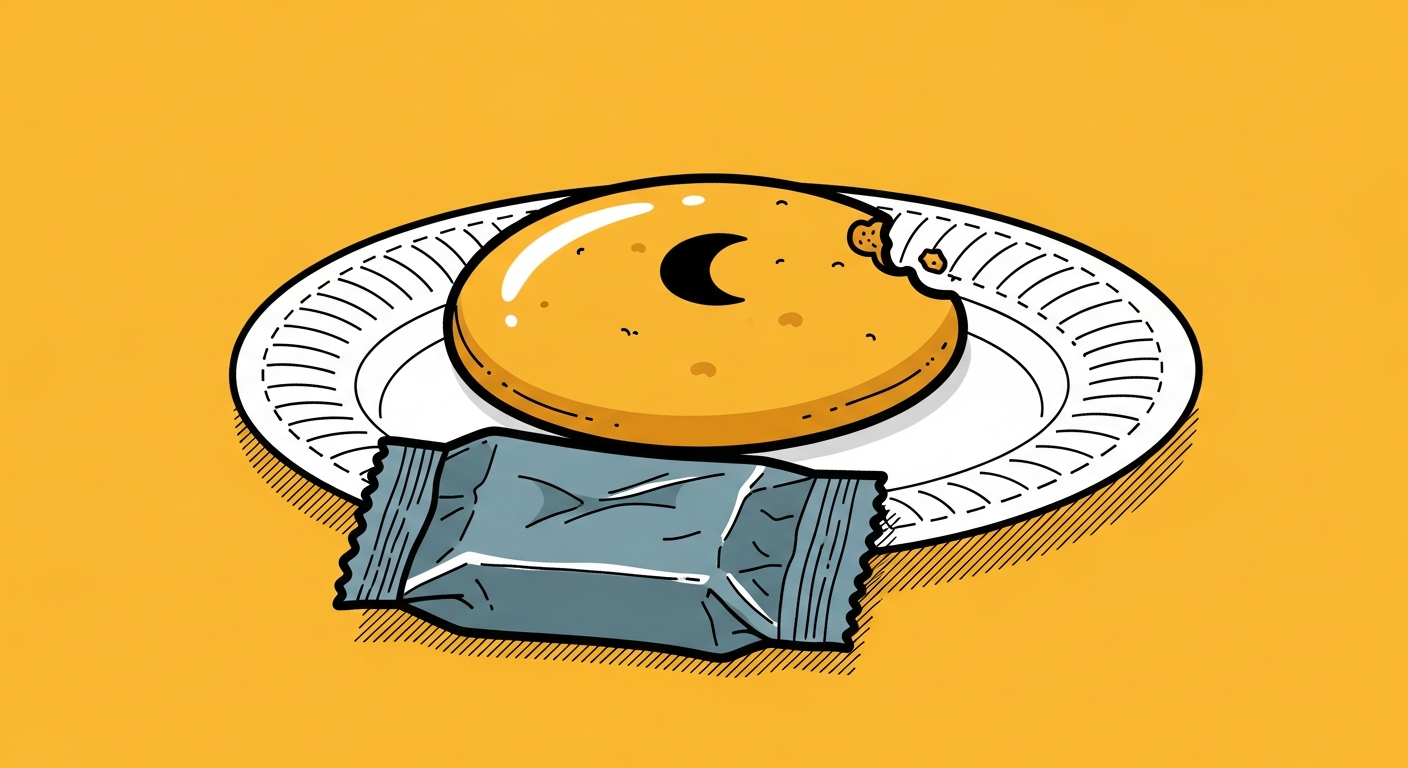
In 1975, psychologist Stephen Worchel placed identical cookies in two jars. One jar held ten cookies, the other held two. Participants consistently rated the cookies from the near-empty jar as more desirable, tastier, and more valuable.
Same cookie. Different supply. Higher perceived value. That experiment captures the scarcity principle in marketing, and it drives billions of dollars in consumer spending every year.
What Is the Scarcity Principle?
The scarcity principle is a psychological phenomenon where people perceive limited resources as more valuable than abundant ones. Robert Cialdini formalized it as one of six persuasion principles in his 1984 book Influence: The Psychology of Persuasion, defining it as the tendency for opportunities to seem more valuable when their availability is restricted.
In marketing, the scarcity principle manifests whenever a brand signals that a product, offer, or experience is limited. “Only 3 left in stock.” “Sale ends midnight.” “By invitation only.” Each of these triggers the same psychological response that made Worchel’s subjects rate two cookies higher than ten.
The principle works because scarcity activates multiple cognitive biases simultaneously.
The Psychology: Why Scarcity Drives Action
Scarcity triggers three distinct psychological mechanisms.
First, loss aversion. Daniel Kahneman and Amos Tversky’s prospect theory demonstrated that losses feel roughly twice as painful as equivalent gains feel pleasurable. When a product is scarce, the potential loss of missing out outweighs the gain of saving money by waiting. Second, reactance theory. Psychologist Jack Brehm found that when people’s freedom to choose is threatened, they desire the restricted option more intensely. Limited availability feels like a restriction on freedom, which paradoxically increases desire.
Third, scarcity serves as a quality signal. If something is rare, we assume it must be good.
Reactance Theory and the Forbidden Fruit Effect
Brehm’s reactance theory explains why “you can’t have this” is one of the most powerful phrases in marketing.
When Hermès tells customers they must first build a purchase history before being offered a Birkin bag, the restriction makes the bag more desirable. When a nightclub enforces a strict door policy, the line outside becomes its own advertisement. Reactance drives consumers to pursue restricted products with greater intensity specifically because the restriction exists. The effort required to obtain a scarce item becomes part of its value.
FOMO by the Numbers
Fear of missing out, FOMO, is the emotional expression of the scarcity principle in digital culture.
Research compiled by Strategy Online found that 69% of millennials experience FOMO, and 60% make reactive purchases because of it. Among Gen Z, the figure rises to 72%. FOMO is not a personality flaw. It is a predictable response to scarcity signals amplified by social media, where consumers see others obtaining limited products in real time. Brands that understand FOMO as a psychological mechanism rather than a buzzword build more effective scarcity campaigns.
Three Types of Scarcity in Marketing
Not all scarcity is created equal. Each type triggers slightly different psychological responses and suits different marketing contexts.
| Scarcity Type | Trigger | Best For | Risk Level | Example |
|---|---|---|---|---|
| Limited quantity | “Only X left” | E-commerce, luxury, collectibles | Low (if real) | Amazon, Supreme |
| Time-limited | “Ends at midnight” | Promotions, launches, seasonal campaigns | Moderate | Black Friday, flash sales |
| Exclusive access | “By invitation only” | Premium brands, memberships, launches | Low | Hermès, Clubhouse |
Limited Quantity Scarcity
Limited quantity scarcity signals that a fixed supply exists and once it is gone, it is gone.
This type triggers the strongest loss aversion because the consumer faces a permanent loss. Amazon’s “Only 3 left in stock” label is the most widely deployed limited quantity signal in e-commerce. Seller experience data suggests that low-stock indicators increase conversion rates meaningfully by creating urgency at the point of purchase decision. The signal works because it transforms a leisurely purchase decision into an urgent one.
Authenticity is critical here because consumers who discover the stock count is fabricated lose trust permanently.
Time-Limited Scarcity
Time-limited scarcity imposes a deadline on an offer or availability window.
Countdown timers on landing pages, flash sales, and seasonal offers all use time-limited scarcity. The psychology is straightforward: as the deadline approaches, the perceived cost of inaction rises. Groupon built its entire business model on time-limited deals, with the company alone reaching over $3 billion in annual revenue at its 2016 peak according to Statista. The most effective time-limited scarcity campaigns provide genuine value within the window rather than simply pressuring consumers to buy faster.
Exclusive Access Scarcity
Exclusive access scarcity restricts who can purchase, not how many units exist or when the offer expires.
This type leverages both reactance theory and identity signaling. Consumers want the restricted product partly because they can’t have it easily, and partly because owning it signals membership in an exclusive group. Clubhouse, the audio social platform, grew to 10 million users in early 2021 by requiring an invitation from an existing member. The invitation-only model turned every existing user into a gatekeeper and every non-user into a person experiencing FOMO. The strategy generated massive brand awareness without any paid advertising.
Scarcity vs. Urgency: What Is the Difference?
Scarcity and urgency are often used interchangeably, but they are distinct psychological triggers that work through different mechanisms.
Scarcity is about supply: there is not enough for everyone. Urgency is about time: you must act now regardless of supply. “Only 5 seats left” is scarcity. “Registration closes Friday” is urgency. “Only 5 seats left and registration closes Friday” is both. The most effective campaigns layer scarcity on top of urgency because they activate loss aversion from two directions simultaneously.
Using urgency without genuine scarcity, such as a “limited time offer” that runs perpetually, trains consumers to ignore your deadlines.
10 Brand Examples of Scarcity Marketing
The following examples demonstrate how leading brands apply the scarcity principle across different industries, channels, and scarcity types.
1. Supreme: The Never-Restock Model
Supreme releases limited quantities of each product and never restocks sold-out items. This creates permanent quantity scarcity that transforms a $48 t-shirt into a $500 resale item.
The streetwear brand generated approximately $523 million in annual revenue in fiscal 2023, despite having only 17 retail locations worldwide. Supreme’s scarcity model turns every product drop into a cultural event. Lines form hours before stores open. The brand’s website crashes during online drops. The scarcity is real, not manufactured, which is why it sustains consumer trust decade after decade.
2. Nike SNKRS: Limited Drops and Digital Scarcity
Nike’s SNKRS app releases limited-edition sneakers through surprise drops, draws, and exclusive access tiers.
The app has been downloaded over 50 million times, and many releases sell out within minutes. Nike combines quantity scarcity (limited pairs) with time scarcity (surprise drop windows) and access scarcity (member-only releases). The SNKRS model generates more demand per release than Nike could fulfill if it wanted to, which means the brand deliberately leaves money on the table to preserve long-term brand equity.
3. Amazon: “Only X Left in Stock”
Amazon’s low-stock indicator is the most viewed scarcity signal in e-commerce history.
The orange text appears when inventory drops below a threshold, creating quantity scarcity at the moment of purchase decision. Amazon also layers time scarcity through Lightning Deals, which show a percentage-claimed progress bar and a countdown timer. The combination of “limited stock” and “limited time” drives impulse purchases that would not occur if the consumer believed the product would be available tomorrow.
4. Starbucks: Unicorn Frappuccino and Seasonal Scarcity
Starbucks released the Unicorn Frappuccino for five days in April 2017. The color-changing, Instagram-ready drink generated 180,000 Instagram posts during its brief availability window.
The campaign demonstrated how time-limited scarcity amplifies social media sharing. Consumers posted not just because the drink was photogenic, but because their followers might miss the chance to try it. Starbucks repeats this formula with seasonal offerings like the Pumpkin Spice Latte, which analysts estimate generates over $500 million in annual revenue during its limited fall availability.
5. McDonald’s: The McRib’s Strategic Disappearance
The McRib returns to McDonald’s menus periodically and unpredictably, creating time scarcity that generates free media coverage with every reappearance.
McDonald’s has turned a sandwich into a cultural phenomenon by making it unavailable most of the year. Each return generates millions of social media mentions. A McDonald’s executive admitted that the McRib’s scarcity is deliberate: permanent availability would eliminate the excitement that drives sales spikes during limited windows.
6. Hermès: The Birkin Waitlist
Hermès does not sell Birkin bags to anyone who walks into the store. Customers must build a purchase history with the brand before being offered the opportunity to buy one.
This exclusive access scarcity model has created a handbag with better investment returns than the S&P 500. Knight Frank’s Luxury Investment Index has tracked Birkin bags appreciating nearly 500% over the past 35 years, outperforming the S&P 500 with average annual returns of 14%. The scarcity is both real (production is genuinely limited) and strategic (distribution is deliberately restricted). The result is a product where the difficulty of acquisition is the primary driver of perceived value.
7. Disney: The Vault Strategy
For decades, Disney released animated classics on home video for limited windows before “returning them to the vault.”
Parents rushed to buy VHS and DVD copies of The Lion King or Aladdin knowing they would become unavailable. While the Disney Vault strategy has evolved in the streaming era, the principle remains. Disney+ releases content in exclusive windows and removes titles periodically. The vault model trained generations of consumers to act immediately on Disney purchases.
8. Tesla: Pre-Order Scarcity
Tesla accepted 325,000 pre-orders for the Model 3 within a week of its 2016 announcement, representing $14 billion in potential revenue.
The company did not have a single production unit ready. The scarcity was in allocation: pre-order position determined when you would receive your car. This transformed a purchase into a competition for position in a queue. Tesla’s approach combined access scarcity (limited production capacity) with time scarcity (order now or wait years).
9. Glossier: Limited Product Drops
Glossier releases select products as limited editions that sell out and may or may not return.
The brand’s Balm Dotcom in special flavors, limited edition merch, and seasonal sets create quantity scarcity within a brand known for always-available core products. The contrast between permanent availability of staples and scarcity of special editions makes the limited items feel genuinely exclusive. This dual strategy maintains everyday accessibility while generating urgency around select launches.
10. Coca-Cola: Share a Coke Personalization Scarcity
When Coca-Cola replaced its logo with popular names, each specific name became a scarce resource.
Finding “your” name on a Coke bottle was not guaranteed. Consumers searched multiple stores to find their name or the names of friends and family. The campaign increased US Coca-Cola sales by 2.5% after a decade of decline. The scarcity was not in the product itself but in the personalized version, which transformed a mass-market commodity into a personalized treasure hunt.
Combining Scarcity with Other Persuasion Principles
Scarcity becomes significantly more powerful when paired with other psychological principles from Cialdini’s framework.
Scarcity Plus Social Proof
Booking.com’s “12 people are looking at this hotel right now” combines scarcity (“only 2 rooms left”) with social proof (“others want this too”). The social proof validates the scarcity signal. If other people are competing for the same limited resource, the perceived value increases further.
This combination is the most effective two-principle pairing in digital marketing.
Scarcity Plus Anchoring
Showing the original price next to a time-limited sale price combines anchoring (the original price sets the reference point) with scarcity (the lower price will not last).
Retailers use this during Black Friday by displaying “was $200, now $99, ends tonight.” The anchor makes the deal feel generous. The deadline makes it feel urgent. Together, they create a decision environment where purchasing feels like avoiding a loss rather than spending money.
When Scarcity Backfires
Scarcity is powerful when authentic and destructive when fabricated. The gap between real and artificial scarcity determines whether the tactic builds or erodes trust.
Fake Scarcity and Consumer Trust Erosion
Countdown timers that reset when they reach zero. “Only 2 left” labels on products that never sell out. “Exclusive” offers available to everyone.
These tactics work in the short term and destroy trust in the long term. Research in consumer psychology has consistently found that consumers who detect false scarcity signals are significantly less likely to purchase from that brand in the future. The Federal Trade Commission has increased enforcement against deceptive scarcity claims. In 2022, the FTC issued updated guidelines specifically addressing fake countdown timers and false limited-availability claims in digital advertising.
The Boy Who Cried “Limited Edition”
When every product launch is “limited edition,” none of them are.
Brands that overuse scarcity language train their audience to ignore it. Bath & Body Works runs “semi-annual sales” so frequently that consumers simply wait for the next one, eliminating the urgency entirely. The solution is restraint. Supreme works because the scarcity is genuine and consistent. The brand that makes everything scarce makes nothing scarce.
Legal and Regulatory Risks
False scarcity claims carry legal consequences in most markets.
The UK’s Advertising Standards Authority banned multiple brands for using fake countdown timers in 2023. The EU’s Digital Services Act includes provisions against dark patterns, which encompass artificial scarcity interfaces. Australia’s ACCC has fined companies for “was/now” pricing where the “was” price was never genuinely offered. Marketers deploying scarcity tactics need to ensure every claim is verifiable and every limitation is real.
Frequently Asked Questions
What is the scarcity principle in marketing?
The scarcity principle is a psychological phenomenon where people perceive limited-availability products as more valuable and desirable. Robert Cialdini identified it as one of six key persuasion principles. In marketing, brands trigger scarcity through limited quantities, time-limited offers, or exclusive access restrictions. The principle works because scarcity activates loss aversion, reactance theory, and quality inference simultaneously.
What is an example of scarcity marketing?
Supreme’s never-restock model is one of the purest examples. The streetwear brand produces limited quantities of each item and never replenishes sold-out stock. This transforms a $48 t-shirt into a $500 resale item. Other examples include Amazon’s “Only 3 left in stock” indicators, Starbucks’ limited-time seasonal drinks, and Hermès’ purchase-history requirement for Birkin bags.
Is scarcity marketing ethical?
Scarcity marketing is ethical when the limitation is genuine. Supreme’s limited production runs are real. Amazon’s low-stock indicators reflect actual inventory. These uses respect the consumer’s intelligence. Scarcity becomes unethical when it is fabricated, such as countdown timers that reset, fake “limited edition” labels on mass-produced goods, or “only X left” claims on unlimited digital products. Regulatory bodies including the FTC and UK ASA actively enforce against deceptive scarcity tactics.
How does FOMO drive scarcity marketing?
FOMO, fear of missing out, is the emotional response that scarcity triggers in consumers. When people see limited-availability products, especially on social media where others are purchasing and sharing, FOMO creates anxiety about being excluded. Research shows 69% of millennials experience FOMO, and 60% make reactive purchases because of it. Social media amplifies FOMO because consumers see others obtaining scarce products in real time.
What is the difference between scarcity and urgency?
Scarcity is about supply limitation: not enough for everyone. Urgency is about time pressure: act before the deadline. “Only 5 left” is scarcity. “Sale ends Friday” is urgency. They are distinct triggers but work powerfully together. The most effective campaigns layer both, such as “Only 5 left and the offer expires at midnight,” which activates loss aversion from two directions simultaneously.
The scarcity principle remains one of the most powerful tools in a marketer’s psychological toolkit, but its effectiveness depends entirely on authenticity. Brands that deploy real scarcity build brand equity over decades. Brands that manufacture fake scarcity erode trust with every campaign. For more on how psychological principles shape advertising, see our guide to the FOMO marketing strategy and the science behind loss aversion in pricing.