Neuromarketing applies neuroscience research methods to marketing problems. Instead of asking consumers what they think (surveys) or watching what they do (behavioral data), neuromarketing measures what their brains actually do when exposed to brands, ads, and products. The global neuromarketing market reached approximately $3.3 billion in 2023 and is growing at over 10% annually as brands seek decision-making insights that traditional research cannot provide.
The gap between what consumers say and what they do is where neuromarketing lives.
What Is Neuromarketing?
The Science: How Your Brain Makes Buying Decisions
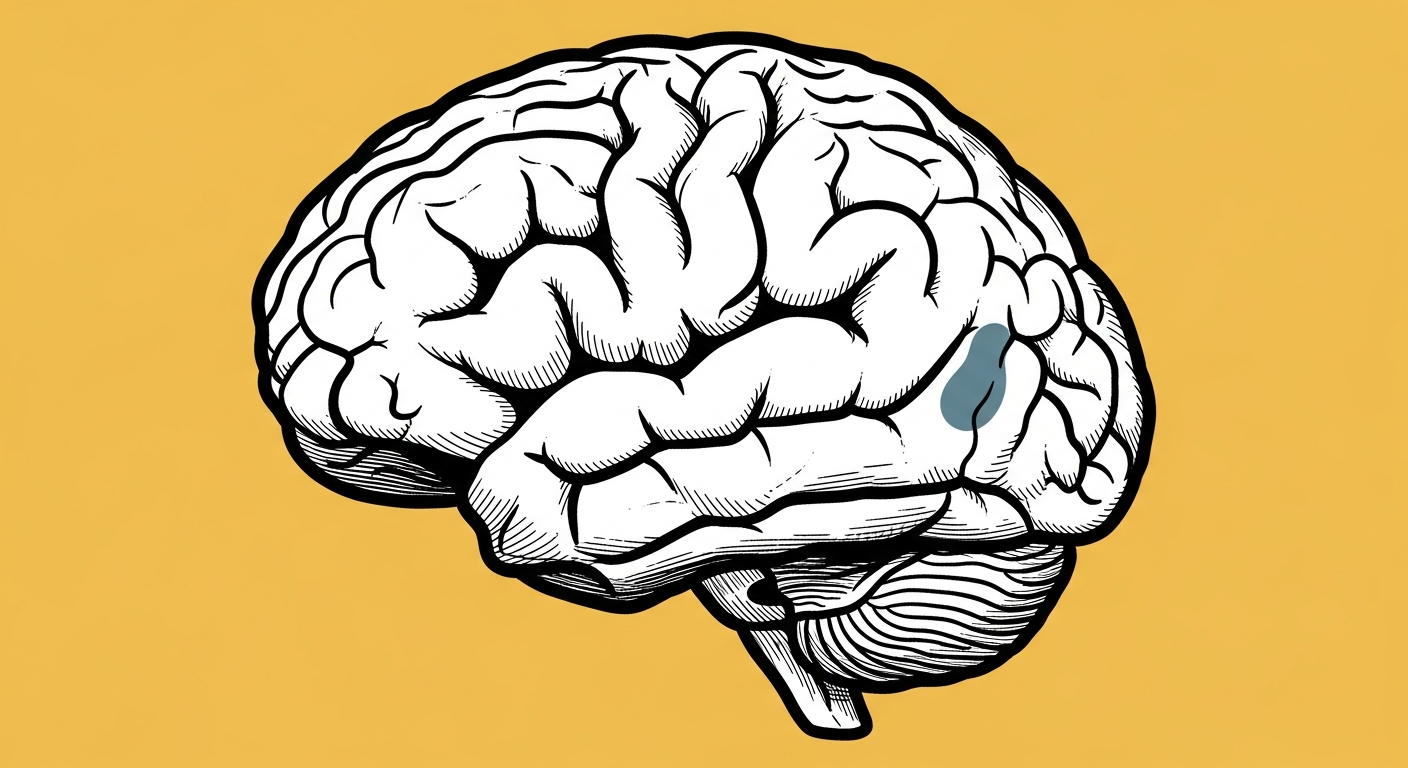
When a consumer encounters a brand or advertisement, the brain processes information through two parallel systems. The limbic system (emotional center) generates an immediate emotional response: attraction, repulsion, excitement, or comfort. The prefrontal cortex (rational center) evaluates features, compares options, and assesses value. Neuromarketing measures both systems to understand the complete decision process.
Harvard Business School professor Gerald Zaltman estimates that 95% of purchasing decisions occur in the subconscious. Traditional market research (surveys, focus groups) captures only the 5% that consumers can consciously articulate. Neuromarketing captures the other 95%.
A Brief History of Neuromarketing
The term was coined in 2002 by Dutch professor Ale Smidts. But the field’s defining moment came in 2004 when Read Montague published his Pepsi Challenge fMRI study, demonstrating that brand knowledge literally changed brain activity during taste tests. Participants’ brains responded differently to the same liquid depending on whether they knew it was Coca-Cola or Pepsi. The brand was not just a preference. It was a neurological reality.
Since then, companies including Coca-Cola, Google, Microsoft, Disney, and Procter & Gamble have incorporated neuromarketing into their research programs. Martin Lindstrom’s 2008 book Buyology: Truth and Lies About Why We Buy brought the field into mainstream marketing conversation.
8 Core Neuromarketing Techniques
| Technique | What It Measures | Cost Range Per Study | Best For |
|---|---|---|---|
| EEG | Electrical brain activity (attention, engagement, emotion) | $5K-$50K | Ad testing, packaging design |
| fMRI | Blood flow in brain regions (deep emotional processing) | $50K-$500K+ | Brand perception studies |
| Eye-Tracking | Gaze patterns, fixation points, attention sequence | $2K-$30K | Ad layouts, packaging, websites |
| Facial Coding | Emotional responses via micro-expressions | $5K-$40K | Video ad testing, UX research |
| Biometric Sensors | Heart rate, skin conductance, breathing | $3K-$25K | Emotional arousal measurement |
| Implicit Association Test | Unconscious brand associations | $1K-$15K | Brand positioning research |
| Sensory Marketing | Multi-sensory response to brand stimuli | $5K-$50K | Retail design, packaging |
| Predictive AI Models | Predicted attention and emotion from creative assets | $500-$10K | Pre-launch ad optimization |
EEG (Electroencephalography)
EEG measures electrical activity on the scalp using sensors placed on the head. It captures real-time changes in attention, cognitive engagement, and emotional valence (positive versus negative response) with millisecond precision. Modern wireless EEG headsets from companies like Emotiv and NeuroSky have made the technology portable and relatively affordable.
EEG is the workhorse of neuromarketing because it offers good temporal resolution (measures moment-to-moment changes), reasonable cost, and natural viewing conditions (participants can watch ads normally). The limitation is spatial resolution: EEG tells you when the brain responds but provides limited information about which specific region is active.
fMRI (Functional Magnetic Resonance Imaging)
fMRI measures blood flow changes in the brain, identifying which specific regions activate in response to stimuli. It provides the deepest insight into emotional processing but requires lying inside a large scanner, which limits ecological validity. The Coca-Cola/Pepsi study used fMRI to show that brand knowledge activated the dorsolateral prefrontal cortex, the region associated with self-image and identity.
fMRI is the most expensive neuromarketing technique and is reserved for high-stakes brand research. Few marketing teams can justify $500,000+ for a single study, but the insights can reshape brand strategy for years.
Eye-Tracking
Eye-tracking technology records where a person looks, for how long, and in what sequence. Heat maps generated from eye-tracking data reveal which elements of an ad, package, or webpage capture attention and which are ignored. Remote eye-trackers built into computer screens now enable large-scale online studies at relatively low cost.
McDonald’s uses eye-tracking extensively for menu board design, ensuring that high-margin items receive the most visual attention. E-commerce companies use eye-tracking to optimize product page layouts, determining the optimal placement for price, reviews, and call-to-action buttons.
Facial Coding
Facial coding software (from companies like Affectiva, now part of Smart Eye) analyzes micro-expressions to identify emotional responses: happiness, surprise, contempt, anger, sadness, fear, and disgust. The technology can process video of participants watching ads and identify the exact moments that trigger emotional peaks.
TikTok partnered with Neurons Inc. to study attention and emotional responses to short-form video ads. The research found that ads triggering an emotional response within the first 3 seconds achieved significantly higher brand recall and purchase intent. Facial coding identified which creative elements triggered those early emotional responses.
Biometric Sensors
Galvanic Skin Response (GSR), heart rate monitors, and breathing sensors measure physiological arousal. High arousal indicates emotional engagement (positive or negative). Combined with other measures (facial coding reveals valence), biometrics provide a complete picture of emotional response intensity and direction.
Implicit Association Test (IAT)
The IAT measures the strength of unconscious associations between concepts (brand-luxury, brand-innovation, brand-trust) by measuring response time. Faster associations indicate stronger unconscious connections. IATs are particularly valuable for brand positioning research: do consumers unconsciously associate your brand with the attributes you intend?
Sensory Marketing Research
Sensory research tests how visual, auditory, olfactory, tactile, and gustatory stimuli affect brand perception. Abercrombie & Fitch’s signature store scent, Starbucks’ coffee aroma, and Singapore Airlines’ custom fragrance all emerged from sensory marketing research. The goal is identifying which sensory cues create the strongest positive brand associations.
Predictive AI Models
The newest addition to the neuromarketing toolkit. Companies like Neurons Inc. and Dragonfly AI have trained AI models on thousands of neuroscience studies to predict attention patterns and emotional responses from static images and video. Upload an ad creative, and the AI predicts where viewers will look, how long they will attend, and the likely emotional response.
Predictive AI democratizes neuromarketing by providing neuroscience-informed insights at a fraction of the cost of lab-based studies. The trade-off is precision: AI predictions are based on population averages, not your specific audience.
How Brands Use Neuromarketing in Advertising
Coca-Cola: Brain Activity Studies for Ad Optimization
Coca-Cola is the most frequently studied brand in neuromarketing history. The Montague Pepsi Challenge study demonstrated that Coca-Cola’s brand activates identity-related brain regions. Coca-Cola has since used EEG and facial coding to optimize ad creative, identifying which moments generate peak emotional engagement and which fall flat.
TikTok: Attention and Recall Research
TikTok invested in neuromarketing research to demonstrate its platform’s advertising effectiveness to brands. Studies using EEG and eye-tracking showed that TikTok ads generate higher attention and emotional engagement than equivalent ads on competing platforms. The research validated TikTok’s core advertising proposition: short-form video captures and holds attention more effectively than traditional formats.
McDonald’s: Eye-Tracking for Menu and Store Design
McDonald’s uses eye-tracking to optimize every visual touchpoint: drive-through menu boards, in-store digital displays, app interfaces, and advertising layouts. The research revealed that menu item placement significantly affects ordering behavior, leading to redesigns that increased average order value by positioning high-margin items in high-attention zones.
Apple: Emotional Resonance in Product Launches
Apple’s product launch presentations are designed to generate peak emotional responses at specific moments. While Apple does not publicly disclose neuromarketing research, the structure of their keynotes (tension, reveal, demonstration, emotional story) follows patterns that neuroscience shows maximize memory encoding and emotional brand association.
Neuromarketing vs. Traditional Research
| Dimension | Neuromarketing | Traditional Research |
|---|---|---|
| What it measures | Unconscious responses (brain activity, physiology) | Conscious responses (stated preferences, opinions) |
| Accuracy | High (bypasses post-hoc rationalization) | Variable (subject to social desirability bias) |
| Cost | $1K-$500K per study | $5K-$100K per study |
| Sample size | Small (20-50 for lab studies) | Large (100-10,000+) |
| Speed | Weeks (lab setup, analysis) | Days to weeks (online surveys) |
| Best for | Emotional response, attention, unconscious preference | Feature preferences, satisfaction, demographics |
When Neuromarketing Adds Value
Use neuromarketing when the decision involves emotional processing (brand choice, ad creative), when stated and revealed preferences differ (consumers say one thing and do another), or when optimizing high-stakes creative (Super Bowl ads, package redesigns, brand repositioning).
When Traditional Research Suffices
Use traditional research for feature prioritization, price sensitivity measurement, demographic profiling, and satisfaction tracking. These questions involve conscious evaluation, where stated preferences are reliable.
How to Apply Neuromarketing on Any Budget
Enterprise-Level: $10K+
Commission lab-based studies with firms like Neurons Inc., iMotions, or Nielsen Consumer Neuroscience. Use EEG for ad testing, eye-tracking for layout optimization, and facial coding for video creative analysis. These studies provide the highest-quality insights and are justified for campaigns with significant media budgets.
Mid-Market: $1K-$10K
Use remote eye-tracking tools (Tobii Pro, Lumen Research) for website and ad layout testing. Deploy implicit association tests through platforms like Sentient Decision Science. Use predictive AI tools (Neurons Predict, Dragonfly AI) to pre-test creative before production.
DIY Neuromarketing: Free-$500
Heatmap tools (Hotjar, Microsoft Clarity) track mouse movement and click behavior as proxies for visual attention on websites. A/B testing platforms (Google Optimize, Optimizely) let you test bias-based variations empirically. Conversion rate optimization is essentially applied neuromarketing: you are testing which stimuli drive the strongest behavioral response, even without measuring brain activity directly.
The Ethics of Neuromarketing
Consumer Privacy Concerns
Neuromarketing research collects intimate biological data. Responsible firms follow strict consent protocols, anonymize data, and do not store individual brain recordings beyond the research period. The Neuromarketing Science and Business Association (NMSBA) publishes a code of ethics that member firms must follow.
The Manipulation Debate
Critics argue that neuromarketing gives brands tools to manipulate consumers at an unconscious level. Defenders argue that neuromarketing measures existing preferences rather than creating new ones. The reality lies between: neuromarketing can optimize advertising effectiveness, but it cannot make consumers want things they have no latent desire for. A perfectly optimized ad for a product nobody needs still fails.
Industry Self-Regulation
The NMSBA code prohibits using neuromarketing to target children, exploit vulnerable populations, or bypass informed consent. Several countries (France, Chile) have enacted or proposed legislation specifically addressing neuromarketing practices. The industry is moving toward transparency and regulation, recognizing that trust is essential for long-term viability.
FAQ
What is neuromarketing and how does it work?
Neuromarketing applies neuroscience methods (brain imaging, biometrics, eye-tracking) to measure consumers’ unconscious responses to marketing stimuli. It works by capturing the emotional, cognitive, and physiological reactions that consumers cannot consciously report, providing insights that traditional surveys and focus groups miss.
How much does neuromarketing research cost?
Costs range from free (heatmap tools) to $500,000+ (fMRI studies). Eye-tracking studies cost $2K-$30K. EEG studies cost $5K-$50K. Predictive AI tools cost $500-$10K per analysis. The right investment depends on the decision stakes: a Super Bowl ad justifies lab-based research. A social media creative test justifies AI prediction.
Is neuromarketing ethical?
When conducted with informed consent, data privacy protections, and transparent methodology, neuromarketing is ethical. The NMSBA code of ethics provides industry standards. Ethical concerns arise when research targets vulnerable populations, bypasses consent, or is used to create deliberately manipulative advertising. Responsible application improves advertising relevance without exploiting consumers.
What is the difference between neuromarketing and behavioral economics?
Behavioral economics studies what consumers do (observed behavior patterns). Neuromarketing studies why they do it (brain and physiological responses). Behavioral economics identifies cognitive biases. Neuromarketing measures the neural mechanisms behind those biases. They are complementary disciplines: behavioral economics provides the theory, and neuromarketing provides the measurement.
Can small businesses use neuromarketing?
Yes. Heatmap tools (Hotjar, free tier available), A/B testing platforms, and predictive AI tools provide neuromarketing-informed insights at minimal cost. The principles of neuromarketing, designing for attention, emotion, and memory, can be applied through standard conversion optimization practices without expensive lab equipment.
Neuromarketing provides the deepest available insight into why consumers choose what they choose. For the psychological frameworks that complement brain science, explore our guides to cognitive biases in advertising, the priming effect in branding, and emotional branding strategy.